Key takeaways
- Hide type over hide color: Top-grain and full-grain cowhide carry moisture away from the skin far better than bonded leather or PU, which laminate a plastic film over foam and trap body heat. If you run warm or sit long stretches, genuine leather is a thermal decision, not a luxury one.
- Lumbar geometry, not lumbar padding: A pillowy backrest means nothing if its apex sits above or below your L3–L5 region. Prioritize height-adjustable or depth-adjustable support that meets the natural inward curve of your lower spine while your feet stay flat.
- Recline that locks: Opening the hip angle past 120 degrees for a few minutes drops muscular tension and slows the breath — a genuinely useful mid-afternoon reset. Look for multi-position locking rather than a spring that fights you the entire time.
- Seat height and depth matched to your frame: Dangling feet compress the underside of the thigh and restrict return circulation; an overlong seat pan does the same behind the knee. Shorter users need a low-range cylinder, larger users need a wide pan and a rated capacity with headroom.
- The parts you never see: A cast aluminum or steel base, a Class 3 or Class 4 cylinder, and rubber-shod casters determine longevity and silence. Squeaks and rolling clatter are minor irritants that quietly train restlessness into your workday.
What's inside
Most people come to me because of what happens at 2 a.m. — the wide-awake stretch, the aching lower back, the restlessness that no supplement seems to touch. What surprises them is how often the conversation turns to the eight hours they spent sitting before bed ever entered the picture. A seat that pins the pelvis into a backward tilt, forces the ribs down, and shallows the breath keeps the nervous system in a quiet state of readiness all day. By evening, the body has no downshift left to perform. Leather chairs get bought for the boardroom look, but the wrong one bakes heat against the spine and collapses at the lumbar curve within a year.
This guide approaches leather desk chairs the way I’d approach a mattress: as a recovery surface you occupy for a third of your day. I’ve weighed hide quality and heat dissipation, lumbar geometry, lockable recline range, seat dimensions for shorter and larger frames, and the mechanical parts that determine whether a chair still supports you in year three. Below you’ll find the shortlist, followed by the criteria I’d apply before spending a cent.
As an Amazon Associate we earn from qualifying purchases.


How to Choose a Leather Office Chair (2026)
- Hide type over hide color: Top-grain and full-grain cowhide carry moisture away from the skin far better than bonded leather or PU, which laminate a plastic film over foam and trap body heat. If you run warm or sit long stretches, genuine leather is a thermal decision, not a luxury one.
- Lumbar geometry, not lumbar padding: A pillowy backrest means nothing if its apex sits above or below your L3–L5 region. Prioritize height-adjustable or depth-adjustable support that meets the natural inward curve of your lower spine while your feet stay flat.
- Recline that locks: Opening the hip angle past 120 degrees for a few minutes drops muscular tension and slows the breath — a genuinely useful mid-afternoon reset. Look for multi-position locking rather than a spring that fights you the entire time.
- Seat height and depth matched to your frame: Dangling feet compress the underside of the thigh and restrict return circulation; an overlong seat pan does the same behind the knee. Shorter users need a low-range cylinder, larger users need a wide pan and a rated capacity with headroom.
- The parts you never see: A cast aluminum or steel base, a Class 3 or Class 4 cylinder, and rubber-shod casters determine longevity and silence. Squeaks and rolling clatter are minor irritants that quietly train restlessness into your workday.
The Best Leather Office Chairs of 2026, Reviewed
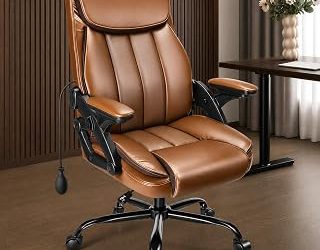
YFO Ergonomic Home Office Desk Chair (Brown)
A sensible entry point: rubber casters that stay quiet on hardwood, a usable height range, and lumbar shaping that holds its position rather than flattening under pressure. Best suited to average-height users who want restrained styling without executive-scale bulk.
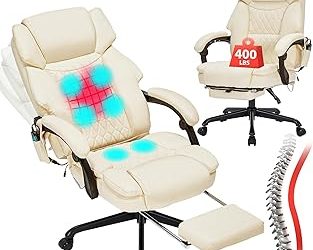
Genuine Leather Executive Chair with 135° Recline
The strongest recovery-minded pick here — that deep, lockable recline lets you fully open the hip angle and breathe diaphragmatically without leaving your desk. The aluminum base and mid-century profile keep it looking deliberate in a room that doubles as living space.
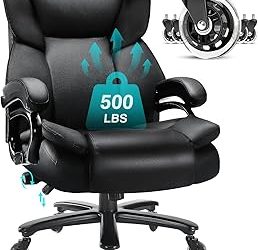
Genuine Leather Mid-Back Executive Chair (Black)
The thickened backrest and defined lumbar shelf make this a strong choice for anyone who finds tall headrests encourage a jutted chin. Mid-back designs also promote small postural shifts, which help far more than sitting perfectly still ever will.
Top-Grain Cowhide Executive Chair
The best hide in this lineup, paired with the rarest adjustment: headrest height, which lets you support the base of the skull rather than shove the neck forward. The three-position lockable recline makes short, restorative breaks easy to build into a workday.
Leather Swivel Chair for Shorter Frames (Brown)
Fit beats specification, and this one is built around a lower seat height so shorter users can plant both feet without perching. The PU upholstery runs warmer than cowhide, so pair it with a breathable seat cover if you tend to overheat.
Frequently Asked Questions
Can a desk chair really affect how I sleep?
Indirectly, but meaningfully. Chairs that restrict circulation and provoke low-grade back pain contribute to evening discomfort, more nighttime position changes, and the late-day caffeine habit people use to fight postural fatigue — all of which fragment sleep.
Is genuine leather cooler to sit on than PU?
Generally yes. Top-grain hide is porous and disperses moisture, while PU and bonded surfaces hold it against the skin. Elevated skin temperature late in the day is a small but real headwind against the evening drop in core temperature that initiates sleep.
How often should I recline or stand?
Aim for a change of position every 30 to 50 minutes: stand briefly, or recline and take ten slow nasal breaths. Treat it as tension release, not a nap substitute — if you genuinely need sleep, a 20-minute nap before mid-afternoon protects your night far better.
What if I’m tall or over 250 pounds?
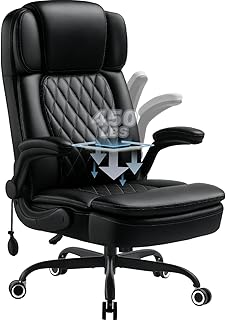
Look specifically at heavy-duty builds such as the 450-pound-capacity big-and-tall executive models with a metal base and spring-reinforced cushion. Rated capacity should exceed your weight by a comfortable margin, since foam and cylinders fail long before the stated limit does.
Final Thoughts
If you want one chair that supports both productive posture and genuine daytime recovery, the Top-Grain Cowhide Executive Chair earns it through hide quality and headrest adjustability, while the 135° Recline Genuine Leather Executive is the better buy if you’ll actually use the recline to decompress. Shorter users should skip both and start with the low-seat Leather Swivel Chair, because a chair that fits your body will always outperform one that merely impresses on paper.