Key takeaways
- Carbon mass, not just HEPA: A H13 True HEPA layer captures tar-laden particulate, but only activated carbon adsorbs the gaseous compounds behind smoke odour. Thin carbon-dusted mesh saturates within weeks in a smoking household; prioritise pelletised or thick-bed carbon and treat the filter as a consumable.
- Sleep-mode decibels: Anything above roughly 30 dB in a quiet bedroom risks micro-arousals in light sleepers. Models rated 22 to 27 dB sit below the threshold where the brain registers sound as an intrusion, and their steady broadband hum can actually mask street noise.
- Air changes over headline coverage: A “1,500 sq ft” rating usually assumes one exchange per hour. For smoke, divide that figure by four or five to find the room size where the unit genuinely performs. Undersizing is the most common reason people conclude purifiers “don’t work.”
- Light discipline: Bright LEDs, air-quality colour rings and glowing touch panels suppress melatonin at the exact moment you want it rising. Confirm the display can be dimmed or switched off entirely, and treat night-light features as optional rather than a selling point.
- Filter economics: Smoke exposure shortens filter life dramatically. Before buying, price a year of replacements and check whether a washable pre-filter is included — rinsing it monthly protects the expensive HEPA and carbon stages underneath.
What's inside
Tobacco smoke is a two-part problem, and most shoppers only solve half of it. The visible haze is particulate — ultrafine matter clustered in the 0.1 to 0.3 micron range, precisely the size that slips deepest into the airway. The half that lingers is gas-phase: nicotine, acrolein, formaldehyde and dozens of volatile compounds that adsorb into pillowcases, mattress ticking, curtains and upholstered headboards, then slowly re-release into the bedroom overnight. That off-gassing is why a room can smell “clean” at 10 p.m. and stale at 3 a.m., and why smokers and their housemates so often report dry throat, nasal congestion and fragmented, unrefreshing sleep.
As a sleep-wellness practitioner, I evaluate purifiers differently than a general reviewer would. Coverage area matters, but so does what the machine does to your sleep environment: how many decibels it adds at its lowest setting, whether its indicator lights leak into your visual field, how much activated carbon it actually carries, and whether it can sustain four to five air changes per hour in a closed bedroom rather than a wide-open living space. The picks below were assessed against those overnight criteria.
As an Amazon Associate we earn from qualifying purchases.


How to Choose an Air Purifier For Smoker (2026)
- Carbon mass, not just HEPA: A H13 True HEPA layer captures tar-laden particulate, but only activated carbon adsorbs the gaseous compounds behind smoke odour. Thin carbon-dusted mesh saturates within weeks in a smoking household; prioritise pelletised or thick-bed carbon and treat the filter as a consumable.
- Sleep-mode decibels: Anything above roughly 30 dB in a quiet bedroom risks micro-arousals in light sleepers. Models rated 22 to 27 dB sit below the threshold where the brain registers sound as an intrusion, and their steady broadband hum can actually mask street noise.
- Air changes over headline coverage: A “1,500 sq ft” rating usually assumes one exchange per hour. For smoke, divide that figure by four or five to find the room size where the unit genuinely performs. Undersizing is the most common reason people conclude purifiers “don’t work.”
- Light discipline: Bright LEDs, air-quality colour rings and glowing touch panels suppress melatonin at the exact moment you want it rising. Confirm the display can be dimmed or switched off entirely, and treat night-light features as optional rather than a selling point.
- Filter economics: Smoke exposure shortens filter life dramatically. Before buying, price a year of replacements and check whether a washable pre-filter is included — rinsing it monthly protects the expensive HEPA and carbon stages underneath.
The Best Air Purifiers For Smokers (2026) Reviewed
YARIKI P280
Rated at 22 dB on its lowest setting, the P280 is the quietest unit here and the one I would put in a bedroom occupied by a light sleeper. Its washable pre-filter is genuinely useful in a smoking home, trapping the sticky, particle-heavy layer that would otherwise clog the H13 media within a season.
LEVOIT Core 300-P
An AHAM-verified performer at 24 dB, the Core 300-P is compact enough for a nightstand and remains the sensible default for bedrooms under roughly 250 square feet. It won’t clear a smoking lounge, but for the room where you actually sleep it delivers a high exchange rate without dominating the space.
PuroAir 240 (2-Pack)
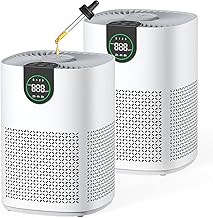
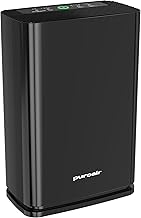
Buying in pairs solves a problem single units can’t: you place one where smoking occurs and one in the bedroom, stopping migration at the source instead of chasing it. The CarbonTech stage is more substantial than the token carbon sheets found in budget purifiers, which shows in odour control after a week of continuous use.
LEVOIT Vital 200S-P
My pick for open-plan homes and larger master bedrooms, running at 27 dB while covering meaningfully more floor area than the Core 300. The onboard air-quality monitor paired with auto mode is the practical advantage — it ramps up when someone lights up two rooms away, then settles back down before it disturbs your sleep cycle.
MOOKA B-D02L
A capable H13 unit for around 1,076 square feet at a friendly price, with a night light that some households appreciate and sensitive sleepers should simply disable. Best treated as a secondary machine for a hallway, den or guest room rather than your primary bedroom filter.
Frequently Asked Questions
Will a purifier eliminate cigarette smell entirely?
Not on its own. Purifiers treat airborne contaminants, but third-hand smoke residue bonds to soft furnishings. Launder bedding weekly, wash curtains, and vacuum upholstery — otherwise the machine spends every night fighting a source it can’t reach.
Should it run all night, or only before bed?
Continuously. Particulate settles and re-suspends whenever you move in bed, so intermittent operation leaves gaps. Sleep or auto mode overnight, with a higher setting for an hour or two after any indoor smoking, is the pattern I recommend.
How often should filters be replaced in a smoking household?
Expect roughly half the manufacturer’s stated interval — often three to five months rather than six to twelve. Vacuum or rinse the pre-filter every two to four weeks, and replace the carbon stage as soon as odour breakthrough returns.
Where should the unit sit in a bedroom?
Roughly six to eight feet from the bed, pulled at least a foot away from walls and clear of curtains or furniture that would block intake. Close enough to create clean air near your breathing zone, far enough that airflow doesn’t dry your sinuses.
Final Thoughts
For most bedrooms, the LEVOIT Core 300-P offers the best balance of verified performance, low noise and manageable filter costs. Choose the LEVOIT Vital 200S-P if your sleeping area is large or opens onto a living space, since its auto response and air-quality sensing handle smoke drift intelligently. Light sleepers who notice every sound should start with the YARIKI P280 and its 22 dB floor.