Key takeaways
- Upright footprint: roughly 45″ deep x 31″ wide
- Fully reclined footprint: around 70-75″ deep depending on ottoman extension
- Wall clearance needed: 25-30 inches behind the chair for full zero-gravity recline
- Ceiling height: no special requirement, since it doesn’t lift vertically like some robotic massage chairs
What's inside
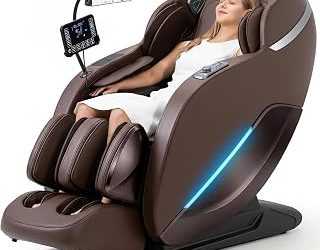
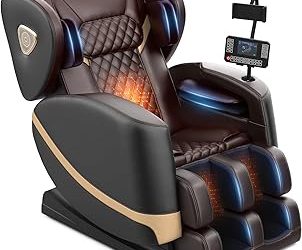
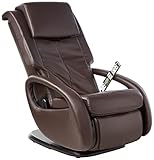
The Human Touch WholeBody 5.1 fits most users between 5’0″ and 6’2″ and up to 265 lbs, needs about 25-30 inches of wall clearance for a full recline, and covers the neck-to-lower-back area plus calves with its roller and airbag system, but taller or heavier users, and anyone wanting foot rollers or L-track coverage, will outgrow it fast. Here’s what the spec sheet doesn’t tell you.
As an Amazon Associate we earn from qualifying purchases at no extra cost to you.
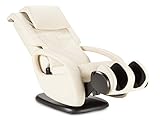
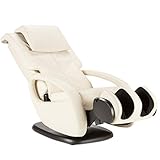

Footprint: what it actually takes to fit this chair
The WholeBody 5.1 uses an S-track roller system with a fixed base, which means it needs forward space to recline rather than sliding backward like L-track or 3D chairs with a rail-glide base. That distinction matters more than the brochure suggests.
- Upright footprint: roughly 45″ deep x 31″ wide
- Fully reclined footprint: around 70-75″ deep depending on ottoman extension
- Wall clearance needed: 25-30 inches behind the chair for full zero-gravity recline
- Ceiling height: no special requirement, since it doesn’t lift vertically like some robotic massage chairs
In a small room, this is workable. A 10×12 ft bedroom or den gives you enough floor area to place the chair against a wall with a couple feet of buffer, plus room to walk around it. What trips people up is measuring the chair’s height and width but skipping the recline path. If you push it flush against a wall, you’ll only get partial recline, which defeats the point of a zero-gravity chair. If you’re tight on space, look at chairs with a self-glide or track-back base that moves the seat forward as it reclines, which cuts wall clearance to 4-6 inches. The 5.1 isn’t built that way, so plan for the deeper zone or place it away from a wall entirely.
Who fits, and who doesn’t
Human Touch lists a height range of about 5’0″ to 6’2″ and a weight limit of 265 lbs for the WholeBody 5.1. In practice, the upper end of that height range is tight. Users near 6’1″-6’2″ often report the headrest sitting low and the calf rollers missing the actual calf muscle because their legs extend past the intended zone. Shorter users under 5’2″ sometimes find the shoulder area of the backrest too wide, so the rollers work more on the outer shoulder than the spine.
If you’re outside that window, this isn’t the chair to stretch for. Human Touch’s own step-up models, like the WholeBody 7.1, extend the height accommodation further and add an L-track that follows the curve of the glutes, which the 5.1’s S-track simply cannot reach. So does the Human Touch Certus, which is built more for taller frames and heavier users with a stronger track and drive system.
Roller coverage: where it actually massages
The S-track in the WholeBody 5.1 follows the natural curve of the spine from neck to lower back, using four rollers plus airbags in the shoulders, arms, and seat. Calf massage comes from a separate roller unit inside the ottoman, not airbag compression alone, which is a step up from entry-level chairs that only squeeze the calves.
| Zone | Mechanism | Coverage |
|---|---|---|
| Neck/upper back | 4D-style rollers | Good, adjustable intensity |
| Mid/lower back | Roller track (S-track) | Good, stops short of glutes |
| Glutes | Airbag only | Weak, no roller reach |
| Arms/hands | Airbag compression | Moderate |
| Calves | Roller + airbag | Good |
| Feet | Airbag compression only | Basic, no foot rollers |
This is the gap most buyers miss. If lower-body relief, especially plantar or heel massage, is your priority, the lack of foot rollers is a real limitation. Chairs marketed as “robotic massage chairs,” including some Human Touch models with 3D or 4D mechanisms and full L-track systems, add foot rollers and glute-reaching tracks. The WholeBody 5.1 skips that tier deliberately to hit a lower price point.
Program list and what you’ll actually use
The chair comes with a set of preset auto-programs, typically covering options like Stretch, Relax, Recovery, and Energize, along with manual mode where you pick roller position, speed, and airbag intensity yourself. In practice, most owners settle into two or three presets within the first month and rarely touch the rest. The manual mode is where the chair earns its keep for targeted lower-back work, since you can park the rollers on one spot instead of running a full-body cycle every time.
There’s no voice control or app-based customization on this model, which is normal at this tier. Human Touch reserves that kind of connected feature set for higher-end lines.
Upholstery and what wears first
The WholeBody 5.1 uses a synthetic leather (PU) upholstery over foam padding, not top-grain leather. This is standard for the price tier and holds up fine under normal home use, but a few wear patterns show up consistently after a couple years of daily use:
- The seat cushion foam compresses first, especially if one person uses the chair daily; expect noticeably softer seating by year two to three
- PU upholstery on the armrests cracks or peels before the back panel does, since hands and forearms create the most friction and oil contact
- Stitching at the headrest seam is a common early failure point if the chair is reclined to full zero-gravity frequently
None of this is unusual for a mid-range chair. It’s the same trade-off you see across the category: real leather costs significantly more and extends upholstery life, but PU is what keeps a massage chair under a certain price ceiling.
Price context
Human Touch massage chair pricing spans a wide range depending on track type and features. Entry chairs like the WholeBody 5.1 usually run in the $2,000-$3,000 range. Step up to the WholeBody 7.1 or Certus and you’re typically looking at $4,500-$7,000, largely because of the L-track, extended body scanning, and stronger motors. The Human Touch Novo sits in between, often priced around $3,500-$4,500, aimed at buyers who want more coverage than the 5.1 without jumping to the flagship tier.
Given that spread, the WholeBody 5.1 is positioned as the accessible entry point into Human Touch’s lineup, not a full-body therapeutic chair. If you’re comparing it to the 7.1 on price alone, know that the gap buys you glute-reaching L-track coverage, foot rollers, and typically better fit accommodation for taller frames.
Decision matrix: does the WholeBody 5.1 fit your situation
| Your situation | WholeBody 5.1 verdict |
|---|---|
| Height 5’2″-5’11”, weight under 230 lbs | Good fit, roller coverage lands correctly |
| Height over 6’1″ or near the 265 lb limit | Look at WholeBody 7.1 or Certus instead |
| Small apartment, limited floor space | Workable if you place it away from a wall; skip if space is under 6 ft deep behind it |
| Chronic lower back or glute pain | Partial relief only; S-track stops short of glutes |
| Want foot rollers/plantar massage | Not available here; look at L-track or 4D models |
| Budget-conscious first massage chair | Solid entry point at this price tier |
| Daily multi-hour use expected | Expect faster foam and upholstery wear; consider it a 3-5 year chair, not 10 |
Moving and setup realities
The WholeBody 5.1 ships in one large box weighing close to 200 lbs, which typically requires two people to move safely from a doorstep into a room. Most standard doorways (30-32 inches wide) accommodate the boxed chair, but hallway turns can be tight given the box length. Assembly is usually limited to attaching the ottoman, arm panels, and headrest rather than full frame construction, and most owners finish setup in under 30 minutes with two people. Once assembled, plan on it being a mostly permanent placement. The weight and recline mechanism make it impractical to reposition often, so measure the final spot, including recline clearance, before it’s out of the box.