Key takeaways
- Sealed H13-class HEPA: Mold spores run roughly 2–10 microns, so almost any HEPA media captures them — the real variable is whether unfiltered air leaks around the filter. Look for gasketed housings and snug filter seating, not just the “H13” badge.
- A real carbon bed: That damp-basement odor comes from microbial VOCs, which pass straight through HEPA. A thin carbon-dusted mesh does little; deeper granular carbon is what actually removes the smell instead of masking it.
- Air changes, not square footage: Coverage claims are typically quoted at one air change per hour. For allergy and mold sensitivity, target four to five, which means dividing the headline number by roughly four. A 1,000 sq ft rating is honestly a 250 sq ft bedroom machine.
- Nighttime noise and light discipline: Anything above about 30 dB on its lowest setting risks fragmenting light sleep, and glowing displays are a genuine circadian nuisance. Insist on a true sleep mode with a display-off option.
- Filter economics and airflow layout: Check annual replacement cost before you buy, and favour 360-degree intakes or top-facing outlets so a nightstand or bed frame doesn’t strangle the unit. For open-plan lofts, a high-capacity model such as the HAP603 (rated to 2,400 sq ft) makes more sense than a bedroom-sized unit.
What's inside
Mold rarely announces itself. Long before anything visible appears behind a headboard or along a cold north-facing window frame, it tends to show up as a faint cellar smell at two in the morning, a throat that feels sanded down by sunrise, or a partner who has suddenly started snoring for no obvious reason. Bedrooms are unusually hospitable to it: eight hours of exhaled moisture, cool surfaces, soft furnishings that hold damp, and a door that stays closed all night. Spores and the musty gases mold gives off as it grows simply settle into that still air — at pillow height, where you breathe deepest.
This roundup examines air purification through a sleep-wellness lens rather than a spec-sheet one. That means machines quiet enough to vanish at 3 a.m., dim enough not to interfere with melatonin, and genuinely capable of turning over a bedroom’s air several times an hour instead of merely stirring it around. Below are the units we recommend most often for mold-prone rooms, followed by a buying framework, straight talk about what a purifier can and cannot fix, and answers to the questions readers send us most.
As an Amazon Associate we earn from qualifying purchases.


How to Choose an Air Purifier For Molds (2026)
- Sealed H13-class HEPA: Mold spores run roughly 2–10 microns, so almost any HEPA media captures them — the real variable is whether unfiltered air leaks around the filter. Look for gasketed housings and snug filter seating, not just the “H13” badge.
- A real carbon bed: That damp-basement odor comes from microbial VOCs, which pass straight through HEPA. A thin carbon-dusted mesh does little; deeper granular carbon is what actually removes the smell instead of masking it.
- Air changes, not square footage: Coverage claims are typically quoted at one air change per hour. For allergy and mold sensitivity, target four to five, which means dividing the headline number by roughly four. A 1,000 sq ft rating is honestly a 250 sq ft bedroom machine.
- Nighttime noise and light discipline: Anything above about 30 dB on its lowest setting risks fragmenting light sleep, and glowing displays are a genuine circadian nuisance. Insist on a true sleep mode with a display-off option.
- Filter economics and airflow layout: Check annual replacement cost before you buy, and favour 360-degree intakes or top-facing outlets so a nightstand or bed frame doesn’t strangle the unit. For open-plan lofts, a high-capacity model such as the HAP603 (rated to 2,400 sq ft) makes more sense than a bedroom-sized unit.
The Best Air Purifiers For Molds (2026) Reviewed
LEVOIT Core 300-P
The reference point for small-to-medium bedrooms: a compact cylinder with H13 media and a 24 dB sleep mode that most people stop noticing within a night or two. It is AHAM Verifide, which matters more than marketing coverage figures, and its 360-degree intake makes it forgiving of tight nightstand placement.
COWAY Airmega Mighty2
The successor to the long-serving AP-1512HH, and still the most balanced choice for a mold-prone master bedroom or a bedroom that opens onto a hallway. Its combination of IEST-certified HEPA and a proper activated carbon layer handles both spores and the musty odor they produce, while the eco mode idles the fan once the air is clean.
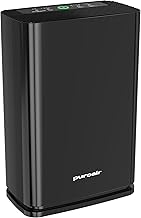
Airpura P714
A specialist, priced accordingly: an all-metal chassis with a deep chemical and germicidal treatment stage, built for households dealing with chronic dampness, post-remediation off-gassing, or genuine chemical sensitivity. If a musty smell has survived two other purifiers, this is the one that usually ends the problem.
LEVOIT Vital 200S-P
The smart pick for anyone who wants evidence rather than guesswork — the onboard air quality monitor lets you watch particulate levels climb when the HVAC kicks on or the closet door opens. At 27 dB in sleep mode with the display dimmed, it stays out of the way of a fragile sleeper.
Afloia Kilo
The quietest of the group at a claimed 22 dB, with a three-stage filter and a sensible 2/4/8-hour timer for people who prefer their purifier to wind down before dawn. The seven-color ambient light is optional; switch it off entirely, since even soft blue light at the bedside undermines the sleep quality you bought the machine to protect.
Frequently Asked Questions
Will an air purifier remove mold growing on my walls?
No. A purifier captures airborne spores and reduces odor, but colonies feeding on drywall, grout, or window condensation will keep releasing more. Fix the moisture source and remediate the growth; treat the purifier as ongoing air hygiene, not a cure.
What humidity level should I pair it with?
Hold your bedroom between 40 and 50 percent relative humidity. Above roughly 60 percent, mold and dust mites both thrive, and no amount of filtration will keep pace — a small dehumidifier alongside your purifier is often the higher-value purchase.
Should I leave it running all night?
Yes, and ideally all day too. Filtration is cumulative; a unit switched on at bedtime spends your first sleep cycle catching up. Continuous low-speed operation on sleep mode is both quieter and more effective than intermittent bursts on high.
Are ionizers or UV lamps worth seeking out?
Only from reputable manufacturers with verified ozone-free designs. Ozone is a respiratory irritant and a poor idea in a sealed sleeping space — mechanical filtration plus carbon does the work without the trade-off.
Final Thoughts
For most bedrooms, the COWAY Airmega Mighty2 is the sensible default: enough carbon to defeat mustiness, enough airflow to deliver real air changes, and a proven track record. Choose the LEVOIT Core 300-P if your room is compact and silence is the priority, or step up to the Airpura P714 when persistent damp, chemical off-gassing, or genuine sensitivity means good enough simply isn’t.