Key takeaways
- Verify duvet certification names, product scope and official label records while keeping warmth, sizing and care decisions separate.
What's inside
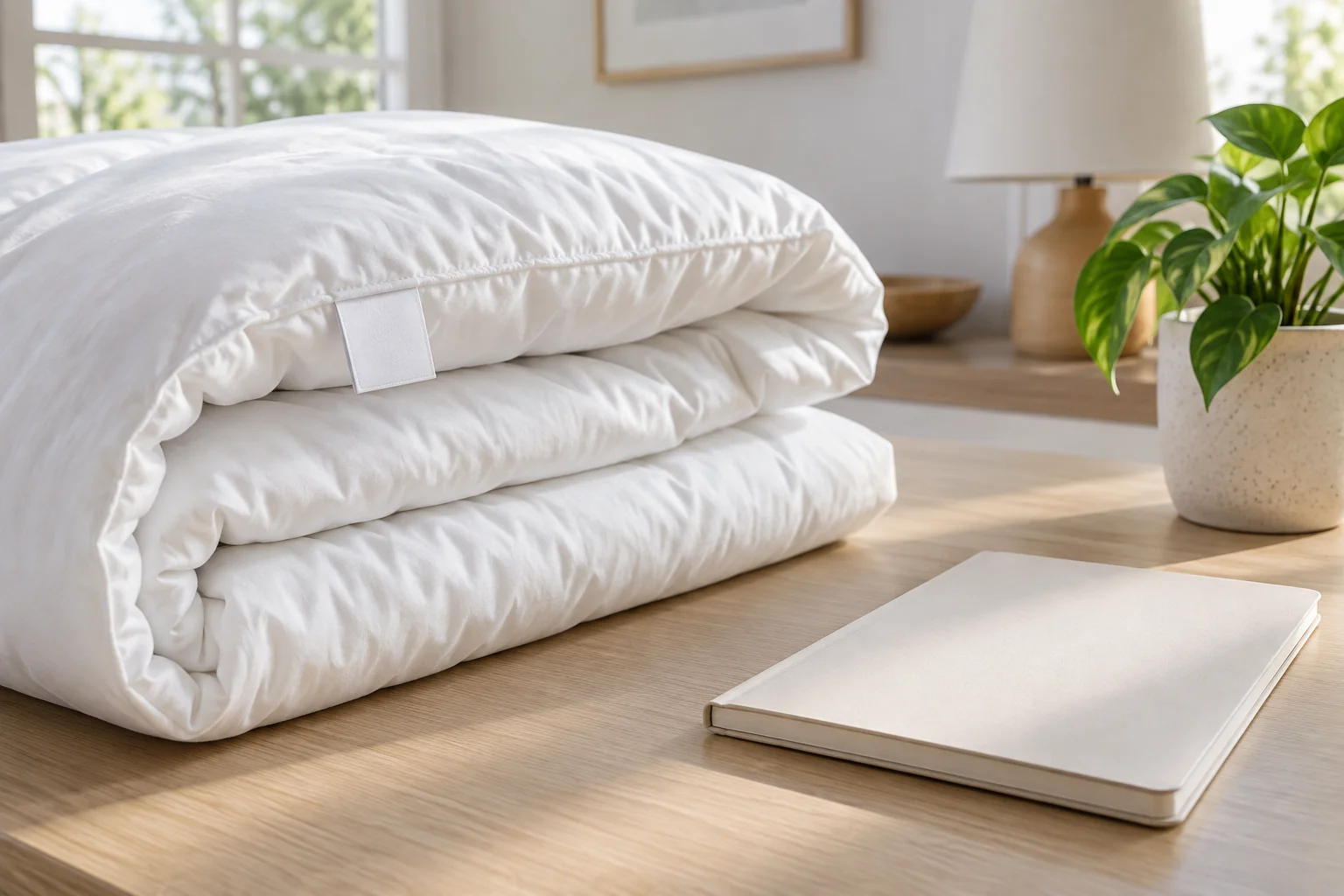
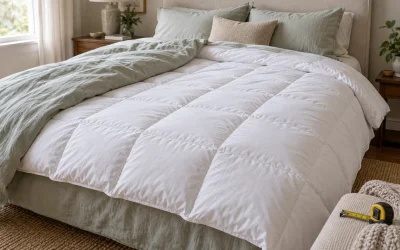
Check a duvet certification claim by identifying the exact standard, the product or material it covers, and the evidence connecting that claim to the duvet you are considering. A logo near a product photograph is a starting point for verification, not a complete description of every component or a promise about sleeping comfort.
Keep certification checks separate from size, fill weight, warmth and care. Those remain product-selection questions even when the certification information is clear.
Read the standard name in full
Write down the full claim rather than grouping every label under “eco certified.” Different standards address different questions. A certification for down sourcing and one for testing textile substances are not interchangeable, even if both appear on the same listing.
Textile Exchange describes the Responsible Down Standard, or RDS, as addressing duck and goose welfare and the chain of custody of certified down and feathers. Its criteria prohibit live plucking and force-feeding. That scope does not establish a duvet’s temperature rating, fill power or laundering method.
OEKO-TEX STANDARD 100 concerns textiles tested for harmful substances. OEKO-TEX describes certification from yarn through finished products and provides a label-verification route. Check which article is covered rather than assuming a statement about one fabric automatically describes an entire assembled duvet.
Connect the claim to the exact item
Record the brand, product name, item code, selected size and fill option. A listing may combine several variants under one page while its certification paragraph refers to a particular material. Save the relevant text and date so you can ask a precise question if the scope is unclear.
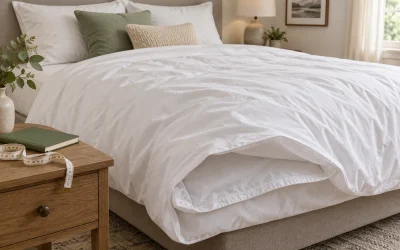
Distinguish the duvet insert from its removable cover. A certified cover does not, by itself, verify the insert inside it. Similarly, a statement about the cotton shell is narrower than a statement identifying the finished comforter. Preserve the wording until the supplier or certification record resolves the scope.
Do not interpret a missing number as proof of wrongdoing. It is an information gap. Ask the brand for the exact standard, certificate or label identifier where applicable, and confirmation of the variant covered. Keep the answer with the product record.
| Field | What to capture | Decision it supports |
|---|---|---|
| Product identity | Model, item code, size, fill option | Matches the claim to the intended purchase |
| Exact standard | Full name and stated version if supplied | Separates different certification purposes |
| Claimed scope | Fill, shell, cover or finished article | Prevents expanding a component claim |
| Identifier | Label or certificate details as provided | Enables an official check where available |
| Verification | Official result, date and scope | Records what was actually confirmed |
| Open question | Specific unresolved mismatch | Directs a useful supplier request |
| Separate specifications | Dimensions, fill, care and construction | Keeps comfort and fit decisions independent |
Use the official checker carefully
OEKO-TEX’s Label Check accepts a certificate or label number and notes that numbers are case sensitive. Enter the identifier exactly as supplied. Its guidance says to contact OEKO-TEX if the check returns no result. A typing error or unresolved result should remain unresolved rather than becoming either approval or an accusation.
Compare the returned description with the seller’s claim. If a record identifies a fabric while the listing describes a completed duvet, ask how the two are connected. Save a dated note of the scope you saw. Do not replace the wording with a broader phrase such as “everything is certified.”
Use the appropriate verification route for each standard. An OEKO-TEX number cannot verify an RDS claim. A company appearing in a directory also needs a clear connection to the specific product claim; a company name alone is not your completed product record.
Worked example: two claims, two answers
In this fictional comparison, Duvet A’s listing says its down is RDS certified and separately describes a cotton shell. Duvet B’s listing provides an OEKO-TEX STANDARD 100 label number but leaves the covered article unclear. The shopper records these as different claims rather than awarding both a generic “certified duvet” tick.
For A, the shopper requests confirmation that the RDS claim applies to the selected product and fill variant. For B, the official label result and supplier response are used to establish whether the covered article matches the intended purchase. Neither outcome answers which duvet is warmer or easier to wash.
The shopper then compares actual dimensions and care instructions in separate columns. No real product has been verified in this example, and no certificate number is invented. The exercise shows how a documented scope can improve a purchase decision without turning certification into a performance ranking.
Keep the final conclusion narrow
Write a conclusion that names the standard, item and scope actually confirmed. Leave unresolved claims visible. Avoid converting certification into “chemical-free,” “allergy-proof,” “organic throughout” or a medical benefit unless separate appropriate evidence supports the exact statement.
Keep the label and purchase record after delivery and compare them with the ordered variant. If the delivered information differs, ask the seller before relying on the original claim. A useful certification record explains what was checked, when it was checked and what questions remain.