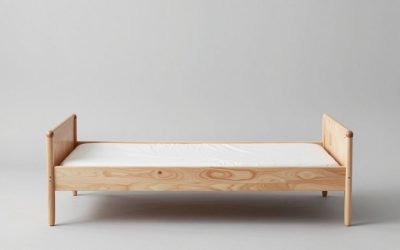
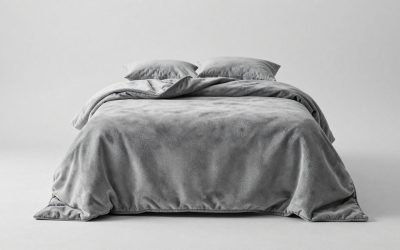
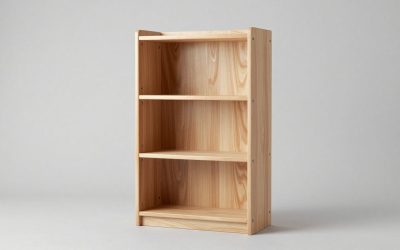
The best toddler beds for boys transitioning from a crib are low-profile frames with a deck height of 6 to 8 inches, partial guardrails on both sides, and a solid wood or metal construction that supports 50 to 75 pounds, with themed designs that make the change feel exciting rather than stressful.
Unlike a twin bed, a true toddler bed uses a standard crib mattress (28 x 52 inches), sits much closer to the floor to prevent serious falls, and is designed for the 18-month to 4-year window before a twin or twin XL. Choosing the right one comes down to height, guardrail coverage, material durability, and how the design fits your room and your child’s temperament.
Our top picks
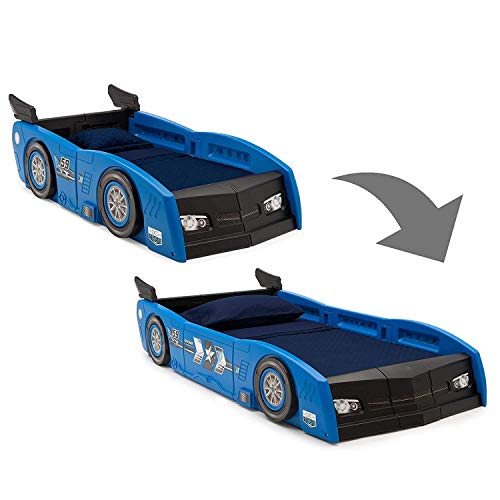
 Delta Children Spidey and His Amazing Friends
- Recommended for ages 15 months+ | Holds up…
- Colorful decals and 3D accents at the footboard,…
- Bed features two attached guardrails for your child’s…

As an Amazon Associate we earn from qualifying purchases at no extra cost to you.
What Makes a Toddler Bed Safe for the Crib-to-Bed Transition
Safety for this age is not just about sturdiness. It is about fall height, entrapment, and climbing risk. Look for these specs before you consider style:
- Deck height: 6-8 inches from floor to mattress support is ideal. Combined with a 5-6 inch crib mattress, the sleeping surface stays under 14 inches high, so a roll-out is a bump, not a fall.
- Guardrail height: At least 4-5 inches above the top of the mattress when the mattress is in place. Anything lower will not stop an active sleeper.
- Guardrail length: Partial rails that cover 60-70% of each side are safer than a single long rail. They prevent rolling while leaving a clear, low entry point so your child does not climb over a tall rail.
- Slat spacing and gaps: No gaps between guardrail, headboard, or footboard wider than 3.5 inches to prevent head entrapment. This is the same standard used for cribs.
- Weight limit: Most toddler beds are rated for 50 pounds, which is enough for the average child until age 4-5. Heavy-duty solid wood or metal frames may be rated to 75 pounds, which adds durability if an older sibling or parent sits to read bedtime stories.
Low-Profile Heights and Why They Matter
Low height is the single most important feature for a first bed. A child who is used to crib walls will roll, and a toddler bed assumes that will happen.
There are three common height ranges:
- Floor-level / Montessori style (2-4 inch deck height): Mattress sits almost on the floor. Lowest fall risk and easiest for toddlers to get in and out independently. Best for very active sleepers or Montessori-inspired rooms, but offers less under-bed storage and airflow.
- Standard low-profile (6-8 inch deck height): The sweet spot for most families. Low enough to be safe, high enough for a trundle or storage bin underneath. This is what brands like Delta Children, Dream On Me, and DaVinci commonly use.
- Elevated toddler bed (10-12 inch deck height): Closer to a twin bed height. Gives more storage clearance but increases fall distance and often requires a small step stool. Better for taller or older toddlers closer to age 3.
If your child is under 2.5 years or moves a lot in sleep, stay at 8 inches or lower.
Material and Construction Trade-Offs
The material determines weight, wobble, off-gassing, and how well the bed survives years of jumping and chewing.
| Material | Typical Weight Limit | Frame Weight | Durability | Best For | Watch Out For |
|---|---|---|---|---|---|
| Solid Hardwood (pine, poplar, birch) | 50-75 lbs | 30-45 lbs | Excellent – resists loosening, can be refinished | Daily use, families planning to reuse for siblings | Heavier to move; usually $180-$350; pine dents easier than birch |
| Engineered Wood (MDF / particleboard + veneer) | 50 lbs | 25-35 lbs | Good for 2-3 years, joints loosen faster | Budget and themed designs (race cars, houses) | Chips if chewed, swells with moisture; check for TSCA Title VI / CARB2 compliance for low formaldehyde |
| Metal (steel tube) | 60-75 lbs | 20-30 lbs | Excellent – strongest joints, no cracking | Small rooms, kids who climb/jump, easy cleaning | Can feel cold/hard, may need bumpers on guardrails; check weld quality |
| Solid Wood + Upholstered Headboard | 50 lbs | 35-50 lbs | Good, fabric wears first | Comfort and style-focused rooms | Fabric stains and absorbs drool; look for removable, washable covers |
For longevity, solid wood or metal with a simple bolt-together frame outlasts MDF designs with a lot of decorative cutouts. If you choose a themed bed made from engineered wood, confirm the bed uses metal mattress support slats or a solid platform rather than thin MDF slats, which sag first.
Themed Designs That Actually Work for Boys
Themed beds help with the emotional side of leaving the crib, but the best themes do not lock you into a short-lived obsession.
Most durable theme types:
- House-shaped frame: A simple A-frame or house silhouette in natural wood. Works with any bedding, feels playful, and does not go out of style in six months. Usually $200-$400 in solid pine.
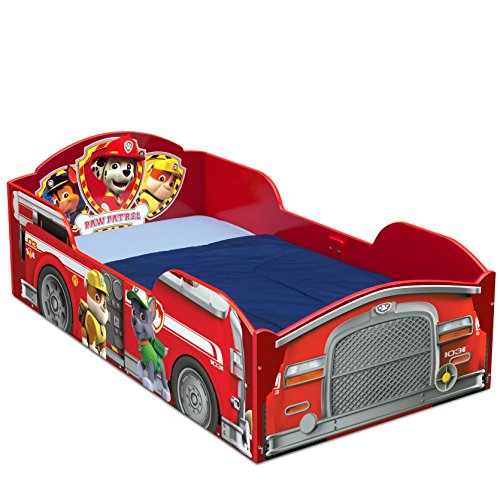
- Race car / truck: High engagement for vehicle lovers, but bulky. A typical race car toddler bed is 30-32 inches wide and 65-70 inches long with molded sides, so it needs more floor space than a basic rectangular frame.
- Construction / fire truck / tent canopy: Often lighter builds with fabric canopies. Fun for nighttime, but fabric tents trap heat and reduce visibility for parents. Choose one with mesh windows if you go this route.
- Classic low-profile with removable decals: A plain white, gray, or natural wood bed with interchangeable bedding (dinosaurs, space, superheroes). This gives you the theme without buying a new bed when interests change.
Avoid beds with tall, vertical headboards or decorative cutouts above 24 inches if your child is a climber. Those become ladders.
Will It Fit? Room Size and Clearance Measurements
A toddler bed itself is small at roughly 30 x 54 inches including the frame, but you need clear space around it for safety and daily use.
| Measurement | Recommended Clearance | Why It Matters |
|---|---|---|
| Side vs. wall | Leave at least 12-16 inches if bed touches wall on one side | Prevents entrapment between mattress and wall; allows sheet changes |
| Open side for entry/exit | 24-30 inches of clear floor space | Child can step down safely without tripping on toys or dressers |
| End of bed to opposite furniture | 30-36 inches | Allows you to kneel or sit for bedtime stories and changing |
| Under-bed clearance (if low-profile) | 2-6 inches | Enough for a flat storage bin, not enough for a child to get stuck underneath |
| Doorway width for moving bed | Standard 28-30 inch doorway | Most toddler beds are 30 inches wide assembled, so you must assemble inside the room |
In a typical 10×12 ft kids’ room (120 sq ft), a toddler bed uses only about 11 sq ft. Placing it with the headboard against the longest wall and leaving the open side toward the center of the room leaves room for a 3-drawer dresser (approx. 32 x 18 inches) and a small bookshelf while keeping a 3 ft wide play path. If you add a nightstand, choose a 16-inch wide model so you do not block the entry gap.
Decision Matrix: Pick by Your Situation
| Your Situation | Best Choice | Why |
|---|---|---|
| Small apartment or shared sibling room | Metal low-profile frame or open-sided Montessori floor bed | Narrow footprint, lighter to move, visually open so room feels larger |
| Very active sleeper or early transition (18-24 months) | Floor-level bed with guardrails on both sides, 4+ inches above mattress | Minimizes fall height; dual rails prevent rolling either direction |
| Renters who move often | Solid wood frame with simple bolt assembly, no large molded plastic | Survives disassembly/reassembly; fewer parts to crack in transit |
| Child loves a specific character/theme | Plain solid wood bed + themed crib-mattress bedding set | You can change the theme for $40-$80 in bedding instead of a $250 bed |
| Plan to reuse for second child | Solid hardwood from DaVinci, Dream On Me, or Delta Children | Higher weight limit and replaceable hardware extend life to 5+ years |
Assembly, Moving and What Wears Out First
Toddler beds are deceptively simple but plan for real-world setup. Box weight is usually 30-45 pounds for solid wood and 25-35 pounds for engineered wood or metal. Most ship flat-pack in one box about 38 x 28 x 7 inches, which fits through any doorway boxed but not assembled.
Assembly typically takes 30-60 minutes with a included Allen key and Phillips screwdriver. Metal frames are fastest with 8-12 bolts. Engineered wood themed beds can have 20+ small fasteners and cam locks. Tighten all bolts after two weeks of use, as wood compresses and bolts loosen, which is the number one source of wobble.
What wears first: guardrail bolts loosening, paint chipping on chew-prone rails, and MDF slat supports sagging. Choose a bed with metal center support bar or solid wood slats spaced under 3 inches apart. If the included slats are thin, a 0.75-inch bunkie board cut to 27.5 x 51.5 inches adds support without raising mattress height significantly.
For cleaning, solid wood and metal wipe clean. For upholstered rails or fabric tents, look for polyester covers rated at 30,000+ double rubs and a zipper for machine washing.
Budget Expectations in 2026
Most quality toddler beds fall into clear ranges without needing specific price promises: basic metal or simple wood frames usually $100-$200, solid wood with guardrails usually $180-$350, and large molded themed beds (race car, house with storage) usually $250-$450. A standard crib mattress you already own fits; if buying new, a Greenguard Gold certified foam or innerspring crib mattress usually $80-$180.
Final Checklist Before You Buy
- Confirm it uses a full-size crib mattress (28 x 52 inches) for a snug fit with no more than two fingers of gap at the sides.
- Check deck height is 8 inches or less for under-3-year-olds.
- Verify guardrails are included on both sides and extend above the mattress top.
- Look for JPMA certification or ASTM F1821 compliance on the listing or manual.
- Measure your room and tape the 30 x 54 inch footprint on the floor before ordering a bulky themed design.
A safe, low, sturdy bed with a simple theme you can update with bedding gives your son independence without sacrificing safety, and it leaves the room flexible for the twin bed that will come next in a year or two.