Key takeaways
- Usable pressure, not peak pressure: Automotive work sits comfortably between 1,200 and 2,000 PSI. “Max PSI” figures are measured at the pump under ideal conditions, so prioritise machines with adjustable output or a dial you can dial down for door jambs, trim, and older paint.
- Flow rate does the rinsing: GPM moves the dirt that PSI has loosened. Anything around 1.5–1.8 GPM will sheet water off a sedan quickly; sub-1.0 GPM units clean fine but stretch the rinse phase considerably.
- Foam delivery method: An onboard detergent tank is convenient for quick washes, while a dedicated foam cannon produces the thick, clinging lather needed for a genuine touchless pre-soak. If a cannon is included, check the bottle capacity and the mixing dial.
- Nozzle selection and wand build: You want a 40° white and 25° green tip for bodywork and a soap nozzle for foam. Steel wands with quick-connect fittings survive dropped-on-concrete reality far better than moulded plastic. Never point a 0° red tip at a panel.
- Reach, stability, and running noise: A 30-foot-plus hose lets you circle a vehicle without dragging the unit; anti-tipping designs stop it toppling when you pull. Electric motors run far quieter than petrol, which matters if you wash early on a Saturday in a shared driveway or apartment car park.
What's inside
Washing a car with the wrong machine is one of the few detailing mistakes that shows up permanently. Too much pressure at too close a range lifts wax, hazes single-stage paint, and forces water past window seals and mirror housings; too little flow and you spend twenty minutes chasing road film that never fully releases. The gap between “cleans a driveway” and “safe on clear coat” is wider than most spec sheets admit, and marketing numbers rarely explain which side of that line a machine falls on.
This guide narrows the field to electric and cordless units that suit vehicle work specifically: controllable pressure, enough flow to rinse foam cleanly, and soap delivery that actually clings. Below you’ll find the models worth shortlisting for 2026, followed by the criteria that separate a genuinely paint-safe washer from a repurposed patio tool.
As an Amazon Associate we earn from qualifying purchases.


How to Choose the Best Pressure Washer for Cars (2026)
- Usable pressure, not peak pressure: Automotive work sits comfortably between 1,200 and 2,000 PSI. “Max PSI” figures are measured at the pump under ideal conditions, so prioritise machines with adjustable output or a dial you can dial down for door jambs, trim, and older paint.
- Flow rate does the rinsing: GPM moves the dirt that PSI has loosened. Anything around 1.5–1.8 GPM will sheet water off a sedan quickly; sub-1.0 GPM units clean fine but stretch the rinse phase considerably.
- Foam delivery method: An onboard detergent tank is convenient for quick washes, while a dedicated foam cannon produces the thick, clinging lather needed for a genuine touchless pre-soak. If a cannon is included, check the bottle capacity and the mixing dial.
- Nozzle selection and wand build: You want a 40° white and 25° green tip for bodywork and a soap nozzle for foam. Steel wands with quick-connect fittings survive dropped-on-concrete reality far better than moulded plastic. Never point a 0° red tip at a panel.
- Reach, stability, and running noise: A 30-foot-plus hose lets you circle a vehicle without dragging the unit; anti-tipping designs stop it toppling when you pull. Electric motors run far quieter than petrol, which matters if you wash early on a Saturday in a shared driveway or apartment car park.
The Best Pressure Washers for Cars (2026), Reviewed
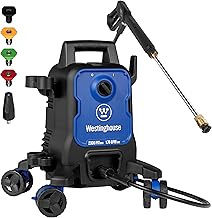
Westinghouse ePX3100
A well-judged balance for car owners: 2,300 max PSI paired with 1.76 GPM gives you plenty of rinsing muscle without the temptation to over-pressurise, and the five-nozzle set covers everything from foam to wheel arches. The anti-tipping base and steel wand make it feel considerably more solid than its footprint suggests.
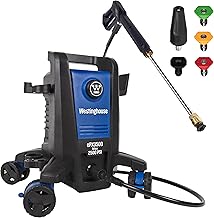
Westinghouse ePX3500
Effectively the ePX3100 with more headroom — 2,500 max PSI at the same 1.76 GPM — which is useful if the same machine also handles fence panels and block paving between washes. Keep it on the wider-angle tips for bodywork and treat the extra pressure as reserve capacity rather than the default setting.
Adjustable 5000PSI Electric Pressure Washer with 33FT Hose
Treat the headline PSI as optimistic marketing rather than measured output, but the practical package is strong: a genuinely adjustable nozzle, a foam cannon, and a 33-foot hose that lets you work all the way round an SUV without repositioning. The adjustability is what earns it a place here.
Quick-Connect Power Washer with Foam Cannon (Bright Green)
A straightforward, budget-conscious option built around four quick-connect tips and an included foam cannon, so you can move from pre-soak to rinse without hunting for adapters. Best suited to owners washing one or two vehicles regularly rather than heavy mixed-duty cleaning.
Cordless Pressure Washer with Two 21V 4.5Ah Batteries
The pragmatic choice when there’s no outdoor tap or power point — it draws from a bucket or water butt and the second battery roughly doubles your working window. Output is modest by design, which makes it forgiving on paint and ideal for wheels, bikes, and interim maintenance washes.
Frequently Asked Questions
What PSI is actually safe for car paint?
Stay between 1,200 and 1,900 PSI for panels, hold the nozzle 12–18 inches away, and use a 40° tip. Move closer or narrower only for wheels, tyres, and wheel arch liners, and keep spray away from chipped paint and aged rubber seals.
Do I need a foam cannon if the washer has a soap tank?
An onboard tank applies diluted detergent through the nozzle, which is fine for maintenance washes. A cannon aerates the mix into thick foam that dwells on the surface and lifts grit before you touch the paint — worth it if you care about swirl prevention.
Can a cordless model wash a whole car?
Yes, with realistic expectations. A 4.0–4.5Ah battery typically covers a pre-rinse and rinse on a mid-size car; two batteries make a full foam-and-rinse cycle comfortable. Cordless units excel at convenience, not at shifting baked-on winter grime.
Will pressure washing strip wax or a ceramic coating?
Properly applied ceramic coatings tolerate domestic pressure washing easily. Carnauba wax is more vulnerable to hot water and aggressive close-range spray, so keep your distance and use pH-neutral shampoo to preserve durability.
Final Thoughts
For most drivers, the Westinghouse ePX3100 is the sensible default — enough flow to rinse quickly, sensible pressure for clear coat, and hardware that lasts. Step up to the ePX3500 if the machine will double as your patio and fence cleaner, or choose the cordless 21V unit if you wash away from a tap and value portability over outright cleaning speed.