Key takeaways
- Prepare an upholstered headboard for a move with a condition record, protection map and mover handoff checklist tailored to its materials and fittings.
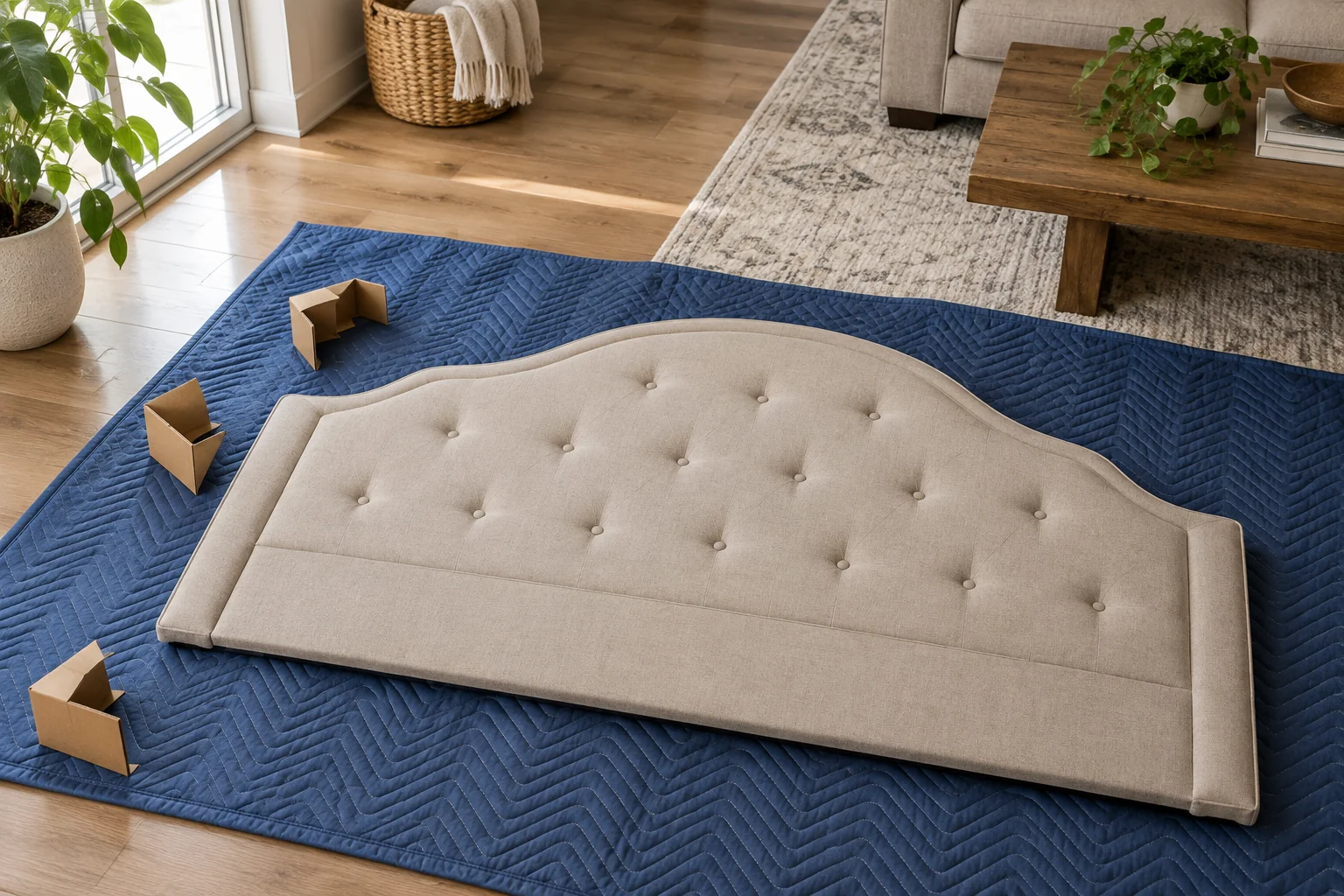
Pack an upholstered headboard by documenting its condition, identifying vulnerable surfaces and agreeing on compatible protection before it is detached or moved. The padded front, decorative edges and mounting hardware need different attention. A wrapping method that suits a plain wooden panel may mark delicate upholstery or put pressure on a raised detail.
This is a preparation and handoff guide, not a universal lifting or disassembly procedure. Use the headboard’s instructions and your mover’s requirements for its particular construction. Large, heavy, wall-mounted or unfamiliar assemblies may need professional handling rather than an improvised attempt to take them apart.
Identify the piece and its attachment
Record the maker, model, approximate purchase date and any available assembly guide. Photograph the complete headboard from the front, back and sides while it is still accessible. Note whether it attaches to a bed frame, wall brackets or another designed support; appearance alone does not establish how it should be removed.
Ask who is responsible for detachment and reassembly before moving day. If a mover is providing that service, send the model information and photographs in advance. Do not remove fabric backing, cut staples or dismantle upholstered sections to find a connection that the instructions do not identify.
Make a condition record before covering the surface
Take an overall photograph and close views of existing marks, loose trim, buttons, seams, corners and the lower attachment area. Use consistent lighting and include a separate note describing each issue. A photograph taken only after wrapping cannot distinguish an existing mark from a problem noticed at delivery.
Record the upholstery material and its care label where available. Avoid starting a wet-cleaning treatment immediately before packing unless the maker’s instructions and drying conditions support it. The piece should be dry before it is covered; wrapping is not a way to deal with an unresolved stain or damp fabric.
Map what needs protection
| Area | Record before packing | Protection question |
|---|---|---|
| Upholstered face | Material, seams and raised details | What clean covering can touch this surface? |
| Top and side edges | Trim, piping, wings or projecting corners | How will contact and concentrated pressure be avoided? |
| Rear surface | Brackets, backing and exposed fittings | Which fittings remain attached during transport? |
| Detached parts | Part names and original positions | Where will they travel without pressing into upholstery? |
| Whole package | Protected dimensions and handling limits | Who confirms the route and transport position? |
Keep this map with the condition photographs. It gives a mover more useful information than a general request to “wrap carefully,” especially when a headboard has wings, nailhead trim or a delicate pile fabric.
Choose layers with the material in mind
U-Haul’s large-furniture moving guidance recommends furniture pads or moving blankets to help protect upholstered items from scratches and dents, and discusses disassembly where possible. That general advice supports planning a protective layer; it does not certify every blanket, plastic film or packing method for your upholstery.
Ask the maker or mover what should touch the fabric, what goes outside it and how the layers should be secured. Use clean materials without grit or exposed sharp fasteners. Keep adhesive tape off the upholstery and finished trim. Secure outer protection without crushing buttons, piping or wing edges, and do not assume that tighter wrapping provides better protection.
If plastic or a fitted cover is proposed, clarify whether it is suitable for the material, journey and any storage interval. Transit protection and long-term storage are different decisions. Do not seal a damp piece or leave a material-specific question unanswered because the outer cover hides the surface.
A worked packing brief
In an illustrative move, a household records a headboard as 160 cm wide, 110 cm high and 12 cm deep before protection. It has two projecting side wings and removable frame brackets. The mover asks for photographs of the wings and confirms the removal procedure from the model’s instructions.
After compatible padding is applied, the mover measures the actual package again rather than assuming that the original dimensions still describe it. The household keeps detached brackets in a labelled container separate from the upholstered face. This example deliberately gives no blanket allowance or lifting position: those depend on the real piece and the agreed handling method.
Plan the route using the protected package
Share the wrapped dimensions with whoever handles doorways, stairs, lifts and vehicle loading. Include awkward turns and access restrictions at both addresses. Do not rely on a door’s nominal size or assume the headboard can be rotated freely once it enters a narrow landing.
Keep the route clear before handling starts. Let the competent handler choose suitable equipment and staffing for the actual weight and shape. Avoid resting the piece on a decorative wing, narrow trim or an unsupported padded edge merely because it is convenient during a pause.
Inspect at delivery before reassembly
Uncover the headboard in a suitable clear area and compare it with the condition record. Account for detached parts and note concerns before packaging is discarded. Follow the mover’s reporting process promptly if something has changed, without assuming that photographs alone guarantee any claim outcome.
Reassemble or remount only according to the correct instructions, with the specified parts and support. Keep the model information and final photographs with the moving record. The result should be a traceable handoff from one room to the next, with protection chosen for the actual headboard rather than a generic wrapping recipe.