Key takeaways
- Performance polyester or velvet: best for daily leaning; hides oil better than light linens.
- Linen and cotton blends: soft natural look but shows a darker “head mark” over time, especially in light colors.
- Faux leather: wipes clean, good for allergy sufferers, but cheaper PU can crack after several years.
- Bouclé: on trend, but hard to spot clean and pulls easily.
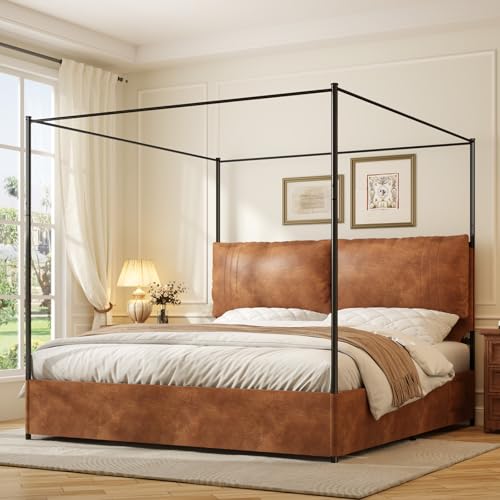
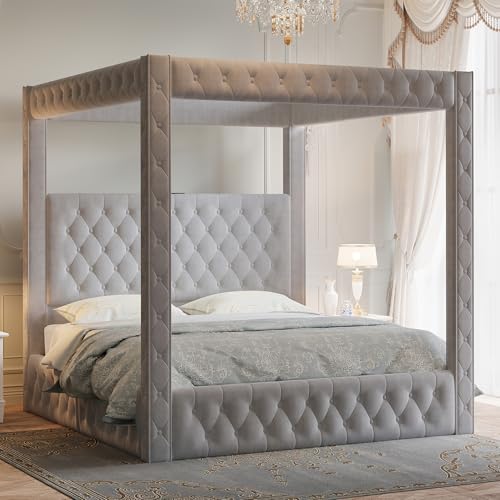
A four poster bed with an upholstered headboard pairs tall wood or metal corner posts with a padded fabric panel between the two head posts, giving you the drama of a poster bed with a soft backrest for reading in bed. The look works best in rooms with at least an 8 ft ceiling, and the main decisions are post height, how the padded panel is attached, and a fabric that tolerates being leaned on daily.
Our top picks


As an Amazon Associate we earn from qualifying purchases at no extra cost to you. Ratings are shown as listed on Amazon.
Why Combine Posts and Upholstery
Classic four poster beds have hard headboards: carved wood, slatted panels or metal spindles. They look striking but are uncomfortable to sit against. An upholstered panel fixes that while the posts keep the vertical, architectural frame. The combination is common in transitional, modern farmhouse and modern glam bedrooms, and it softens the visual weight of a tall bed in a mid-sized room.
Three Ways the Headboard Is Built
| Construction | How it works | Pros | Cons |
|---|---|---|---|
| Integrated panel | Padded panel is framed into the head posts at the factory or bolts into grooves | Cleanest look, no gaps, very sturdy | Fabric cannot be replaced easily |
| Inset slip-in panel | Upholstered board drops into channels between posts | Panel can be removed to recover or clean | Small gaps at sides; may rattle if loose |
| Separate headboard added to a poster frame | Standalone upholstered headboard mounted to wall or frame between posts | Lets you upgrade an existing bed | Must measure the inside post width exactly |
If you are adding a separate upholstered headboard to an existing four poster, measure the clear distance between the head posts at mattress height. A queen poster bed is commonly 62–66 inches between posts, while a standard queen headboard is about 61–64 inches wide, so fit is close. Leave 1/2 to 1 inch of clearance on each side so the panel can be installed without scraping the posts.
Post Height vs Ceiling Height
Posts are what make this bed, and they need breathing room above. A useful rule is at least 12 inches between post tops and the ceiling; 18–24 inches looks more relaxed.
| Ceiling height | Comfortable post height | Upholstered headboard height |
|---|---|---|
| 8 ft (96 in) | 72–80 in | 48–56 in |
| 9 ft (108 in) | 80–90 in | 54–62 in |
| 10 ft (120 in) | 84–96 in | 60–70 in |
| Vaulted or 11+ ft | 90 in and up, or canopy-style | 65 in and up |
The headboard panel usually rises to about two-thirds of post height. That ratio keeps the posts visible as a frame rather than letting the padded panel swallow them.
Room Fit
Poster beds add width and length because the posts sit outside the mattress. A queen four poster typically measures about 64–68 inches wide and 86–92 inches long; a king about 80–84 inches wide and the same length range. In a 12 x 12 ft room, a queen leaves 38–40 inches on each side when centered, plenty for 24 inch nightstands and a walkway. A king in that same room leaves roughly 30 inches a side, which still fits nightstands around 20 inches wide but feels fuller. For a bed with posts at the foot, allow 30–36 inches of walking space past the footboard so the posts do not catch your hip.
Fabric for a Headboard You Lean On
An upholstered headboard takes hair oils, skin contact and pressure from pillows. The fabric choice decides how quickly it looks worn.
- Performance polyester or velvet: best for daily leaning; hides oil better than light linens.
- Linen and cotton blends: soft natural look but shows a darker “head mark” over time, especially in light colors.
- Faux leather: wipes clean, good for allergy sufferers, but cheaper PU can crack after several years.
- Bouclé: on trend, but hard to spot clean and pulls easily.
Mid-tones such as warm gray, taupe, sage, navy or charcoal hide wear best. If you prefer ivory or cream, choose a removable slip-in panel or plan to use a headboard slipcover.
Matching Post Material to the Panel
| Posts | Upholstery that pairs well | Style result |
|---|---|---|
| Dark solid wood (walnut, espresso) | Cream linen, oatmeal weave | Traditional, warm |
| Light oak or natural ash | Sage, sand or white bouclé | Scandinavian, organic modern |
| Black metal | Charcoal velvet, gray performance weave | Modern, industrial |
| Brass or gold metal | Navy, emerald or blush velvet | Glam, hotel-inspired |
| Painted white wood | Ticking stripe, light blue linen | Coastal, cottage |
Sturdiness and Assembly
Tall posts amplify any looseness in the joints. Look for posts bolted to the rails with metal bed-rail hardware or bolts into threaded inserts, not just wood screws. Solid wood posts around 2.5–4 inches square resist sway better than thinner or hollow ones. Metal four posters are lighter to move but more prone to wobble if the frame lacks cross bracing or a center support leg.
Plan on 1.5–3 hours of assembly for two people; posts over 80 inches tall are awkward to stand up alone. A queen frame typically ships in two to four boxes, often 120–200 lb total for solid wood, and individual posts or rails can be about 80–90 inches long, so check hallway turns. Tighten all bolts again after the first two weeks, and if the bed creaks when you lean on the headboard, check the panel channels for gaps and add felt strips.
Canopy Options
Many four poster beds include top rails connecting the posts, which turns them into a canopy bed. With an upholstered headboard, a light canopy treatment works better than heavy drapes, which compete with the fabric panel. Sheer panels tied at the posts, or just the bare rails, keep the look clean. Without top rails, the bed reads as more modern.
What It Costs
Queen four poster beds with upholstered headboards usually run $500–$1,200 for metal or engineered wood frames, $1,200–$3,000 for solid wood with performance fabrics, and higher for designer and custom pieces. Spending more mostly buys thicker solid posts, better joinery and a removable or higher-grade headboard fabric, which are the factors that decide whether the bed stays tight and fresh-looking for a decade.