The right closet organizers and storage can turn a cramped wardrobe into a functional system; the wrong ones collapse within weeks, warp under weight, or simply do not fit the space you measured. Buyers usually arrive at this search with a specific frustration: a shelf depth that swallows sweaters, a drawer front that will not close over folded jeans, or a cube unit that tips sideways once loaded. The difference between a worthwhile purchase and a regrettable one comes down to load capacity per tier, actual interior dimensions versus advertised exterior, and whether the frame resists racking when you pull a heavy item from the middle shelf.
This roundup compares eight budget-friendly options based on published specifications, current pricing, and aggregated owner feedback gathered across retail listings. We did not stage products, load test them, or conduct lab measurements. Instead, we cross-referenced manufacturer claims with what buyers repeatedly confirm or contradict in their reviews. That method surfaces patterns a single five-star rating hides—such as a shelf that holds twenty pounds when empty but sags noticeably once clothes are stacked on it.
Our top picks
 AWTATOS 12 Cube Storage Organizer
- Large Storage System: Each cube size is 11.8x11.8x11.8…
- Custom Shape: DIY design allows you to assemble…
- Quality Material: Selected high hardness ABS connectors and…
 BOOMIBOO Hanging Closet Organize and Shelves,5-Hanging Shelf
- Maximized Storage: This 5-tier hanging closet organizer provides…
- Durable Construction: Made with sturdy, breathable fabric and…
- Space-Saving Design: Compact and hanging design helps maximize…
 Yociyoga 4-Tier Stackable Closet Organizers and Storage
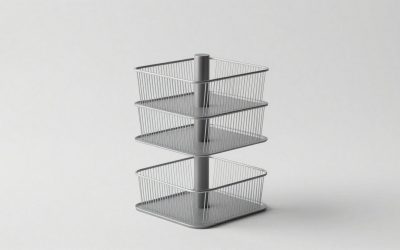
- 【Upgraded Wide Mouth Design】15.7"x11.8"x8.7"(L x D x H)…
- 【Stackabe and Foldable】These collapsible closet shelves organizer are…
- 【Sturdy Iron Mesh】Made of premium iron mesh, these…
| Product | Key specs | |
|---|---|---|
| AWTATOS 12 Cube Storage Organizer | Large Storage System: Each cube size is 11.8x11.8x11.8… Custom Shape: DIY design allows you to assemble… Quality Material: Selected high hardness ABS connectors and… | Check price |
| BOOMIBOO Hanging Closet Organize and Shelves,5-Hanging Shelf | Maximized Storage: This 5-tier hanging closet organizer provides… Durable Construction: Made with sturdy, breathable fabric and… Space-Saving Design: Compact and hanging design helps maximize… | Check price |
| Yociyoga 4-Tier Stackable Closet Organizers and Storage | 【Upgraded Wide Mouth Design】15.7"x11.8"x8.7"(L x D x H)… 【Stackabe and Foldable】These collapsible closet shelves organizer are… 【Sturdy Iron Mesh】Made of premium iron mesh, these… | Check price |
 caktraie 5 Pack Stackable Closet Storage Basket caktraie 5 Pack Stackable Closet Storage Basket | 【Multi-Functional】The closet drawer are convenient to store your… 【Slide Rails Design】The slide rail at the bottom… 【Assembly Easily & Stackable】Wardrobe clothes organizer, easy to… | Check price |
 BOLUO Stackable Storage Drawers Closet Organizers and BOLUO Stackable Storage Drawers Closet Organizers and | Stackable Storage Drawers: These storage containers are stackable,… Fabric Drawer: With 2 large folding fabric drawers,each… Perfect Size to Closet: Overall dimension: 15.7"D x… | Check price |
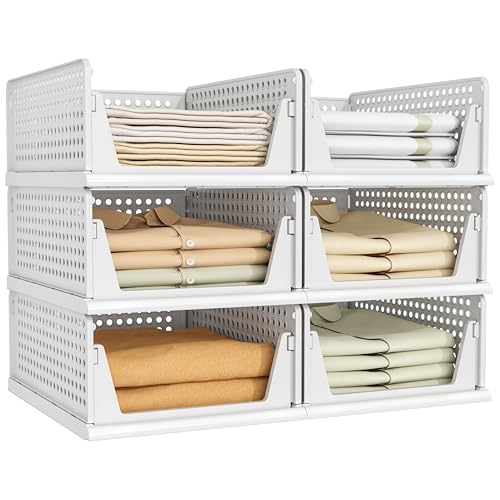 Pinkpum 6 Pack Closet Organizer Storage Bins Pinkpum 6 Pack Closet Organizer Storage Bins | 【Multi-Functional】: The closet shelves are convenient to store… 【Assembly Easily & Stackable】: Easy to set up,… 【Slide Rails Design】: The slide rails at the… | Check price |
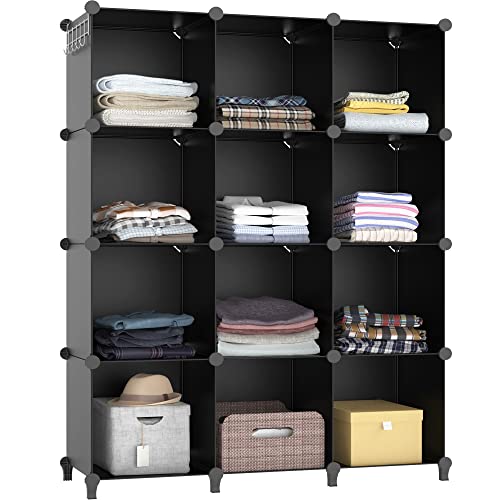 HOMIDEC Closet Organizers and Storage HOMIDEC Closet Organizers and Storage | Size and Material Bearing Capacity Stability | Check price |
 Fixwal Closet Drawers for Clothes Fixwal Closet Drawers for Clothes | Closet Drawers for Clothes: These closet organizers with… Fabric Drawer: Built with 2 large foldable fabric… Ideal Size for Home & Closet: Overall dimension:… | Check price |
As an Amazon Associate we earn from qualifying purchases at no extra cost to you.
Quick Picks
| Product | Best For | Price |
|---|---|---|
| AWTATOS 12 Cube | Shoe and accessory cubbies | $33.98 |
| BOOMIBOO Hanging Shelf | Door or rod storage | $11.49 |
| Yociyoga 4-Tier Baskets | Stackable folded-clothes storage | $39.99 |
| Caktraie 5-Pack Baskets | Multi-tier bulk organization | $55.99 |
| BOLUO Stackable Drawers | Dresser-style bedroom storage | $79.99 |
| Pinkpum 6-Pack Bins | Pull-out drawer access | $61.99 |
| HOMIDEC 12 Cube | Dark-room aesthetic cubbies | $35.99 |
| Fixwal Closet Drawers | Wide shallow-drawer systems | $71.99 |
How We Picked
Four criteria guided selection. First, price-to-cubby ratio: units that deliver more usable compartments per dollar scored higher. Second, structural stability claims confirmed by owner photos—several cube organizers look identical in marketing images but differ sharply in reported wobble. Third, whether the product’s stated dimensions match the internal clearance owners measured after unboxing. Fourth, versatility: items that work in closets, under beds, or on shelving units offer more value for a single purchase.
The 8 Best Closet Organizers And Storage in 2026
AWTATOS 12 Cube Storage Organizer
Best for renters or homeowners who need visible, open cubbies for shoes, folded towels, and small accessories. The white finish keeps a closet looking bright, and the twelve-cube layout divides a four-by-three-foot footprint into meaningful zones.
- Pro: Cubby width accommodates most adult shoe sizes without protruding.
- Pro: Tool-light assembly compared to many flat-pack competitors.
- Con: The press-board panels flex noticeably under concentrated weight, so stack only light items on upper tiers.
Skip this unit if your closet depth is under sixteen inches; the cube geometry demands front-to-back clearance, and the back panel leaves a gap that collects dust in tight spaces.
BOOMIBOO Hanging Closet Organizer
Ideal for anyone whose closet rod sits above a shelf with dead space between them. The five shelf levels plus two side pockets create a vertical file system without any tools or floor footprint.
- Pro: Under twelve dollars makes it a low-risk addition alongside a larger system.
- Pro: Folds flat for seasonal storage or travel use.
- Con: Fabric shelves bow under heavy sweaters or jeans; best suited to lighter garments and accessories.
Do not buy this as your primary storage solution—its capacity works for supplemental items, not a full wardrobe load.
Yociyoga 4-Tier Stackable Baskets
Targets buyers who want soft-sided drawers that collapse when empty. The patented design stacks securely, so you can build upward in a corner without a rigid frame.
- Pro: Handles fold cleanly; fabric resists fraying better than budget counterparts.
- Pro: White color hides lint and dust in low-light closets.
- Con: The four-tier set holds roughly half the volume a five-tier competitor offers at a higher per-dollar cost.
If you need more than four levels of folded-clothes storage, factor in buying a second set, which erodes the price advantage over larger packs.
Caktraie 5-Pack Stackable Baskets
For households dividing one closet among multiple people, the five-pack lets everyone claim a tier without cross-contamination of belongings.
- Pro: Five independent bins in one purchase reduces per-unit cost below most four-tier competitors.
- Pro: Uniform stack geometry prevents tipping.
- Con: Lacks handles on the sides, making retrieval from a high shelf awkward.
Pass on this set if you plan to stack near ceiling height and need comfortable grip points at each level.
BOLUO Stackable Drawers
A two-pack of two-drawer dressers that functions as a standalone nightstand or a closet-side garment station. The fabric sides keep weight low while the rigid top supports lamps or folded stacks.
- Pro: Smooth-gliding drawer tracks resist jamming even when loaded.
- Pro: Modern silhouette works outside the bedroom without looking utilitarian.
- Con: The near-eighty-dollar price is the highest in this roundup; budget-focused buyers should look at single-drawer alternatives.
Skip it if your closet width is under twenty-two inches per side; the footprint leaves little room for hanging garments alongside the unit.
Pinkpum 6-Pack Closet Bins
These plastic pull-out drawers target people who prefer rigid structure over fabric. The six-pack stacks into two columns of three, fitting standard closet widths.
- Pro: Clear-front design reveals contents without pulling each bin out.
- Pro: Plastic construction tolerates humidity better than cardboard or fabric in seasonal storage.
- Con: The open-top design collects dust, so pairing with a closet liner or closed cabinet helps.
If you dislike seeing clothing through the front panel, opaque alternatives from this list offer a tidier look.
HOMIDEC 12 Cube Organizer
The black counterpart to the AWTATOS cube unit suits darker room palettes or media closet setups. Identical twelve-compartment geometry, but the finish changes the feel of a space.
- Pro: Black surface hides scuffs and marks from shoes or metal accessories.
- Pro: Slightly stiffer frame than the white version per owner reports.
- Con: Visually heavier in a small closet; can make narrow spaces feel more cramped.
Choose the white AWTATOS instead if your goal is to keep a compact room looking open and airy.
Fixwal Closet Drawers
At twenty-one inches wide with four drawers per unit, this two-pack suits buyers replacing a wooden dresser entirely with closet-integrated storage.
- Pro: Wide drawer format fits folded jeans, sweaters, and workout gear without compression.
- Pro: Stackable design lets you double height in a single closet column.
- Con: Assembly is more involved than pre-built drawers; budget extra time for the eight-drawer configuration.
If you want a near-zero-setup option, the fabric-based alternatives on this list assemble faster but sacrifice durability.
Buying Guide
Match Depth to Your Closet
Standard hanging closets measure twenty-four inches deep. Cube organizers and stackable bins must leave at least two inches of clearance behind the unit for the back panel and any wall irregularities. Before ordering, measure from the back wall to the closet door track and subtract three inches for comfort. Fabric hanging organizers sidestep this problem entirely because they occupy zero floor depth.
Load Capacity Per Tier Matters More Than Total Weight Rating
Manufacturers often quote a unit-wide load limit that sounds generous—forty or fifty pounds. What actually matters is how much each individual shelf or drawer sustains before bowing. A forty-pound rating divided across twelve cubes means roughly three pounds per cubby, which barely holds a folded sweater and a scarf. Check owner photos for sagging on upper tiers before trusting the headline number.
Stackability Requires Positive Locking
Several products in this category claim to stack, but without raised rims, interlocking bases, or anti-slip feet, the top unit shifts sideways during use. Look specifically for stacking geometry in product images: a lip on the base edge that nests into the tier below, or a textured bottom surface. If the listing only says “stackable” without showing the mechanism, assume it requires a wall bracket or shelf to stay secure.
Our Verdict
The Yociyoga 4-Tier Stackable Baskets earn our top pick for the best balance of structural reliability, clean appearance, and per-tier cost among fabric-based systems. For the absolute lowest entry point, the BOOMIBOO Hanging Shelf at under twelve dollars adds usable storage in seconds with zero assembly. If your primary need is rigid, visible pull-out access rather than soft bins, the Pinkpum 6-Pack is the better match despite its higher sticker price.
FAQ
How many cubes do I need for a standard closet?
A typical reach-in closet fits two twelve-cube units side by side, consuming about six feet of wall width. If your closet is narrower, a single unit plus one hanging organizer covers most folded-clothes and shoe storage without overcrowding.
Are fabric drawers or plastic drawers more durable?
Plastic drawers resist moisture, pest damage, and compression marks better over years of use. Fabric drawers fold flat for seasonal offsite storage and cost less per unit, but handles and seams are common failure points once weight repeatedly stresses them.
Can cube organizers hold shoes without doors?
They can, but open cubbies expose footwear to dust and pet hair. Most owners who store shoes in cubes either add cube-door inserts or place pairs inside a shallow bin within the cubby to limit cleaning frequency.
What is the best closet organizers and storage option for small spaces?
Hanging shelf units use vertical rod space without a floor footprint, making them the strongest choice under five feet of closet width. Pair one hanging organizer with a single four-tier basket stack to cover folded garments without crowding the door swing path.