Key takeaways
- Species and natural oils: Western red cedar leads for outdoor use because its natural oils resist rot and insects without heavy chemical treatment. Acacia and eucalyptus are denser and heavier; fir and poplar are budget-friendly but need diligent sealing to avoid swelling and grain lift.
- Thermal behavior: Real wood stays close to ambient temperature, which is why it feels neutral on skin at dusk. Darker plastics and metals absorb afternoon heat and radiate it back — a small detail that decides whether an evening sit feels restful or restless.
- Recline angle and slat contour: Look for a seat that pitches back roughly 20–30 degrees with a contoured backrest. A back that’s too upright forces micro-adjustments; too flat and your lower back does the work. Neither supports the kind of settled stillness that precedes good sleep.
- Hardware and joinery: Stainless or coated hardware is non-negotiable — rust streaks are the first sign of a chair that will loosen within two seasons. Pre-assembled backs and seats also mean factory-set alignment rather than whatever you manage with an Allen key.
- Maintenance honesty: Untreated cedar silvers gracefully but wants an annual sealer if you prefer the warm tone. Faux-wood polymers ask for nothing but a hose. Choose based on the upkeep you’ll realistically do, not the upkeep you intend to do.
What's inside
Most people shop for an Adirondack chair the way they shop for a sofa — they look at the silhouette, the finish, the price. As someone who spends their working hours talking to people about rest, I’d argue that’s backwards. The chair that actually earns its keep is the one your nervous system trusts: the one whose slats hold body heat on a cool evening, whose recline angle lets your shoulders drop without your neck compensating, whose wood doesn’t creak and pull you back into alertness every time you shift. Outdoor seating is one of the few places where “winding down” happens by default, and the material under you decides whether that happens in five minutes or forty-five.
The wood question is where buyers get stuck, and for good reason — cedar, acacia, fir, poplar and modern faux-wood polymers all behave differently once weather, humidity and body weight enter the picture. This guide breaks down what each material actually does over a few seasons, which construction details matter for genuine comfort rather than showroom appeal, and how six well-reviewed 2026 options compare. My criteria are simple: does it stay stable, does it stay comfortable long enough for you to lose track of time, and does it survive a winter without becoming a chore.
As an Amazon Associate we earn from qualifying purchases.




🛒 Best Price Today on Amazon
Prime members get fast, free shipping on everything above, plus member-only deals. New members get a 30-day free trial — cancel anytime.
How to Choose the Right Wood for an Adirondack Chair (2026)
- Species and natural oils: Western red cedar leads for outdoor use because its natural oils resist rot and insects without heavy chemical treatment. Acacia and eucalyptus are denser and heavier; fir and poplar are budget-friendly but need diligent sealing to avoid swelling and grain lift.
- Thermal behavior: Real wood stays close to ambient temperature, which is why it feels neutral on skin at dusk. Darker plastics and metals absorb afternoon heat and radiate it back — a small detail that decides whether an evening sit feels restful or restless.
- Recline angle and slat contour: Look for a seat that pitches back roughly 20–30 degrees with a contoured backrest. A back that’s too upright forces micro-adjustments; too flat and your lower back does the work. Neither supports the kind of settled stillness that precedes good sleep.
- Hardware and joinery: Stainless or coated hardware is non-negotiable — rust streaks are the first sign of a chair that will loosen within two seasons. Pre-assembled backs and seats also mean factory-set alignment rather than whatever you manage with an Allen key.
- Maintenance honesty: Untreated cedar silvers gracefully but wants an annual sealer if you prefer the warm tone. Faux-wood polymers ask for nothing but a hose. Choose based on the upkeep you’ll realistically do, not the upkeep you intend to do.
The Best Adirondack Chairs Reviewed (2026)
Casafield Folding Cedar Adirondack Chair
Cedar remains the benchmark for outdoor comfort, and this folding version delivers the species’ best traits: light weight, stable dimensional behavior in humidity, and that faintly aromatic, skin-neutral surface that never feels clammy or scorching. Partial pre-assembly keeps the critical seat-and-back geometry consistent, and the fold-flat design suits patios that get repurposed seasonally.
Shine Company Westport Wooden Adirondack Chair
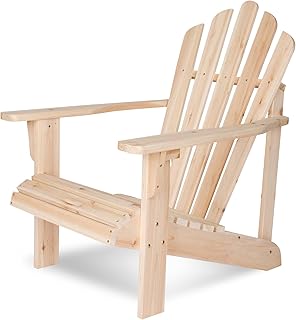
A faithful take on the original Westport profile, with the back and seat arriving pre-assembled so the recline is correct out of the box. The wide arms are genuinely functional — broad enough to rest a forearm and a mug without bracing, which matters more for relaxation than most buyers expect.
VINGLI Folding Adirondack Chair
The 350-pound rating here reflects heavier stock and tighter joinery, and you feel it as an absence of flex or creak when you settle in. Weather-resistant finishing plus a folding frame makes this a sensible pick for decks that see real seasonal swings.
Christopher Knight Home Hanlee Folding Adirondack Chair
The natural stain reads warmer than most budget finishes, and the fan-back geometry provides more upper-back contact than flat-slat competitors. Sold as a twin set, it’s an efficient way to create a proper two-person wind-down spot rather than a single chair nobody wants to give up.
Outdoor Folding Adirondack Chair Set of 2 (Light Brown)
Solid wood construction with a pre-assembled backrest and a contoured seat that supports the thighs without pressure at the knee crease. The light brown finish stays cooler in direct sun than darker stains, making this a strong choice for west-facing porches.
Frequently Asked Questions
Is cedar genuinely better than fir or poplar?
For longevity, yes — cedar’s natural oils resist decay and insects with minimal intervention. Fir and poplar can perform well, but they depend entirely on the coating holding up, which means resealing on schedule.
Does faux wood compromise comfort?
Modern polystyrene chairs like the Lifetime Faux-Wood model are structurally excellent and effectively maintenance-free. The tradeoff is thermal: they hold heat longer in full sun and feel cooler at night, so consider your primary sitting hours.
Can an outdoor chair actually help with sleep?
Indirectly, but meaningfully. Evening exposure to natural light and cooler air supports circadian timing, and a comfortable outdoor seat makes that habit sustainable — far more so than a chair you abandon after ten minutes.
How much upkeep should I plan for?
Budget an annual cleaning and reseal for real wood, plus a hardware check each spring. Store or cover chairs through hard winters and you’ll add years to the frame.
Final Thoughts
For most buyers, the Casafield cedar chair is the best balance of authentic material comfort and sane maintenance, while the Shine Company Westport is the pick if you want classic proportions dialed in from the factory. If upkeep is the deciding factor, the Lifetime Faux-Wood chair asks almost nothing of you and still delivers a properly reclined, weather-proof place to end the day.