Key takeaways
- For hot sleepers: choose a removable cotton percale, linen-blend, lyocell, or moisture-wicking cover. Avoid thick sherpa and dense plush fabric.
- For year-round use: choose a breathable weighted insert with two covers, such as a light cotton cover and a warmer winter cover.
- For sensitive skin: prioritize a smooth, tightly woven, machine-washable cover and check whether the filling is enclosed in a separate liner.
- For noise sensitivity: choose smaller compartments and soft fabric. Beads that slide through large pockets can make rustling sounds.
The best weighted blankets for adults are usually those weighing about 7–10% of your body weight, with breathable glass-bead or dense-knit filling, a washable cover, and dimensions suited to one sleeper rather than an oversized bedspread.
Our top picks

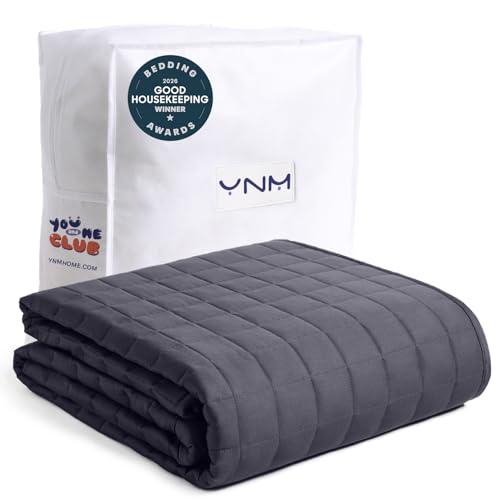


As an Amazon Associate we earn from qualifying purchases at no extra cost to you. Ratings are shown as listed on Amazon.
Quick picks by sleeping situation
| Situation | Best choice | Useful specifications | Why it works |
|---|---|---|---|
| Hot sleeper or warm bedroom | Cooling glass-bead blanket | 7–10 lb; cotton, bamboo-derived viscose, or moisture-wicking cover | Less bulky than many chunky-knit designs and easier to ventilate |
| Cold bedroom | Weighted blanket with removable fleece or sherpa cover | 10–15 lb; breathable inner layer with a separate warm cover | Lets you remove insulation without replacing the weighted insert |
| Small apartment | Single-person throw or twin-size blanket | 48–60 inches wide and 72–80 inches long | Uses less storage space and is easier to wash and dry |
| Restless sleeper | Evenly compartmentalized glass-bead blanket | 4–6 inch square or rectangular pockets with reinforced stitching | Reduces shifting and keeps pressure distributed across the body |
| Back or joint sensitivity | Lightweight, flexible weighted blanket | About 5–8% of body weight; avoid stiff, heavily overfilled construction | Provides gentle pressure without making it difficult to turn or exit bed |
How much should an adult weighted blanket weigh?
Start at approximately 7–10% of your body weight, but treat that figure as a starting range rather than a rule. A lighter blanket is often more comfortable for side sleepers, people who run warm, and anyone with limited mobility. A heavier option may suit a larger adult who prefers pronounced pressure, provided they can easily move it away.
| Adult body weight | Starting range | When to choose the lighter end | When the heavier end may suit |
|---|---|---|---|
| 100–130 lb | 7–12 lb | Side sleeper, hot sleeper, smaller frame | Strong preference for pressure and unrestricted movement |
| 130–170 lb | 9–15 lb | First-time user or sensitive joints | Cool room and preference for a substantial feel |
| 170–220 lb | 12–20 lb | Restless sleeper or limited mobility | Broad frame and experience with weighted bedding |
| 220–280 lb | 15–25 lb | Heat sensitivity or difficulty repositioning | Only if the blanket remains easy to remove and does not restrict breathing |
Do not choose a very heavy blanket simply because it is marketed for adults. You should be able to push it aside without assistance, change position, and uncover your face and chest immediately. Avoid weighted blankets for infants and young children. Adults with respiratory, circulatory, neuromuscular, or mobility conditions should ask a healthcare professional before using one.
Filling types: glass beads, plastic beads, sand, and knit weight
Glass beads
Fine glass beads are the most versatile choice for many adults. They create a relatively smooth drape, fit into small pockets, and usually add less bulk than plastic pellets. Look for double-stitched compartments and an inner liner that prevents beads from escaping if the outer cover is removed.
Polyester or plastic pellets
Plastic pellets are generally less expensive and can feel slightly more cushioned. They may occupy more space, making the blanket puffier and warmer. A high-quality liner matters because larger pellets can be more noticeable when you move.
Sand or mineral filling
Sand-filled designs can feel dense and conforming, but they require excellent sealing. Moisture can create clumping, and a damaged seam can make cleaning difficult. They are less convenient if you expect frequent machine washing.
Dense-knit or non-bead blankets
Chunky-knit and woven weighted blankets use the mass of yarn or layered fabric rather than loose filling. They drape naturally and avoid bead leakage, but they can be difficult to clean, less temperature-neutral, and surprisingly heavy to lift. They are better for people who value texture and appearance over compact storage.
Cover material and temperature regulation
The cover often has more impact on perceived warmth than the filling. Cotton percale feels crisp and comparatively breathable; cotton jersey feels softer and warmer. Bamboo-derived viscose or lyocell can feel cool and smooth, although its performance depends on the weave and blend rather than the fiber name alone. Polyester microfiber and fleece are soft and economical but tend to retain more heat.
- For hot sleepers: choose a removable cotton percale, linen-blend, lyocell, or moisture-wicking cover. Avoid thick sherpa and dense plush fabric.
- For year-round use: choose a breathable weighted insert with two covers, such as a light cotton cover and a warmer winter cover.
- For sensitive skin: prioritize a smooth, tightly woven, machine-washable cover and check whether the filling is enclosed in a separate liner.
- For noise sensitivity: choose smaller compartments and soft fabric. Beads that slide through large pockets can make rustling sounds.
Do not assume “cooling” means cold. A weighted blanket still adds insulation because it covers your body. Bedroom temperature, pajamas, mattress breathability, and the cover weave all affect whether you overheat.
Dimensions: choose for one person, not for the whole bed
A weighted blanket should generally cover your body from about the shoulders to the feet without creating a large overhang. A 48-by-72-inch throw suits many smaller adults and is easy to wash. A 60-by-80-inch twin-size blanket gives a taller adult more coverage. A queen-size weighted blanket, often around 80 by 90 inches, is useful for sharing only if both people want the same weight; otherwise, two individual blankets provide better control.
Oversized blankets can slide off the mattress, pull at the sleeper, and become awkward to launder. They also place more weight on the bed rather than directly on the user. For a 10-by-12-foot bedroom, a single-person 48-by-72-inch blanket is easier to fold on a chair or store in a 12-by-16-inch fabric bin than a queen-size version. Leave a clear path of at least 24 inches beside the bed so handling and removal are not obstructed by furniture.
Washability, construction, and everyday maintenance
For the easiest care, buy a blanket with a removable cover secured by a zipper or multiple ties. A cover that can be washed separately is especially valuable because it absorbs body oils and perspiration while the weighted insert may be too heavy for a household machine.
- Check the care label for the maximum machine capacity. A 10–15 lb blanket may be manageable in a large 4.5–5.0 cubic-foot washer, but a 20 lb blanket can overload smaller machines.
- Use a commercial front-loading washer if the manufacturer recommends it. Do not force a tightly packed blanket into a home machine.
- Air-dry or use low heat when permitted. High heat can damage synthetic covers, shrink cotton, or stress stitching.
- Inspect corner ties, zipper ends, and pocket seams first; these are the areas most likely to wear from repeated washing and pulling.
- Never carry a heavy blanket by one corner. Support it from underneath to reduce seam strain.
What to inspect before buying
Look for evenly filled pockets, reinforced perimeter stitching, secure attachment points for the cover, and an inner liner that contains the filling. Hold the blanket by its edges mentally as a durability test: a design that concentrates weight into a few long channels will shift more than one using small, evenly spaced compartments.
Also check the packed size and weight. A 15 lb blanket may be comfortable on the bed but awkward on stairs, through a narrow doorway, or into a top-loading washer. If storage is limited, select a single-person size that can be folded into a breathable container without compressing damp fabric.
Bottom line
For most adults, the best weighted blanket is a 7–10% body-weight model with evenly distributed glass beads, a breathable removable cover, and a single-person size. Choose lighter and cooler for a first blanket or warm sleeping environment; choose denser and warmer only when you can still move freely and wash the blanket safely. The right combination of weight, pocket construction, fabric, dimensions, and maintenance requirements matters more than the highest available weight.