The best posture correctors for men and women are adjustable figure-8 braces with breathable mesh or neoprene-blend straps, sized by chest circumference rather than S/M/L alone, because they provide shoulder support without restricting movement and fit discreetly under clothing for most body types.
Our top picks
 ComfyBrace Posture Corrector for Men and Women
- Say Hello to a Pain-Free Life- The Comfy…
- Innovative Design - Our proprietary design is orthopedically…
- Develop Correct Posture on your Own & Regain…
 Posture Corrector for Women and Men
- Stronger Support, Precise Pain Relief: Designed with 5…
- Posture That Builds Confidence: Designed for comfortable daily…
- Loved by thousands of users: the back brace…
 YTUIJGH Posture Corrector for Women & Men
- Superior Postural Support & Pain Relief:Experience unparalleled comfort…
- Fully Adjustable with 4 Reinforced Support Rods:Achieve a…
- Breathable & Lightweight for All-Day Comfort:Crafted from high-quality,…
| Product | Key specs | |
|---|---|---|
| ComfyBrace Posture Corrector for Men and Women | Say Hello to a Pain-Free Life- The Comfy… Innovative Design - Our proprietary design is orthopedically… Develop Correct Posture on your Own & Regain… | Check price |
| Posture Corrector for Women and Men | Stronger Support, Precise Pain Relief: Designed with 5… Posture That Builds Confidence: Designed for comfortable daily… Loved by thousands of users: the back brace… | Check price |
| YTUIJGH Posture Corrector for Women & Men | Superior Postural Support & Pain Relief:Experience unparalleled comfort… Fully Adjustable with 4 Reinforced Support Rods:Achieve a… Breathable & Lightweight for All-Day Comfort:Crafted from high-quality,… | Check price |
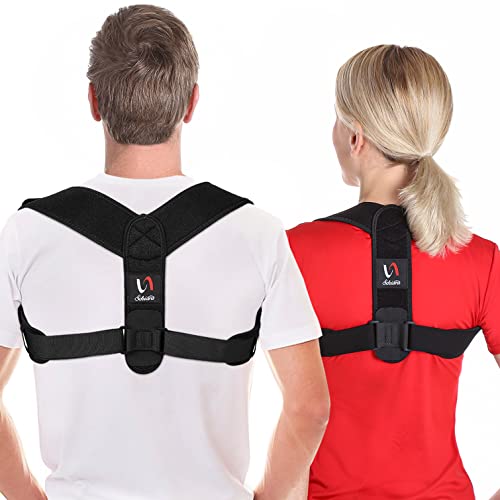 Schiara Posture Corrector for Men and Women Schiara Posture Corrector for Men and Women | Enjoy a much healthier life with a posture… Straighter posture lets you feel more confident: With… Invisible under clothes: This back brace can be… | Check price |
As an Amazon Associate we earn from qualifying purchases at no extra cost to you.
What Makes a Posture Corrector Work for Different Bodies
Posture correctors fail for two reasons: wrong size and wrong material for your wear time. A brace that helps for 30 minutes at a desk may chafe during an 8-hour shift, and a one-size design that fits a 38-inch chest will not anchor correctly on a 48-inch chest or a petite frame. Focus on these five criteria before choosing a style.
1. Adjustable Sizing: Chest Measurement Matters More Than Weight
Most quality correctors now use dual-axis adjustability: velcro shoulder straps plus a separate waist or mid-back strap. This matters because shoulder width and torso length vary independently by sex and height.
- How to measure: Wrap a soft tape around the fullest part of your chest, under the arms. That number is your brace size. Do not use t-shirt size.
- Ideal fit: You should be able to slide two fingers under the straps at the collarbone when standing tall. If you can fit a fist, it is too loose to cue posture; if you cannot fit one finger, it will dig and restrict breathing.
- Range to look for: Unisex figure-8 braces typically cover 28 to 50 inches with one model using 10 to 12 inches of velcro adjustment per strap. Models that list separate ranges (e.g., 28-36″, 37-44″, 45-52″) fit more accurately than true one-size options.
- For women: Look for front-closure or Y-back designs that avoid direct pressure across the bust, and shoulder straps that are 1.5 to 2 inches wide to prevent cutting into softer tissue. Racerback styles distribute pull across the upper back better for narrower shoulders.
- For men: Broader chests need 2 to 2.5-inch-wide straps and reinforced stitching at the center back cross. If your chest is over 46 inches, avoid elastic-only models that stretch out within weeks.
2. Brace Materials: Breathability vs. Support
Material determines how long you can comfortably wear the brace and how well it holds its shape after washing.
| Material / Construction | Thickness | Breathability | Support Level | Best For | Durability Note |
|---|---|---|---|---|---|
| Lightweight Mesh with Elastic Weave | 1.5 – 2.0 mm | High – air flows through perforations | Low to Medium | Office wear, discreet under shirts, warm climates | Retains shape for 6-12 months with daily use; hand wash needed |
| Neoprene Blend with Cotton Lining | 2.5 – 3.5 mm | Low to Medium – traps heat | Medium to High | Need for stronger pull, mild upper-back soreness | Holds tension longer but can cause sweating over 2+ hours |
| Posture-Corrector with Metal or Flexible Stays (boning) | 3.0 – 4.0 mm at stays | Medium | High | Significant slouching, long desk hours | Stays prevent rolling but add 3-4 oz weight; not invisible under fitted clothing |
| Posture-Trainer Device (e.g., electronic, like Upright GO type) | Adhesive pod, no straps | Very High | Cueing only, no mechanical pull | Training muscle memory, very discreet wear | Reusable adhesives last 2-4 weeks per pack; usually $70-$100 for device |
For all-day wearability in 2026, breathable mesh with elastic is the most versatile. Neoprene is better if you need a firmer reminder and do not plan to wear it for more than 1-2 hours at a time. Avoid 100% elastic without lining if you have sensitive skin; it tends to cause friction at the underarms after 60-90 minutes.
3. Shoulder Support and Back Coverage
Correctors range from simple shoulder loops to full upper-back panels.
- Figure-8 (shoulder-only): Pulls shoulders back from the front. Lightest and most discreet, takes up about 4×6 inches on your back. Good for posture cueing if your main issue is rounded shoulders from desk work.
- Figure-8 with mid-back panel: Adds a 7×9 inch stabilizing panel between shoulder blades. Prevents straps from digging into the spine and reduces riding up.
- Full back brace with lumbar support: Extends to the lower back (12-16 inches long). Provides posture plus lower-back stability but is visible under clothing and too warm for summer wear.
If your slouch comes from the upper back and neck, a standard figure-8 is enough. If you also collapse through the mid-back when sitting, choose a model with a vertical back bar or panel.
4. Discreet Wearability and Comfort
Discreet wear comes down to three measurements: strap width, overall bulk under clothing, and color.
- Strap profile: Straps under 2 inches wide disappear under a collared shirt or sweater; over 2.5 inches will show under fitted t-shirts.
- Total weight: Most mesh braces weigh 4 to 7 oz. Anything over 9 oz feels bulky by hour three.
- Edge finishing: Look for soft bound edges or silicone trim. Raw-cut neoprene leaves red marks at the shoulder after 45 minutes.
- Color: Nude/beige blends under light clothing; black is less visible under dark workwear. White shows through quickly with sweat.
Comfort rule: A corrector should feel like a gentle reminder to roll your shoulders back and lift your chest, not like it is forcing you into position. If you feel numbness, tingling, or have to shrug to breathe, loosen it or size up.
Decision Matrix: Choose by Your Situation
Use this to match your daily reality to the right type, rather than browsing by gender alone.
| Your Situation | Best Corrector Type | Why It Fits | Wear Time to Start |
|---|---|---|---|
| Small apartment desk job, 6-8 hours sitting | Breathable mesh figure-8 with mid-back panel | Low profile for chairs with mesh backs, prevents shoulder rounding without lumbar bulk | 20-30 minutes, 2-3x per day, add 10 minutes each week |
| Active or on your feet, need movement | Light elastic figure-8 without stays | Allows arm rotation for lifting, carrying; stays would restrict | 15 minutes during tasks that trigger slouching |
| Kids and pets at home, frequent bending | Front-closure, adjustable Y-back | Easy to put on and take off alone, stays in place when bending | 30 minutes during housework or homework help |
| Renter or hot climate, no AC, need breathability | Perforated mesh with cotton lining | Reduces sweat buildup; neoprene would overheat | 30-45 minutes max before break |
| History of upper-back stiffness or mild pain | Neoprene-blend with flexible stays | Stronger cueing, holds thoracic extension longer | 15-20 minutes, consult clinician if pain persists |
| Want invisible under work clothes | Electronic posture trainer or ultra-thin mesh (1.5mm) | No visible straps; vibration cue instead of pull | All day for trainers, 1 hour for thin mesh |
Best Picks by Body Type and Use Case
Price ranges in 2026 are usually $18 to $45 for basic mesh figure-8 braces, $35 to $75 for reinforced models with stays and panels, and $70 to $120 for electronic posture trainers. Unisex models now dominate; dedicated men’s and women’s cuts differ mainly in chest shaping and strap angle, not function.
Best for Most Men and Women: Adjustable Mesh Figure-8 with Back Panel
This is the default recommendation for different body types because the mid-back panel anchors the brace regardless of chest size, and the mesh keeps heat down. Look for models listing chest coverage from 30 to 48 inches with at least 11 inches of velcro range, and a panel width of 7 to 8 inches. It works for 5’0″ to 6’2″ frames because the shoulder loops adjust independently of the center ring height. Expect discreet wear under a loose button-down or hoodie, but it will show under a fitted tee.
Best for Petite and Narrow Frames: Front-Closure Y-Back
Women under 5’4″ or men with a chest under 34 inches often find standard figure-8 braces gap at the back. A Y-back with a front velcro closure sits higher between the shoulder blades and shortens the effective strap length by 2 to 3 inches, so it actually pulls instead of hanging. Choose one with 1.5-inch straps and a total length under 14 inches from neck to lower strap anchor to avoid bunching at the waist.
Best for Large and Tall Builds: Reinforced Wide-Strap Brace
For chests 44 to 52 inches or heights over 6’0″, wide 2.25 to 2.5-inch elastic straps with double-stitched cross points prevent the brace from slicing into the trapezius. Models with a 9 to 10-inch tall back panel distribute load better and resist twisting when you reach overhead. Check that the velcro contact area is at least 4×2 inches per strap; smaller patches slip under higher tension.
Best for Discreet Office Wear: Ultra-Thin or Electronic Trainer
If invisibility matters more than strong pull, two options work. An ultra-thin 1.5 mm mesh corrector in beige is undetectable under a dress shirt at a normal viewing distance of 2 to 3 feet. An adhesive posture trainer type device, worn on the upper back, has no straps at all and vibrates when you slouch. Trainers are better for building long-term habit, while thin braces are better if you want immediate physical support during long meetings.
Fit and Durability Realities Most Listings Skip
Measurements that determine whether a brace will be comfortable for months, not just minutes:
- Seat and desk clearance: If you use a desk chair with a high back, a brace with a rigid stay that extends 4+ inches below the shoulder line will push against the chair and shift upward. Measure from the top of your shoulder to the chair’s lumbar bulge; if it is under 12 inches, choose a stay-free model.
- Range of motion: With a proper fit, you should still be able to raise both arms overhead without the brace riding up more than 1 inch. If it rides higher, the chest sizing is too small or the center ring sits too low.
- Washing and wear timeline: Elastic fibers lose about 15-20% of tension after 60 washes. Hand wash cold and air dry to double lifespan. The first failure point is usually the velcro, which collects lint and loses grip after 4 to 6 months of daily use. Replace when straps no longer hold without overlapping by at least 1 inch.
- Skin and circulation: Do not wear over open skin for more than 2 hours without a thin undershirt layer. Red indentations that fade within 15 minutes are normal; marks lasting over 30 minutes mean it is too tight.
Start with 15 to 30 minute sessions twice daily rather than all-day use. Posture correctors are training tools, not permanent supports. Pair wear with 2 to 3 minutes of chest-opening stretches and mid-back strengthening, such as wall slides or band pull-aparts, to build the muscle endurance that holds posture when the brace is off. If you have diagnosed scoliosis, herniated discs, or post-surgical restrictions, check with a physical therapist before using a brace with stays.
Frequently Asked Questions
How long until I see a difference?
Most people notice they catch themselves slouching less after 2 to 3 weeks of consistent 30-minute sessions. The brace does not permanently change alignment on its own; it teaches awareness that you then maintain with muscle strength.
Can men and women share the same posture corrector?
Yes, if the chest measurement overlaps. Unisex figure-8 braces fit both when sized correctly. Women may prefer front-closure designs for bust comfort, and men may need wider straps for broader shoulders, but the mechanics are identical.
Will it fix forward head posture?
A shoulder brace helps indirectly by aligning the upper back, which reduces neck compensation, but it does not pull the head back. For forward head position, combine bracing with chin tucks and monitor height adjustment so your eyes are level with the top third of the screen.