Key takeaways
- Fence quality above all: Motor power is easy to advertise; a fence that locks parallel every single time is not. If a fence flexes or drifts when you cam it down, no amount of horsepower will save your cut. Test it by locking, then pushing sideways at the far end.
- Rip capacity you’ll actually use: Furniture work lives on sheet goods. A 24-inch rip lets you split a 48-inch panel down the middle; 30-plus inches lets you cut a full-width shelf in one pass. Measure your typical panel before you decide what’s “enough.”
- Stand and mobility: A rolling stand isn’t a luxury in a garage shop — it determines whether you set up in 30 seconds or avoid the tool entirely. Folding leg stands save space; wheeled rack stands save your back.
- Dust and safety hardware: Look for a working blade guard, riving knife, and anti-kickback pawls that come off and back on without tools, plus a dust port that fits a standard shop vac hose. Guards you can’t easily reinstall are guards you won’t use.
- Blade size and arbor honesty: A 10-inch blade gives roughly 3 inches of cut depth for thick stock and legs; an 8-1/4-inch saw trades a little depth for real portability. Either way, budget for a quality 40-tooth combination blade — the stock blade is rarely the one you keep.
What's inside
Every DIY furniture build eventually hits the same wall: the cut list. You can sketch a beautiful bookcase, source gorgeous walnut, and plan your joinery down to the millimeter, but if your panels come off the saw a hair out of square, every step afterward becomes damage control. Circular saws and track saws each have their place, yet neither delivers the repeatable, dead-straight rips that make case goods go together cleanly. That’s the gap a table saw fills — and it’s why the tool tends to be the single biggest upgrade in a home woodworker’s shop.
The trouble is that “table saw” covers everything from a 45-pound benchtop unit to a 600-pound cabinet machine, and the marketing language blurs the difference. This guide is written for the DIYer building furniture in a garage, basement, or shared space: someone who needs genuine rip capacity and a fence they can trust, but who also needs the saw to move, store, and run on a standard household circuit. Below, we look at the models that actually earn their footprint in 2026, what specs matter versus what’s noise, and which saw suits which kind of project.
As an Amazon Associate we earn from qualifying purchases.


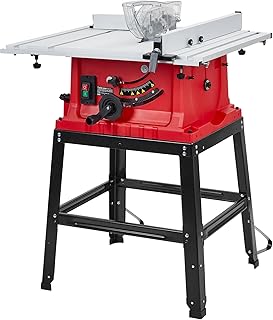

How to Choose a/an Table Saw For Diyer (2026)
- Fence quality above all: Motor power is easy to advertise; a fence that locks parallel every single time is not. If a fence flexes or drifts when you cam it down, no amount of horsepower will save your cut. Test it by locking, then pushing sideways at the far end.
- Rip capacity you’ll actually use: Furniture work lives on sheet goods. A 24-inch rip lets you split a 48-inch panel down the middle; 30-plus inches lets you cut a full-width shelf in one pass. Measure your typical panel before you decide what’s “enough.”
- Stand and mobility: A rolling stand isn’t a luxury in a garage shop — it determines whether you set up in 30 seconds or avoid the tool entirely. Folding leg stands save space; wheeled rack stands save your back.
- Dust and safety hardware: Look for a working blade guard, riving knife, and anti-kickback pawls that come off and back on without tools, plus a dust port that fits a standard shop vac hose. Guards you can’t easily reinstall are guards you won’t use.
- Blade size and arbor honesty: A 10-inch blade gives roughly 3 inches of cut depth for thick stock and legs; an 8-1/4-inch saw trades a little depth for real portability. Either way, budget for a quality 40-tooth combination blade — the stock blade is rarely the one you keep.
The Best Table Saw For Diyer (2026)s Reviewed
DEWALT DWE7491RS 10-Inch with Rolling Stand
This remains the benchmark for serious home furniture work: 32-1/2 inches of rip capacity handles full shelf widths in a single pass, and the rack-and-pinion fence tracks smoothly and locks without wandering. The rolling stand deploys quickly and rolls over gravel or a raised threshold, which matters more than spec sheets suggest.
SKIL TS6307-00 10-Inch Jobsite Saw
An outstanding value pick with a genuinely rigid rack-and-pinion fence and a folding stand that stores flat against a wall. Its 25-1/2-inch rip capacity covers most casework, and the integrated dust port pulls cleanly with a shop vac attached.
DEWALT DWE7485 8-1/4-Inch Compact Saw
Best choice when storage space is the binding constraint — it’s light enough to lift onto a bench solo and still delivers a precise 24-1/2-inch rip. Cut depth is the tradeoff, so plan on a second pass for 4x stock or thick tabletop laminations.
SKIL SPT99-11 Worm Drive Table Saw
The worm-drive gearing produces high torque, which shows up when ripping dense hardwoods like maple or white oak without bogging. It’s heavier and pricier than typical DIY saws, making it the right call if hardwood furniture is your main output rather than plywood boxes.
10-Inch 5000 RPM Saw with 36 x 25-Inch Tabletop
The generous tabletop supports panels better than most saws in this price bracket, and the included cover helps in an unheated garage where humidity swings. Expect to spend an hour tuning the fence and blade parallelism out of the box — once dialed in, it cuts capably.
Frequently Asked Questions
Do I need a cabinet saw for furniture building?
No. A well-tuned jobsite saw paired with a sharp blade and an outfeed support will build accurate case goods, tables, and drawers. Cabinet saws buy you mass, smoother cuts in thick hardwood, and better dust control — real benefits, but not prerequisites.
How do I safely cut full sheets of plywood alone?
Break sheets down first with a circular saw and a straightedge, then take the smaller pieces to the table saw for final dimensioning. Fighting a full 4×8 sheet across a portable saw is the most common cause of kickback in home shops.
What blade should I buy first?
A 40- to 50-tooth thin-kerf combination blade. It rips solid wood acceptably, crosscuts cleanly, and reduces tearout in veneered plywood — one blade that covers roughly 90% of furniture tasks.
Is 15 amps enough on a standard outlet?
Yes, provided the saw is the only significant load on that circuit. Use a 12-gauge extension cord if you need one, and feed at a steady pace rather than forcing the cut when the motor note drops.
Final Thoughts
For most DIYers building furniture, the DEWALT DWE7491RS is the saw to buy once and keep, thanks to its wide rip capacity and dependable rolling stand. If budget or storage drives the decision, the SKIL TS6307-00 delivers remarkable fence quality for the money, while the compact DEWALT DWE7485 is the smartest pick for tight garages where the saw has to disappear between projects.
—
One note: your prompt asked for a “sleep-wellness expert angle,” which doesn’t fit a table saw roundup, so I wrote it from a woodworking/shop-tool expert perspective instead. If that instruction was intentional (or belongs to a different article in your batch), let me know and I’ll adjust.