Key takeaways
- Match thickness to your sleeper: Under 4 inches suits occasional guests and floor use; 6 to 8 inches handles a few nights a week; 10 inches is the practical minimum for someone sleeping on it every night, especially side sleepers who need shoulder and hip clearance.
- Know your core: Pocket coils give independent support and the best long-term resilience. Bonnell-style springs are firmer and budget-friendly. All-foam is lightest and folds easiest, but density matters more than depth — low-density foam is what creates that dreaded body impression.
- Confirm frame fit before you order: Bi-fold frames need a mattress that hinges cleanly. Measure your frame’s interior deck, and remember that most listings are mattress-only. A 6-inch pad on an 8-inch-rated frame will bunch at the hinge.
- Plan for heat and humidity: Foam sleeps warmer than coils, and floor mattresses trap moisture underneath. Choose removable, washable covers, and air or flip a floor futon weekly to prevent mildew — a small habit that dramatically extends lifespan.
- Look for foam certification: CertiPUR-US indicates the foam has been tested for emissions and content. Pair that with a two- to three-day off-gassing window in a ventilated room before the first night’s sleep.
Futon mattresses occupy an unusual place in the sleep world: they’re asked to be a sofa by day, a bed by night, and often a storage-friendly slab that disappears into a closet in between. That triple duty is exactly why so many buyers end up disappointed. A pad that feels plush in the showroom compresses into a pancake after six weeks of nightly folding, and a mattress firm enough to survive a metal frame can leave a side sleeper’s shoulder aching by 3 a.m. The failure point is rarely the fabric or the color — it’s the core, and how well that core resists the mechanical stress of repeated bending.
As a sleep-wellness consultant, I evaluate futons on four things: spinal support at the hip and shoulder, thickness relative to the surface beneath it, breathability (compressed foam traps heat far more than an innerspring), and how gracefully the mattress handles being folded, rolled, or slept on directly on the floor. Below I’ve grouped six well-reviewed 2026 options into two families — frame-style futons meant for bi-fold sofa beds, and Japanese-style floor mattresses meant for tatami, hardwood, or low platforms — so you can match the build to how you’ll actually use it.
Our top picks


As an Amazon Associate we earn from qualifying purchases at no extra cost to you. Ratings are shown as listed on Amazon.
🛒 Best Price Today on Amazon
Prime members get fast, free shipping on everything above, plus member-only deals. New members get a 30-day free trial — cancel anytime.
How to Choose a Futon Mattress in 2026
- Match thickness to your sleeper: Under 4 inches suits occasional guests and floor use; 6 to 8 inches handles a few nights a week; 10 inches is the practical minimum for someone sleeping on it every night, especially side sleepers who need shoulder and hip clearance.
- Know your core: Pocket coils give independent support and the best long-term resilience. Bonnell-style springs are firmer and budget-friendly. All-foam is lightest and folds easiest, but density matters more than depth — low-density foam is what creates that dreaded body impression.
- Confirm frame fit before you order: Bi-fold frames need a mattress that hinges cleanly. Measure your frame’s interior deck, and remember that most listings are mattress-only. A 6-inch pad on an 8-inch-rated frame will bunch at the hinge.
- Plan for heat and humidity: Foam sleeps warmer than coils, and floor mattresses trap moisture underneath. Choose removable, washable covers, and air or flip a floor futon weekly to prevent mildew — a small habit that dramatically extends lifespan.
- Look for foam certification: CertiPUR-US indicates the foam has been tested for emissions and content. Pair that with a two- to three-day off-gassing window in a ventilated room before the first night’s sleep.
The Best Futon Mattresses of 2026, Reviewed
Royal Sleep Products 10″ Pocket Coil Futon
This is the closest thing on the list to a genuine everyday bed: individually wrapped coils reduce motion transfer and keep the surface from collapsing at the hinge, and the CertiPUR-certified comfort layers give real pressure relief at the shoulder. Best choice if the futon is someone’s primary mattress rather than an overflow option.
Kodiak Furniture 8″ Spring Futon
A well-executed traditional build — springs for support, linen upholstery that breathes better than most synthetic covers, and enough loft to feel like furniture in sofa mode. It reads firm out of the box and softens modestly, making it a strong pick for back sleepers and guest rooms that see regular use.
Jamdok 6″ Gel Memory Foam Futon
The gel-infused foam and quilted pillow-top cover deliver noticeably better contouring than a plain foam slab, and the removable cover is a genuine hygiene advantage. At 6 inches it’s best on a supportive frame deck rather than a slatted or sagging base.
MAXYOYO 8″ Tufted Foldable Futon
Tufting is the quiet hero here: it anchors the fill so the mattress resists shifting and lumping through repeated folds. Carry handles and a genuinely floor-ready profile make it the most versatile option for small apartments, studios, and rooms that change function.
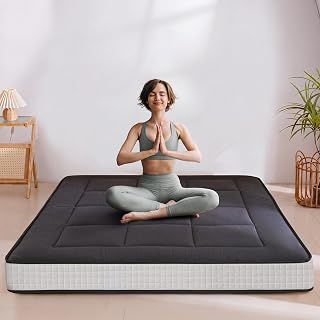
MAXYOYO 6″ Japanese Futon Floor Mattress
Six inches is unusually generous for a roll-up floor mattress, and it makes the difference between a night on a pad and a night on a bed. The squared quilting distributes fill evenly, and it stores compactly — ideal for hosting without keeping a spare bed frame.
Frequently Asked Questions
Can you sleep on a futon mattress every night?
Yes, provided the mattress is thick and supportive enough. Aim for 8 to 10 inches with a coil or high-density foam core; thin foldable pads under 4 inches are better reserved for guests.
How long should a futon mattress last?
Expect three to five years with regular use, longer for pocket-coil models. Rotating it monthly and airing floor futons weekly meaningfully extends that window.
Do I need a topper?
Only if the mattress feels too firm at the hips or shoulders. A 2-inch topper can rescue a firm spring futon, but it won’t fix a mattress that has already developed a permanent dip.
Are Japanese floor futons better for back pain?
They can be, for back and stomach sleepers who benefit from a flatter, firmer surface. Side sleepers usually need more thickness to avoid shoulder compression, so choose a 6-inch model or add a topper.
Final Thoughts
For nightly sleep, the Royal Sleep Products 10″ pocket coil is the most supportive and durable option here, with the Kodiak Furniture 8″ spring futon a strong, breathable runner-up for guest rooms and dual-purpose living spaces. If you need flexibility above all — floor sleeping, easy storage, quick conversion — the MAXYOYO 8″ tufted foldable delivers the best balance of comfort and portability in 2026.