A daybed asks something unusual of a piece of furniture: it has to look like seating during daylight hours and perform like a real bed after dark. That dual mandate is where most purchases go sideways. Shoppers fixate on the silhouette, get the frame home, and discover that the seat height is wrong for lounging, the mattress they already own overhangs the arms, or the slat spacing sags under an adult’s weight by month three. From a sleep-standpoint, the consequences are not cosmetic — an unstable foundation transmits micro-movements that fragment sleep architecture, and a poorly supported surface pushes the spine out of neutral alignment for seven or eight hours at a stretch.
This guide approaches daybeds the way I’d approach any sleep surface a person actually plans to use: foundation integrity first, then footprint, then features. Below you’ll find the frames worth your attention in 2026 — from storage-heavy L-shaped builds for small apartments to solid-wood classics that will outlast several mattresses — along with a buying framework, honest assessments of each pick, and answers to the questions that come up most often once the box is open.
Our top picks



As an Amazon Associate we earn from qualifying purchases at no extra cost to you.
🛒 Best Price Today on Amazon
Prime members get fast, free shipping on everything above, plus member-only deals. New members get a 30-day free trial — cancel anytime.
How to Choose a Daybed (2026)
- Slat span and support: Look for slats spaced no more than 3 inches apart with a center support leg or steel cross-bracing. Wide gaps let foam mattresses bulge downward, creating soft spots that undermine lumbar support and void many mattress warranties.
- Deck height versus mattress depth: Add your mattress thickness to the frame’s deck height. If the total exceeds the arm or backrest height, the mattress will slide and the daybed stops functioning as a sofa. A 6–8 inch mattress usually sits best; 12 inch models overwhelm most frames.
- Sleeper frequency: Occasional guest use tolerates a metal frame and a thinner mattress. Nightly use — a teen’s room, a studio apartment — warrants a solid hardwood frame and a full-depth mattress, since compressed foam recovers poorly under daily load.
- Storage and trundle trade-offs: Drawers and trundles consume the under-bed cavity, which also happens to be where air circulates. If you live somewhere humid, prioritize open clearance to reduce moisture buildup beneath the mattress.
- Electronics placement: USB ports and LED strips are genuinely useful for bedside charging, but confirm the lighting has a warm setting or independent switch. Cool, blue-heavy light near the head of the bed suppresses melatonin release in the hour before sleep.
The Best Daybed (2026)s Reviewed
Twin Corner Bed Frame, L-Shaped Daybed (Vintage Brown)
This is the most space-efficient option here — the L-shaped configuration turns a corner into a defined sleep zone with a bookcase, bedside rack, and drawers absorbing the clutter that usually ends up on a nightstand. The integrated charging station and LED accents suit a small bedroom or dorm well, though I’d recommend dimming the lights an hour before bed to protect your natural wind-down.
Martha Stewart Neely Solid Wood Platform Daybed
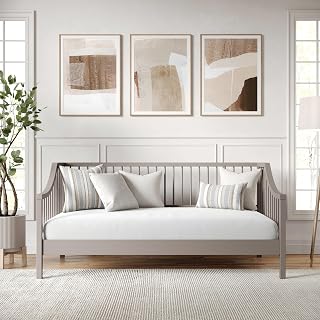
Solid wood construction with turned spindles and a slatted foundation that genuinely needs no box spring — this is the pick for nightly sleepers who want a frame that stays silent and square for years. The gray finish reads transitional rather than trend-chasing, which matters if the daybed lives in a room you don’t plan to redecorate soon.
YUHUASHI Upholstered Daybed with Wood Slat Support
Upholstery softens the sofa-by-day experience considerably, and the yellow finish is a legitimate design choice rather than a compromise for a living room or home office. Wood slat support handles a standard twin mattress well; just plan on periodic fabric maintenance since padded surfaces trap dust and dander more readily than wood or metal.
SHA CERLIN Metal Daybed with Storage Headboard
The double-layer headboard is the standout feature — it functions as a shelf without demanding floor space, and the USB ports mean no cables snaking across the room. Steel slat support is reassuringly rigid, and generous under-bed clearance keeps airflow moving, which is the right call for a guest room that sits unused between visits.
Full Size Upholstered Daybed with Twin Trundle
A full-size sleep surface with a twin trundle underneath makes this the highest-capacity option in the roundup — two sleepers, one footprint. Button tufting and piped, waved arms give it a finished look for a shared kids’ room, and assembly is straightforward enough for one person with an afternoon free.
Frequently Asked Questions
Do I need a box spring with a daybed?
Almost never. Every frame here uses a slat or steel-slat foundation designed to support a mattress directly. Adding a box spring raises the deck height past the arms and destabilizes the whole assembly.
What mattress thickness works best?
Six to eight inches is the sweet spot for daybeds used as seating. If the daybed is a primary bed and seating is secondary, you can go to 10 inches — beyond that, expect the mattress to sit above the backrest.
Can adults sleep on a daybed long term?
Yes, provided the frame is rated for adult weight and includes center support. Pair it with a mattress matched to your sleep position rather than whatever thin foam pad came bundled, since the mattress determines spinal alignment far more than the frame does.
Are trundles comfortable enough for guests?
They are if you treat the trundle mattress as a real mattress. Low-profile foam in the 6-inch range performs well; the 4-inch pads sold as trundle inserts tend to bottom out and leave guests with morning stiffness.
Final Thoughts
For nightly sleepers who want a frame that holds up, the Martha Stewart Neely solid wood daybed is the most durable choice in this group. The SHA CERLIN metal daybed is the smarter pick for guest rooms and small spaces, thanks to its storage headboard and open under-bed clearance, while the L-shaped Twin Corner Bed Frame remains unmatched if you need a daybed, nightstand, and bookcase to occupy a single corner.