Key takeaways
- Concentration ratio: Look for how much finished cleaner a bottle yields, not how many ounces it contains. A quart that dilutes to 40 gallons beats a gallon of ready-to-use every time on cost per square foot.
- Surface match: Alkaline degreasers eat oil on concrete but will dull automotive clear coat and strip wood stain. Match the chemistry to the material — one bottle genuinely cannot do both jobs well.
- Injector compatibility: Downstream injectors need thin, low-viscosity soap to siphon properly. Thick gel concentrates often need pre-dilution in a bucket or a dedicated foam cannon to draw at all.
- Foam dwell time: Cling is the whole point. A foam that sheets off in ten seconds gives the surfactants no contact time; one that clings for two to three minutes does the lifting for you.
- Runoff safety: Anything you spray on a driveway ends up in soil, storm drains, or a garden bed. Biodegradable, phosphate-free formulas are worth the small premium if you have lawn, beds, or a well.
What's inside
Most people don’t think about pressure washer soap until they’re standing on a half-cleaned patio, watching water push grime around instead of lifting it away. The machine does the mechanical work, but detergent does the chemical work — breaking the bond between soil and surface so the rinse actually carries it off. Skip it, and you’ll spend twice as long at a higher pressure setting, which is exactly how siding gets etched, deck boards get furred, and mortar joints get blown out. As someone who writes mostly about restorative home environments, I’ll add the part nobody sells you on: a spring-green film on the north wall of a house isn’t just cosmetic. Mold and mildew colonies shed spores that drift indoors, and airborne irritants are a documented sleep disruptor. Cleaning the outside of your house is quiet, unglamorous air-quality work for the inside of it.
This guide covers six detergents and one foam cannon worth owning in 2026, split roughly into two camps: heavy-duty degreasers for concrete, fences, siding, and equipment, and pH-neutral touchless formulas for vehicles. I’ve weighted dilution economics heavily — concentration ratio matters more than bottle size — along with surface safety, foaming behavior, and whether a product plays nicely with plants, pets, and the septic system you’d rather not think about. Prices and availability update automatically below.
As an Amazon Associate we earn from qualifying purchases.


How to Choose a Pressure Washer Soap (2026)
- Concentration ratio: Look for how much finished cleaner a bottle yields, not how many ounces it contains. A quart that dilutes to 40 gallons beats a gallon of ready-to-use every time on cost per square foot.
- Surface match: Alkaline degreasers eat oil on concrete but will dull automotive clear coat and strip wood stain. Match the chemistry to the material — one bottle genuinely cannot do both jobs well.
- Injector compatibility: Downstream injectors need thin, low-viscosity soap to siphon properly. Thick gel concentrates often need pre-dilution in a bucket or a dedicated foam cannon to draw at all.
- Foam dwell time: Cling is the whole point. A foam that sheets off in ten seconds gives the surfactants no contact time; one that clings for two to three minutes does the lifting for you.
- Runoff safety: Anything you spray on a driveway ends up in soil, storm drains, or a garden bed. Biodegradable, phosphate-free formulas are worth the small premium if you have lawn, beds, or a well.
The Best Pressure Washer Soaps (2026) Reviewed
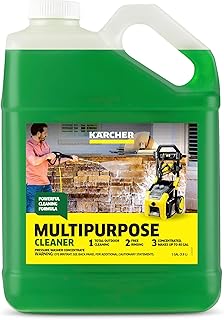
Kärcher Multi Purpose Pressure Washer Detergent
The most sensible default for homeowners: one highly concentrated bottle makes up to 40 gallons of working solution, and it handles fences, siding, driveways, sidewalks, and patios without needing a second product. Dilution control is the real advantage here — go weak for painted surfaces, strong for concrete, and you’ve effectively bought three detergents.
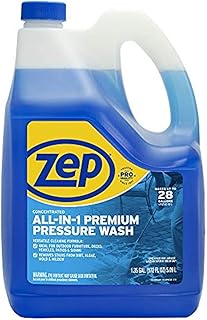
Zep All-in-1 Pressure Washing Concentrate (172 oz)
This is the jug to buy if you clean a whole house each spring rather than a patio each month; at 172 fluid ounces the cost per gallon of mixed cleaner drops sharply. It’s aggressive on mildew and weathered grey on siding and composite decking, so test an inconspicuous panel before you commit to a wall.
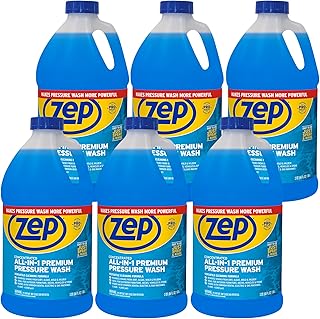
Zep All-In-One Pressure Wash 64 oz (Case of 6)
Same proven formula in a size that’s easier to pour and store, sold as a six-pack for people who’d rather not re-order mid-season. Genuinely strong on grease, oil, road film, and mold or mildew staining, which makes it the pick for garage floors and equipment pads.
Wash Chems Pro30 Auto Foam Soap
A one-step, highly concentrated vehicle soap in a 2.5-gallon container, built for touchless washing where you can’t safely put a mitt on the paint. It’s the right call for trucks, trailers, and heavy equipment carrying baked-on road film, and it foams thickly enough to actually dwell on vertical panels.
Wash Chems Pro50 Foam Cannon Detergent
The gentler, higher-lubricity sibling — commercial-grade but formulated for frequent touchless washes on vehicles you care about cosmetically. At just over a gallon of concentrate it lasts an absurdly long time in a foam cannon, and it’s the one I’d pair with a maintained daily driver.
Frequently Asked Questions
Can I use dish soap or laundry detergent instead?
You can, but you shouldn’t. Household soaps are poorly rinsing, often high-pH, and leave a residue film that traps dirt and can clog injectors and pump seals over time.
Do I need a foam cannon?
Only for vehicles or any job where dwell time matters more than throughput. A Tool Daily foam cannon with a 1/4-inch quick connector and a set of nozzle tips converts a standard washer into a proper touchless setup for very little money.
Will these detergents kill my plants?
Concentrated degreasers can scorch foliage and stress shallow roots. Pre-wet nearby beds, tarp what you can, and rinse the surrounding area thoroughly when you’re finished.
Soap first or rinse first?
Rinse first at low pressure to remove loose debris, apply detergent bottom to top, let it dwell two to three minutes without drying, then rinse top to bottom.
Final Thoughts
For most households, the Kärcher multi-purpose concentrate is the one bottle to keep on the shelf — flexible dilution, low cost per gallon, safe across the majority of exterior surfaces. Scale up to the 172-ounce Zep All-in-1 if you’re tackling a full house or a stained garage floor, and add Wash Chems Pro50 with a foam cannon if vehicles are part of the routine. Get the outside of the house clean, and the air inside it — and the sleep that depends on it — quietly improves.