Key takeaways
- Vented canopy: A top vent — ideally a two- or three-tier design — lets rising air escape instead of building pressure under the fabric. This is the single biggest factor in both stability and the elimination of that sleep-wrecking canvas snap.
- Rib count and material: Look for at least eight ribs made from fiberglass or reinforced steel. Fiberglass flexes and returns; cheap aluminum bends once and stays bent, leaving a sagging canopy that pools water.
- Fabric density and UV rating: A 200–240 GSM canopy with UPF 50+ blocks the harsh midday spectrum that suppresses melatonin recovery, while still allowing enough ambient brightness to keep your circadian signaling honest.
- Base weight, not base presence: Freestanding umbrellas need 50–75 lbs of base for a 9-foot canopy, and cantilever models often need 200 lbs or more. Under-weighting is the most common cause of failure I see.
- Tilt and crank quality: A smooth push-button tilt lets you chase low-angle afternoon sun off your eyes without standing up — a small ergonomic detail that makes the difference between a nap and a nuisance.
What's inside
Anyone who has drifted off in a patio lounger knows how quickly the experience can unravel. One gust and the canopy overhead starts flapping like a sail, the pole shudders in its base, and the slow, restorative quiet you came outside for is gone. In coastal towns, open plains, and high-rise balconies, wind is not an occasional nuisance — it is the defining variable. From a sleep-wellness standpoint, that matters more than most shoppers realize: unpredictable noise and shifting light are two of the most reliable ways to prevent the nervous system from downshifting into genuine rest.
This guide approaches windy-area patio umbrellas the way I would approach a bedroom environment — as a system for controlling light, temperature, and sound so the body can actually settle. Below you will find the frame construction, venting, and anchoring details that separate an umbrella that survives its first storm from one that ends up folded in the garage, plus reviews of the models I recommend most often to clients building outdoor rest spaces in 2026.
As an Amazon Associate we earn from qualifying purchases.


How to Choose a Patio Umbrella For Windy Areas (2026)
- Vented canopy: A top vent — ideally a two- or three-tier design — lets rising air escape instead of building pressure under the fabric. This is the single biggest factor in both stability and the elimination of that sleep-wrecking canvas snap.
- Rib count and material: Look for at least eight ribs made from fiberglass or reinforced steel. Fiberglass flexes and returns; cheap aluminum bends once and stays bent, leaving a sagging canopy that pools water.
- Fabric density and UV rating: A 200–240 GSM canopy with UPF 50+ blocks the harsh midday spectrum that suppresses melatonin recovery, while still allowing enough ambient brightness to keep your circadian signaling honest.
- Base weight, not base presence: Freestanding umbrellas need 50–75 lbs of base for a 9-foot canopy, and cantilever models often need 200 lbs or more. Under-weighting is the most common cause of failure I see.
- Tilt and crank quality: A smooth push-button tilt lets you chase low-angle afternoon sun off your eyes without standing up — a small ergonomic detail that makes the difference between a nap and a nuisance.
The Best Patio Umbrella For Windy Areas (2026)s Reviewed
EliteShade USA 9ft 3-Tier Market Umbrella
The three-tier vented canopy is the standout here, bleeding off pressure so effectively that the fabric stays taut and quiet in moderate gusts. Commercial-grade construction and a ten-year fade guarantee make this my default recommendation for exposed patios where the umbrella lives outdoors all season.
PURPLE LEAF Cantilever 10′ x 10′ Double Top
Rated to 35 MPH and built around a double-top frame, this offset model clears loungers and daybeds entirely — ideal if you want unbroken shade over a napping surface with no pole in the middle. Budget for a substantial base and expect a genuine half-hour assembly, but the payoff is the most stable large-format shade on this list.
9ft 3-Tier Patio Umbrella with 8 Sturdy Ribs (Navy)
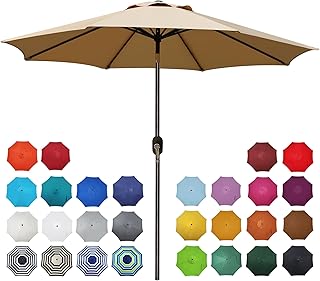
A well-judged middle option that borrows the tiered venting of pricier commercial umbrellas at a friendlier price. The eight-rib frame holds shape nicely, and the deep navy canopy casts a cooler, lower-glare shade that reads as noticeably more restful than pale fabrics.
JEAREY 9FT Market Umbrella (Beige)
The crank and tilt mechanism on this one is unusually smooth for its class, and the water-resistant canopy shrugs off the brief squalls that often accompany wind. Best suited to semi-sheltered patios where you can take it down before serious weather.
9′ Outdoor Patio Umbrella with Push Button Tilt and Crank
A straightforward, honest eight-rib market umbrella for dining sets and smaller decks. It lacks multi-tier venting, so pair it with a heavy base and lower the canopy in strong wind — within those limits, it performs reliably.
Frequently Asked Questions
What wind speed can a patio umbrella actually handle?
Most vented residential umbrellas are comfortable up to roughly 20–25 MPH, and premium cantilever frames are tested closer to 35 MPH. No umbrella should be left open in sustained high wind, regardless of rating.
Does a vent really make a difference?
Yes, and audibly so. Venting reduces lift and largely eliminates the rhythmic flapping that keeps the brain in a light, alert state — the same reason a rattling window ruins a night’s sleep indoors.
How heavy should my base be?
Plan on 50–75 lbs for a 9-foot umbrella used with a table, more if it stands alone. Cantilever models typically require weighted plates totaling 200 lbs or bolting to the deck.
Can I nap under an umbrella safely?
Comfortably, yes — a UPF 50+ canopy substantially reduces direct exposure. Reflected UV still reaches you from paving and water, so keep sessions moderate and stay hydrated.
Final Thoughts
For most windy patios, the EliteShade 9ft 3-Tier is the smartest all-around buy, balancing serious venting with commercial durability. If your goal is a genuinely restful shaded lounge with no center pole, step up to the PURPLE LEAF Cantilever; and if you want tiered venting without the premium, the 9ft 3-Tier in navy is an excellent value.