Key takeaways
- Vented canopy: This is non-negotiable. A single- or double-tier vent lets pressurized air escape out the top instead of lifting the canopy like a parachute, which reduces both wobble and the flapping noise that keeps you from actually relaxing.
- Rib count and material: Look for eight or more ribs. Fiberglass ribs flex and rebound in gusts, while thin steel ribs tend to kink permanently. More ribs also mean a tauter canopy, which means less noise.
- Fabric weight and weave: Aim for 200–240 GSM solution-dyed polyester or acrylic. Heavier fabric resists stretching at the seams, holds color for years, and blocks more scattered light — which matters if you’re using the space for daytime rest rather than just sitting.
- Base weight, honestly calculated: A 9-foot table umbrella wants at least 50 lbs when threaded through a table, and 75–100 lbs when freestanding. Cantilever models often need 150–220 lbs of plate weight. Underweighting the base is the single most common cause of failure.
- Tilt and closing habits: Push-button or crank tilt lets you chase low-angle sun without moving furniture. But build the habit of closing and securing the canopy whenever you leave — no umbrella survives an unattended storm.
What's inside
As someone who spends most of my professional life talking about circadian rhythm, afternoon rest, and the small environmental details that make recovery possible, I’ve become oddly obsessed with patio umbrellas. A shaded outdoor seat is one of the most underrated recovery tools most homeowners already own — it’s where you get morning light without midday glare, where a twenty-minute nap actually happens, and where evening wind-down begins. The problem is that in a breezy yard, that restorative pocket of shade turns into a rattling, lurching nuisance. Nothing wrecks a nap faster than a canopy that snaps like a sail every ninety seconds, and nothing wrecks a weekend faster than replacing a frame that folded in a 20 mph gust.
This guide is written for people in genuinely windy locations: coastal lots, rooftop decks, open prairie backyards, and pool areas that funnel afternoon thermals. I’ve focused on the structural features that actually matter when air is moving — vented tops, rib count and rib material, fabric weight, and base compatibility — and paired that with what I care about as a sleep and rest specialist: UV blocking, glare control, quiet operation, and shade that stays put long enough to be useful. Below are the models worth your attention in 2026, plus a short buying framework so you can judge anything else you come across.
As an Amazon Associate we earn from qualifying purchases.


How to Choose a Patio Umbrella For Windy Area (2026)
- Vented canopy: This is non-negotiable. A single- or double-tier vent lets pressurized air escape out the top instead of lifting the canopy like a parachute, which reduces both wobble and the flapping noise that keeps you from actually relaxing.
- Rib count and material: Look for eight or more ribs. Fiberglass ribs flex and rebound in gusts, while thin steel ribs tend to kink permanently. More ribs also mean a tauter canopy, which means less noise.
- Fabric weight and weave: Aim for 200–240 GSM solution-dyed polyester or acrylic. Heavier fabric resists stretching at the seams, holds color for years, and blocks more scattered light — which matters if you’re using the space for daytime rest rather than just sitting.
- Base weight, honestly calculated: A 9-foot table umbrella wants at least 50 lbs when threaded through a table, and 75–100 lbs when freestanding. Cantilever models often need 150–220 lbs of plate weight. Underweighting the base is the single most common cause of failure.
- Tilt and closing habits: Push-button or crank tilt lets you chase low-angle sun without moving furniture. But build the habit of closing and securing the canopy whenever you leave — no umbrella survives an unattended storm.
The Best Patio Umbrella For Windy Area (2026)s Reviewed
EliteShade 9ft 3-Tier Market Umbrella (Black)
The three-tier vented canopy is the standout here: it sheds gusts far better than a flat top and stays noticeably quieter, which is exactly what you want over a lounge chair. Commercial-grade construction and a genuine 10-year non-fading claim make it my first recommendation for exposed decks and poolsides.
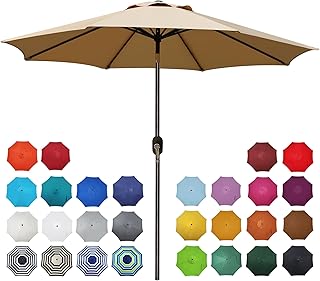
EliteShade 9ft Market Umbrella (Heather Beige)
Same heavy-duty bones as its three-tier sibling with a single vented top and a softer neutral canopy that diffuses light beautifully rather than bouncing glare into your eyes. UPF 50+ coverage and crank-plus-tilt operation make it the easiest all-day shade in the lineup.
PURPLE LEAF 12ft Cantilever Umbrella, Double Top (Taupe)
The double-top design is the reason this offset model handles gusts as well as it does — air passes between the layers instead of loading the canopy. If you want unobstructed shade over a daybed or hammock with no center pole in the way, this is the pick, provided you commit to a properly weighted base.
PURPLE LEAF 12ft Wood-Grain Umbrella (Navy Blue)
An oversized braced-frame umbrella with 240 GSM fade-resistant fabric and an aluminum pole that looks like timber without the maintenance. The extra span is genuinely useful for shading a full dining set or a pair of loungers through a shifting afternoon sun.
10FT Patio Umbrella with Push Button Tilt and Crank
A sensible mid-size option with eight sturdy ribs and a waterproof, UV-blocking canopy at a friendly price. It’s the one I’d suggest for moderately breezy patios rather than truly exposed sites, and it benefits enormously from a heavier base than most buyers expect.
Frequently Asked Questions
How much wind can a patio umbrella actually handle?
Most quality vented umbrellas are comfortable up to roughly 20–25 mph with an adequate base. Beyond that, close it. Manufacturer wind ratings assume a properly weighted, level installation and a canopy that hasn’t already been stretched or bent.
Does a vent really make a difference?
Yes, measurably. Vents relieve upward pressure under the canopy, which reduces lift, reduces frame stress, and cuts the flapping noise that makes shaded seating feel restless instead of restful.
Center pole or cantilever for wind?
Center-pole market umbrellas are generally more stable because the load sits directly over the base. Cantilevers can perform well — especially double-top designs — but they demand substantially more base weight to counter the offset lever arm.
Can I leave the umbrella open overnight?
I don’t recommend it. Overnight gusts and morning thermals are unpredictable, and a closed canopy also dries faster, which prevents the mildew and musty odor that turn a pleasant outdoor space into one you’d rather avoid.
Final Thoughts
For most windy yards, the EliteShade 9ft 3-Tier delivers the best balance of gust tolerance, quiet operation, and long-term fade resistance, with the Heather Beige EliteShade close behind if you prefer softer, lower-glare light. If you need pole-free shade over a lounge or daybed, the PURPLE LEAF 12ft Cantilever Double Top is the one to buy — just pair it with a base heavy enough to earn its stability.