Key takeaways
- True flat recline: Five preset positions are useful, but confirm the last one lays genuinely horizontal. Supine rest with the spine neutral and the head level is what allows the shoulders to release; a permanent half-sit keeps the neck flexors working the entire time.
- Heat exchange: Sleep onset depends on shedding warmth through the skin. Sling fabrics such as textilene breathe across the whole contact area, while solid HDPE shells stay cooler underfoot but hold heat where your back meets the surface — pair those with a light throw or vented cushion.
- Pressure distribution: Look for a continuous, gently contoured deck rather than a slatted seat with pronounced ridges. Concentrated pressure at the sacrum and heels triggers the micro-shifts that fragment a nap long before you notice them.
- Wheels and repositioning: Shade migrates roughly fifteen degrees an hour. Rear transport wheels let you chase or escape direct sun without breaking your rest posture, which matters more than it sounds — standing, dragging, and resettling resets the whole wind-down.
- Frame integrity and storage: Check stated weight capacity, leg footprint, and whether the chair folds. Fully grounded legs resist sinking into turf and eliminate the wobble that keeps you subtly braced instead of relaxed.
What's inside
Most people shop for a chaise lounge the way they shop for a planter — by silhouette and color — then wonder why twenty minutes on it leaves them stiff, overheated, and strangely unrested. The oversight is simple: a lounger is sleep equipment that happens to live outdoors. When a backrest tops out at a slouched thirty degrees, the chin drops toward the chest and the airway narrows. When the surface traps body heat, you block the small core-temperature dip that precedes real drowsiness. And when a frame flexes and ticks with every shift of weight, the nervous system never quite agrees to stand down.
I assess outdoor seating on the same terms I’d assess a mattress: recline geometry, thermal behavior, pressure distribution, and how quietly the structure holds a still body. Below are six of the strongest outdoor chaise lounges heading into 2026 — folding aluminum frames, oversized HDPE loungers on wheels, and cushioned cast-aluminum pairs — along with the buying criteria that separate a chair you perch on from one you can actually fall asleep on.
As an Amazon Associate we earn from qualifying purchases.




🛒 Best Price Today on Amazon
Prime members get fast, free shipping on everything above, plus member-only deals. New members get a 30-day free trial — cancel anytime.
How to Choose an Outdoor Chaise Lounge Chair (2026)
- True flat recline: Five preset positions are useful, but confirm the last one lays genuinely horizontal. Supine rest with the spine neutral and the head level is what allows the shoulders to release; a permanent half-sit keeps the neck flexors working the entire time.
- Heat exchange: Sleep onset depends on shedding warmth through the skin. Sling fabrics such as textilene breathe across the whole contact area, while solid HDPE shells stay cooler underfoot but hold heat where your back meets the surface — pair those with a light throw or vented cushion.
- Pressure distribution: Look for a continuous, gently contoured deck rather than a slatted seat with pronounced ridges. Concentrated pressure at the sacrum and heels triggers the micro-shifts that fragment a nap long before you notice them.
- Wheels and repositioning: Shade migrates roughly fifteen degrees an hour. Rear transport wheels let you chase or escape direct sun without breaking your rest posture, which matters more than it sounds — standing, dragging, and resettling resets the whole wind-down.
- Frame integrity and storage: Check stated weight capacity, leg footprint, and whether the chair folds. Fully grounded legs resist sinking into turf and eliminate the wobble that keeps you subtly braced instead of relaxed.
The Best Outdoor Chaise Lounge Chairs (2026) Reviewed
Aluminum Foldable 5-Position Chaise Lounge (Khaki)
This one arrives ready to use — no assembly, no hardware bag — and folds flat for shoulder-season storage, which is why it suits balconies and small decks. The fully grounded legs give it a stable, rattle-free footprint on grass or pavers, and the five-stop backrest reaches a low enough angle for genuine napping.
Oversized HDPE Chaise Lounge with Wheels
The extra-wide deck is the standout feature here: side-sleepers and larger frames get room to turn without hanging a shoulder over the edge. UV-resistant HDPE shrugs off pool chemicals and rain, while the wheels and integrated cup holder make it easy to reposition and stay hydrated without getting up.
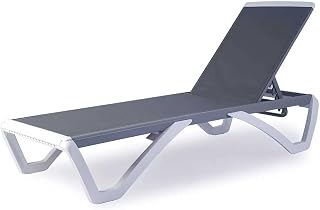
Kozyard Fully Flat Adjustable Patio Lounger
My pick for people who actually intend to sleep outside — it lays completely flat, so the spine settles into a neutral line instead of a permanent V. Breathable textilene over an aluminum frame with resin legs vents body heat continuously, which is the single biggest factor in staying asleep on a warm afternoon.
Cast Aluminum Chaise Lounge Set of 2 with Cushions
The most substantial option of the group, with waterproof cushions that add real pressure relief at the hips and heels for longer sessions. Buying as a pair matters more than it seems: shared afternoon downtime is one of the more reliable ways households protect rest time at all.
THOEOE Patio Chaise Lounge with Wheels
A close sibling to the oversized HDPE model, with the same generous proportions, five-position backrest, cup holder, and rolling mobility. Weather-resistant construction means it can stay poolside through the season without covers or seasonal fussing.
Frequently Asked Questions
Will an afternoon nap outside hurt my nighttime sleep?
Not if you keep it brief and early. Twenty to thirty minutes before roughly 3 p.m. restores alertness without eating into your sleep pressure. Longer or later naps drift into deep sleep and leave you groggy, and the daylight exposure you get outdoors actually reinforces your circadian timing.
Do I really need a fully flat recline?
If you’re reading, no — a moderate incline is more comfortable. If you intend to doze, yes. Flat positioning lets the head, cervical spine, and pelvis align, and it stops the slow forward slump that wakes people with a stiff neck.
Textilene sling or solid HDPE?
Textilene breathes better and suits hot, humid climates where heat buildup is the limiting factor. HDPE is more durable against chlorine, storms, and neglect, making it the smarter poolside choice — just add a thin cushion if you run warm.
How do I keep a lounger from degrading in the sun?
Rinse salt and chlorine off after use, store cushions dry, and rotate the chair occasionally so one side isn’t permanently sun-facing. UV-stabilized HDPE and powder-coated aluminum handle exposure well, but trapped moisture under cushions is what ruins most sets.
Final Thoughts
For actual outdoor sleep, the Kozyard fully flat lounger is the one I’d choose — flat geometry plus breathable textilene solves both posture and thermoregulation at once. If you want durability and space to spread out, the oversized HDPE chaise with wheels is the more resilient poolside pick, while the folding aluminum 5-position model remains the best answer for small patios and easy storage.