Key takeaways
- Damp vs. wet rating: A damp rating suits covered porches, breezeways, and garages where the fan never takes direct rain. Open pergolas, poolside, and coastal exposure need a wet-rated or IP65-sealed unit; installing a damp-rated fan there shortens its life and voids most warranties.
- Airflow you can feel, not just CFM on paper: Match blade span to the seating zone — roughly 44–52 inches for a standard patio, 60 inches and up for long decks or garages. High CFM matters, but so does sweep: a wide, slow-turning fan produces a gentler, more restful breeze than a small fan screaming at top speed.
- Motor type and noise floor: DC and BLDC motors run cooler, sip power, and typically sit well below the hum of an older AC motor. If you nap outdoors or sleep with the windows open, prioritize motor quality above every other feature — mechanical hum and blade wobble are the two things most likely to keep you half-awake.
- Dimmable, warm-toned light: Look for LED kits that dim smoothly and lean toward 2700K–3000K in the evening. Cool white light in the hour before bed works against melatonin; a fan that remembers your last dim setting saves you from resetting it nightly.
- Control that fits the space: Remotes are standard, but a hardwired wall control is more reliable long-term, and app or voice control earns its keep if the fan is mounted high or the patio is used year-round. Timers are underrated — a two-hour shutoff is ideal for falling asleep to airflow without over-cooling by 3 a.m.
What's inside
Most people shop for an outdoor ceiling fan the way they shop for a garden hose — by diameter and price — and then wonder why the porch still feels stagnant at 9 p.m. or why the deck lights buzz so loudly that conversation drifts indoors. As someone who spends a lot of time studying how airflow, light temperature, and low-level noise shape rest, I’d argue the covered patio has become a second bedroom for many households: it’s where people wind down, read, nap in a hammock, and let their core temperature drop before bed. That makes fan choice less cosmetic than it looks.
This guide looks at six outdoor-rated ceiling fans through that lens — moving air quietly, dimming warmly, and holding up to humidity — while still covering the practical things (blade span, CFM, mounting, damp versus wet rating) that determine whether the thing actually works over your seating. Below you’ll find quick picks, a buying framework, short reviews of the strongest options, and answers to the questions I’m asked most often.
As an Amazon Associate we earn from qualifying purchases.



🛒 Best Price Today on Amazon
Prime members get fast, free shipping on everything above, plus member-only deals. New members get a 30-day free trial — cancel anytime.
How to Choose a/an Outdoor Ceiling Fan With Lights (2026)
- Damp vs. wet rating: A damp rating suits covered porches, breezeways, and garages where the fan never takes direct rain. Open pergolas, poolside, and coastal exposure need a wet-rated or IP65-sealed unit; installing a damp-rated fan there shortens its life and voids most warranties.
- Airflow you can feel, not just CFM on paper: Match blade span to the seating zone — roughly 44–52 inches for a standard patio, 60 inches and up for long decks or garages. High CFM matters, but so does sweep: a wide, slow-turning fan produces a gentler, more restful breeze than a small fan screaming at top speed.
- Motor type and noise floor: DC and BLDC motors run cooler, sip power, and typically sit well below the hum of an older AC motor. If you nap outdoors or sleep with the windows open, prioritize motor quality above every other feature — mechanical hum and blade wobble are the two things most likely to keep you half-awake.
- Dimmable, warm-toned light: Look for LED kits that dim smoothly and lean toward 2700K–3000K in the evening. Cool white light in the hour before bed works against melatonin; a fan that remembers your last dim setting saves you from resetting it nightly.
- Control that fits the space: Remotes are standard, but a hardwired wall control is more reliable long-term, and app or voice control earns its keep if the fan is mounted high or the patio is used year-round. Timers are underrated — a two-hour shutoff is ideal for falling asleep to airflow without over-cooling by 3 a.m.
The Best Outdoor Ceiling Fan With Lights (2026)s Reviewed
52″ Solid Wood 3-Blade Walnut Fan with Remote and Wall Control
This is the one I’d put over a porch swing or reading chair: a quiet DC motor, six speeds, and dimmable light in a solid walnut body that reads as furniture rather than hardware. The dual remote-and-wall-control setup means you’re never hunting for a handset in the dark.
72″ Aluminum Industrial 8-Blade Fan, 9,744 CFM
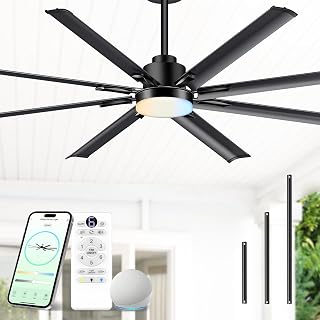
For long decks, deep garages, and wide covered patios, nothing else here moves comparable air — and the BLDC motor keeps that volume surprisingly civil. The dimmable LED with memory and Alexa control make it easy to dial down to a low, near-silent setting once the heat breaks.
52″ Matte Black and Gold 3-Blade Fan with Light and Remote
A strong choice when the patio doubles as a design statement, with a matte black finish and gold accents that suit modern and transitional exteriors. Performance is solid rather than spectacular, so treat it as a style-forward pick for medium covered spaces.
52″ Dark Walnut Propeller Fan, High CFM
The propeller profile pushes a firm, directional breeze downward, which is exactly what you want over a dining table in humid weather. It’s quiet at mid speeds and the dark walnut finish transitions cleanly between indoor and outdoor use.
addlon 20″ IP65 Plug-In Caged Fan
The most flexible option on the list: fully waterproof, hangs from a hook, plugs into a standard outlet, and reverses direction — ideal for gazebos, rentals, or anywhere hardwiring isn’t happening. The built-in timer and six speeds make it a genuinely good sleep companion for screened porches.
Frequently Asked Questions
Can I use an indoor ceiling fan on a covered porch?
Not safely. Indoor fans lack sealed motor housings and moisture-resistant finishes, so humidity corrodes bearings and rusts hardware within a season or two. Choose at least a damp-rated fan for any exterior location.
What size fan do I need for my patio?
Measure the seating area, not the whole deck. Up to about 100 square feet, a 44-inch fan is adequate; 100–225 square feet suits 52 inches; beyond that, go 60–72 inches or install two fans spaced evenly.
Is it healthy to sleep with an outdoor fan running?
Generally yes, and mild air movement helps the body shed heat, which supports falling asleep. Avoid aiming strong airflow directly at your face for hours — it can dry out sinuses and eyes — and use a timer or low speed overnight.
Do these fans help with mosquitoes?
Meaningfully, yes. Mosquitoes are weak fliers and struggle in sustained breeze, so a fan on medium or high over a seating area noticeably reduces bites without any chemicals.
Final Thoughts
For most covered patios, the 52-inch solid wood walnut fan is the best all-around buy — quiet DC motor, warm dimmable light, and dual controls at a sensible size. If you’re covering a large deck or garage, step up to the 72-inch aluminum industrial fan for airflow nothing else here matches, and if you can’t hardwire, the addlon 20-inch IP65 caged fan delivers real waterproof performance from a standard outlet.