Key takeaways
- Compressor noise floor: Anything under roughly 40 dB tends to blend into a quiet room; above 45 dB and the cycling becomes an arousal trigger, meaning brief awakenings you won’t remember but will feel the next day. Thermoelectric units are quieter but weaker — for a bedroom, favor a well-insulated compressor model and place it on a rug or dense mat rather than bare hardwood, which amplifies vibration.
- Display brightness and light leak: Microwave clocks and fridge interior lamps emit in the blue-white range that suppresses melatonin most efficiently. Look for units where the display can be dimmed or the clock disabled; if not, a strip of blackout tape costs nothing and protects your circadian signal.
- Stacking stability and clearance: A microwave sitting directly on a fridge lid traps heat, forces the compressor to run longer, and turns a quiet appliance into a loud one. A dedicated rack or shelf that separates the two, with ventilation gaps on all sides, solves both the thermal and the acoustic problem at once.
- Capacity matched to actual habits: Roughly 1.7 cu ft handles drinks and a few meals; 2.5 to 3.1 cu ft with a genuine top freezer supports real cooking. Oversizing means a louder, hungrier appliance running in a room where you’re trying to lower arousal, not raise it.
- Energy Star certification: Beyond the utility bill, efficient models run shorter cycles with better insulation — which is another way of saying they interrupt you less often.
What's inside
Most people shopping for a mini fridge and microwave pair are thinking about square footage, not sleep architecture. That’s understandable — dorm rooms, studio apartments, finished basements, and home offices all reward compact appliances. But I spend my working life helping people fix broken nights, and I can tell you that the single most common overlooked culprit in a small bedroom isn’t caffeine or screens. It’s a compressor cycling on at 3 a.m. two feet from someone’s pillow, paired with an LED display bright enough to read by.
This guide approaches the mini fridge microwave combo the way a sleep specialist would: acoustics first, light discipline second, then the usual practicalities of capacity, energy draw, and whether the two units can actually stack without wobbling. Below you’ll find the bundles and stands worth considering in 2026, followed by the selection criteria I’d apply if I were furnishing a room someone has to sleep in.
As an Amazon Associate we earn from qualifying purchases.


How to Choose a Mini Fridge Microwave Combo (2026)
- Compressor noise floor: Anything under roughly 40 dB tends to blend into a quiet room; above 45 dB and the cycling becomes an arousal trigger, meaning brief awakenings you won’t remember but will feel the next day. Thermoelectric units are quieter but weaker — for a bedroom, favor a well-insulated compressor model and place it on a rug or dense mat rather than bare hardwood, which amplifies vibration.
- Display brightness and light leak: Microwave clocks and fridge interior lamps emit in the blue-white range that suppresses melatonin most efficiently. Look for units where the display can be dimmed or the clock disabled; if not, a strip of blackout tape costs nothing and protects your circadian signal.
- Stacking stability and clearance: A microwave sitting directly on a fridge lid traps heat, forces the compressor to run longer, and turns a quiet appliance into a loud one. A dedicated rack or shelf that separates the two, with ventilation gaps on all sides, solves both the thermal and the acoustic problem at once.
- Capacity matched to actual habits: Roughly 1.7 cu ft handles drinks and a few meals; 2.5 to 3.1 cu ft with a genuine top freezer supports real cooking. Oversizing means a louder, hungrier appliance running in a room where you’re trying to lower arousal, not raise it.
- Energy Star certification: Beyond the utility bill, efficient models run shorter cycles with better insulation — which is another way of saying they interrupt you less often.
The Best Mini Fridge Microwave Combos (2026), Reviewed
BLACK+DECKER BCRK25V Fridge with EM720CB7 Microwave
This is the pairing I recommend most often for bedrooms: the Energy Star fridge runs with a low, even hum rather than the sharp startup clunk of cheaper compressors, and the microwave’s push-button door avoids the sudden latch snap that startles light sleepers. The child safety lock is a genuine bonus in shared spaces.
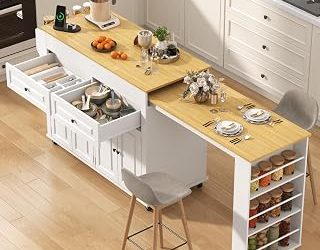
Mini Fridge Microwave Combo Stand Cabinet with Storage
Not an appliance, but arguably the most important purchase here. Elevating the microwave onto its own metal shelf gives the fridge the rear and top clearance it needs to run efficiently, and the added storage turns a cramped corner into a functional coffee station.
Koolatron 3.1 Cu Ft Fridge + 700W Total Chef Microwave
The flat-back fridge sits closer to the wall than most, which matters in narrow dorm layouts, and 3.1 cu ft is enough for a full week of prepped meals. The touch-control microwave is quieter in operation than its dial-based competitors, though the beeper is insistent — worth muting if you can.
BLACK+DECKER 2.5 Cu Ft Fridge with Farberware Microwave
A sensible middle-capacity bundle for home offices and guest rooms, with reversible-door flexibility that helps you position the unit away from the bed. The Farberware microwave is unremarkable in the best way: it heats evenly and doesn’t announce itself.
Frigidaire Retro 3.1 Cu Ft Fridge with Retro Countertop Microwave
Bought together, these two make the most visually cohesive setup on this list, and the retro fridge’s separate top freezer is a real one rather than a token ice shelf. Be aware that the styling comes with a slightly louder compressor — better suited to a kitchenette or den than a sleeping alcove.
Frequently Asked Questions
Is it safe to put a microwave on top of a mini fridge?
It’s generally permitted but rarely ideal. Blocking the fridge’s top and rear vents traps heat and increases run time. Use a rack or shelf that maintains a few inches of clearance on every side.
Will a mini fridge really disturb my sleep?
It can, especially in a room under about 150 square feet. Intermittent noise is more disruptive than constant noise because the onset itself triggers a physiological response, so cycling compressors are worse than steady fans.
What size do I actually need for a dorm room?
Around 2.5 cu ft suits most students; 3.1 cu ft if you cook regularly and want usable freezer space. Check your institution’s cubic-foot and wattage limits before ordering.
Can I plug both into the same outlet?
Ideally, no. A 700W microwave drawing simultaneously with a compressor startup surge can trip a circuit. Give the microwave its own outlet and avoid extension cords entirely.
Final Thoughts
If the room doubles as a bedroom, the BLACK+DECKER BCRK25V and EM720CB7 combination is the quietest, most sleep-considerate setup on this list — and pairing it with the dedicated fridge-and-microwave stand is what turns it from tolerable to genuinely unobtrusive. For larger spaces where noise matters less than capacity and character, the Koolatron 3.1 cu ft bundle offers the best practical value, and the Frigidaire Retro pairing is the one you’ll actually enjoy looking at.