Key takeaways
- Support core first: Pocketed coils in the 13–14.5 gauge range give heavier bodies something to push against. In a king, look for a high coil count and reinforced center-third zoning; if you prefer all-foam, insist on a base layer of at least 1.8 lb/ft³.
- Three to four inches of comfort layer: Shoulders need somewhere to go. Thin quilting over firm springs creates hot spots at the deltoid, while shallow soft foam compresses to nothing within minutes of lying down.
- Read density, not just firmness: Memory foam at 4 lb/ft³ or higher resists permanent body impressions far better than budget 3 lb foam. Firmness describes a feeling; density predicts how many years that feeling survives.
- Target medium-firm, not rock-hard: A bed that feels medium-firm to a 150 lb sleeper often behaves like a medium at 250 lb. That’s why plush-labeled models with a robust core frequently outperform beds sold as extra-firm.
- Edge support and trial length: Reinforced perimeter coils stop the sit-and-slide effect when you get out of bed. Favor 365-night trials and check the warranty’s body-impression threshold — anything under 0.75 inches is a genuinely strong guarantee.
Body weight changes the physics of a mattress. A side sleeper carrying more mass concentrates that load across two narrow contact points — the shoulder and the hip — and most beds marketed as “plush” simply run out of material underneath. The comfort layer bottoms out, the pelvis settles lower than the shoulder line, and the lumbar spine holds a gentle diagonal for seven hours that it was never built to sustain. Morning stiffness follows, and a new pillow almost never fixes it.
What heavier side sleepers need is a two-part structure: a genuinely deep pressure-relief layer that can absorb a shoulder without collapsing, sitting on a support core stiff enough to keep the hips level. Below, we break down the specifications that actually predict durability under load, then review the mattresses holding up best in 2026 — reinforced hybrids, zoned-coil designs, and one all-foam option for sleepers who want deeper contouring.
Our top picks




As an Amazon Associate we earn from qualifying purchases at no extra cost to you. Ratings are shown as listed on Amazon.
🛒 Best Price Today on Amazon
Prime members get fast, free shipping on everything above, plus member-only deals. New members get a 30-day free trial — cancel anytime.
How to Choose a Mattress For Heavy Side Sleepers (2026)
- Support core first: Pocketed coils in the 13–14.5 gauge range give heavier bodies something to push against. In a king, look for a high coil count and reinforced center-third zoning; if you prefer all-foam, insist on a base layer of at least 1.8 lb/ft³.
- Three to four inches of comfort layer: Shoulders need somewhere to go. Thin quilting over firm springs creates hot spots at the deltoid, while shallow soft foam compresses to nothing within minutes of lying down.
- Read density, not just firmness: Memory foam at 4 lb/ft³ or higher resists permanent body impressions far better than budget 3 lb foam. Firmness describes a feeling; density predicts how many years that feeling survives.
- Target medium-firm, not rock-hard: A bed that feels medium-firm to a 150 lb sleeper often behaves like a medium at 250 lb. That’s why plush-labeled models with a robust core frequently outperform beds sold as extra-firm.
- Edge support and trial length: Reinforced perimeter coils stop the sit-and-slide effect when you get out of bed. Favor 365-night trials and check the warranty’s body-impression threshold — anything under 0.75 inches is a genuinely strong guarantee.
The Best Mattresses For Heavy Side Sleepers (2026), Reviewed
BedStory 14 Inch Hybrid
Engineered specifically for heavier bodies, this one pairs zoned lumbar reinforcement with a pocket-spring core that resists the mid-bed dip most boxed mattresses develop by year three. Backed by a 10-year warranty, it’s our overall pick for side sleepers above 250 pounds.
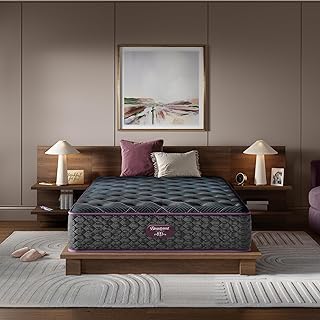
Beautyrest World Class Level Three Plush
The “plush” designation is misleading in the best way: a 14.75-inch profile delivers real shoulder cradling while Beautyrest’s coil system keeps the hips from dropping out of alignment. It’s the premium option here, and the one to choose if long-term durability outranks price.
Sleepmax 14 Inch Hybrid
A well-balanced value hybrid, with pressure-relieving foams over a responsive coil unit and a cooling cover that helps offset the extra heat heavier sleepers tend to trap. The 365-night trial is long enough to reveal whether the comfort layers hold their loft under nightly load.
Novilla 14 Inch Gel Memory Foam Hybrid
Pocketed coils beneath gel memory foam and a cool-touch nylon cover produce that slow-sinking contour at the shoulder without sacrificing spinal support. A sensible fit for heavier side sleepers who sleep warm but don’t want to give up the memory-foam hug.
Sweetnight CoolNest 14 Inch
The all-foam entry on this list, with five-zone construction that firms up under the hips and yields at the shoulder, plus airflow channels to keep surface temperature down. Best suited to the lighter end of the heavy-sleeper range, or couples who prioritize motion isolation over coil bounce.
Frequently Asked Questions
What firmness should a heavy side sleeper choose?
Roughly 6–7 out of 10 on the manufacturer’s scale. Perceived firmness drops as body weight rises, so a medium-firm rating usually lands as a true medium once you’re on it — which is exactly where hips and shoulders want to be.
Is a hybrid better than all-foam over 250 pounds?
Generally, yes. Steel coils push back with consistent force and don’t soften with temperature the way polyfoam does. All-foam beds can work, but only when the base and transition layers are genuinely high-density.
How thick should the mattress be?
Fourteen inches is a sensible floor. That depth allows three to four inches of contouring material above a substantial support core, and the higher deck height also makes getting in and out easier on the knees and hips.
Does my bed frame need upgrading?
Very likely. Slats should sit no more than three inches apart, and every queen or king needs center support with legs to the floor. An under-built foundation causes sagging that gets blamed on the mattress — and can void the warranty outright.
Final Thoughts
For most heavier side sleepers, the BedStory 14 Inch Hybrid offers the best combination of reinforced support and value, while the Beautyrest World Class Level Three Plush is the long-haul investment for those who want proven coil engineering and deep shoulder relief. If you’re shopping carefully, the Sleepmax 14 Inch Hybrid delivers most of that performance with a year-long trial to prove itself.