Key takeaways
- Noise rating in dBA: Anything at or under 60 dBA is roughly conversational and safe to run near bedrooms; 70 dBA is tolerable behind a closed door; above 80 dBA belongs in a garage or outbuilding, and you should wear hearing protection. Manufacturers measure at varying distances, so treat the number as a comparison tool rather than gospel.
- Motor type and RPM: Low-RPM induction motors are the reason ultra-quiet models exist. Cheap high-RPM universal motors hit target pressure faster but produce the sharp, whining tone that carries through drywall most effectively.
- Tank size versus your actual task: A one-gallon tank is plenty for brad nailers, upholstery staplers, and inflation. Spray finishing and continuous-demand tools need six gallons or more, or the motor will cycle constantly — which is exactly the on-off pattern that disturbs rest.
- Oil-free versus oil-lubricated: Oil-free pumps require no maintenance and won’t stain a finished floor, making them the sensible choice for indoor furniture work. Oil-lubricated units run quieter and last longer but demand upkeep and level placement.
- Cordless or 12V for inflation only: If your real need is tires, sports balls, and air mattresses for guests, skip tanks entirely. A handheld inflator with auto shutoff does the job in under three minutes and stores in a nightstand drawer.
What's inside
Most people shop for an air compressor thinking about pressure, tank size, and price — and then discover the real cost after the first use. A budget compressor that shrieks at 90 decibels in an attached garage doesn’t just annoy the neighbors; it rattles through shared walls, wakes a napping toddler two rooms over, and turns a Saturday morning project into a household negotiation. As someone who spends most of my working life studying what disrupts human rest, I can tell you that intermittent, high-frequency mechanical noise is among the worst offenders. Your brain registers a compressor kicking on even during light sleep, and fragmented sleep is worse for you than slightly less sleep.
This guide approaches inexpensive compressors through that lens. You’ll still get the practical specs — CFM, PSI, duty cycle, portability — but weighted toward models that let you assemble a bed frame, refinish a dresser, or top off the car tires without turning your home into an acoustic hazard. Every pick below stays in genuinely affordable territory, and I’ve flagged which ones belong indoors near living space and which belong in a detached shop.
As an Amazon Associate we earn from qualifying purchases.


🛒 Best Price Today on Amazon
Prime members get fast, free shipping on everything above, plus member-only deals. New members get a 30-day free trial — cancel anytime.
How to Choose a Low Cost Air Compressor (2026)
- Noise rating in dBA: Anything at or under 60 dBA is roughly conversational and safe to run near bedrooms; 70 dBA is tolerable behind a closed door; above 80 dBA belongs in a garage or outbuilding, and you should wear hearing protection. Manufacturers measure at varying distances, so treat the number as a comparison tool rather than gospel.
- Motor type and RPM: Low-RPM induction motors are the reason ultra-quiet models exist. Cheap high-RPM universal motors hit target pressure faster but produce the sharp, whining tone that carries through drywall most effectively.
- Tank size versus your actual task: A one-gallon tank is plenty for brad nailers, upholstery staplers, and inflation. Spray finishing and continuous-demand tools need six gallons or more, or the motor will cycle constantly — which is exactly the on-off pattern that disturbs rest.
- Oil-free versus oil-lubricated: Oil-free pumps require no maintenance and won’t stain a finished floor, making them the sensible choice for indoor furniture work. Oil-lubricated units run quieter and last longer but demand upkeep and level placement.
- Cordless or 12V for inflation only: If your real need is tires, sports balls, and air mattresses for guests, skip tanks entirely. A handheld inflator with auto shutoff does the job in under three minutes and stores in a nightstand drawer.
The Best Low Cost Air Compressors of 2026, Reviewed
California Air Tools CAT-1P1060S Light & Quiet
At 56 dBA, this is the quietest genuinely affordable compressor I’ve tested, and it’s the only one on this list I’d run in a hallway outside a bedroom without hesitation. The one-gallon steel tank and 0.6 HP motor limit you to trim nailers, staplers, and inflation — but for furniture assembly and small refinishing jobs, that’s the entire job description.
MZB 2.4 Gallon Ultra Quiet
The 70 dBA rating and 5.65 CFM output make this the sweet spot for anyone who needs real spray-painting capacity without garage-grade racket. It’s the compressor I recommend for a basement workshop under occupied bedrooms, with the caveat that you should still stop work an hour before anyone turns in.
VEVOR 6.3 Gallon Oil-Free Compressor
Six-plus gallons and 3.35 CFM at 90 PSI give you the headroom for continuous spray work and cabinet-scale projects, and the oil-free pump means no maintenance schedule to forget. This one is louder than the two above — plan on a detached garage or a shop with a closed door and hearing protection.
AstroAI L7 Cordless Tire Inflator
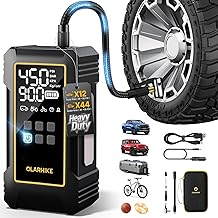
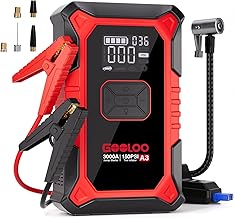
Cordless operation, 150 PSI, digital gauge, and auto shutoff cover every inflation task a household actually has, from car tires to the guest air mattress. Because it runs less than two minutes per tire, total noise exposure is negligible — a meaningful advantage over any tanked unit.
150 PSI Digital 12V Tire Inflator
The 12V corded design trades cordless freedom for unlimited runtime off your car’s outlet, which matters on a cold morning when a battery pack has lost half its charge. The integrated LED light and auto shutoff make it a legitimate roadside safety item, not just a convenience.
Frequently Asked Questions
How quiet does a compressor need to be to use indoors?
Aim for 60 dBA or below if anyone in the home may be sleeping. Sleep research consistently shows that noise events above roughly 45 dBA at the sleeper’s ear can trigger arousals, and two closed doors typically buy you 20 to 25 dBA of attenuation.
Can a small one-gallon compressor handle furniture projects?
Yes, for assembly and repair. Brad nailers, pin nailers, and upholstery staplers all draw intermittently and low volume. Spray finishing a full dresser is where a one-gallon tank runs out of breath.
Do I need oil-lubricated for durability at this price?
Not anymore. Oil-free pumps in the current generation last well past what a homeowner will demand of them, and they eliminate the risk of oil misting onto a finish you just spent a weekend applying.
Where should I store a compressor to minimize noise transmission?
On a concrete floor, ideally on a rubber anti-vibration mat, and never directly against a shared wall or on a suspended wooden floor. Structure-borne vibration travels further through a house than airborne sound.
Final Thoughts
If your projects live inside the house, the California Air Tools CAT-1P1060S is the clear choice — 56 dBA is transformative when you share walls with sleepers. Need spray capacity without the noise penalty? The MZB 2.4 Gallon splits the difference better than anything else near its price. And if inflation is your only real requirement, the AstroAI L7 will do more for your household peace than any tanked compressor ever could.