Key takeaways
- Clearance before dimensions: Measure your walkways first, not the island. Aim for roughly 36–42 inches of clear floor on every working side. Anything tighter turns into nightly side-shuffling, and in a dim kitchen it becomes a genuine shin-and-toe hazard.
- Lighting temperature: If an island includes integrated LEDs, check whether they’re warm or adjustable. Cool blue-white light near the eyes after dark suppresses melatonin more than most people realize. A warm, low-output strip is far kinder for a 9 p.m. tidy-up than flipping on every ceiling fixture.
- Closed storage ratio: Open shelving photographs beautifully and accumulates visual noise fast. A cluttered sightline raises perceived task load right when you want your nervous system down-shifting. Favor closed cabinets and drawers for anything you don’t use daily.
- Mobility versus stability: Wheels are excellent in small kitchens, but insist on locking casters. An island that drifts while you knead dough or lean on it creates low-grade physical tension. If your island doubles as a dining surface, stationary construction is usually the calmer choice.
- Task consolidation: The best islands cut trips. Power outlets, spice racks, and towel bars mean the kettle, blender, and cleanup all happen in one spot. Fewer laps around the kitchen means a shorter evening routine and an earlier lights-out.
What's inside
Most kitchen island advice stops at square footage and countertop finishes. I come at it from a different direction: I spend my working hours helping people repair broken sleep, and the kitchen is where a surprising number of those repairs begin. The last two hours before bed are when the body is supposed to be winding down — and instead, many households are standing under harsh overhead lighting, scrambling to clear a cluttered counter, packing lunches at 10:40 p.m. A layout that fights you at night quietly pushes bedtime later, week after week.
The buyer’s problem is that “kitchen layout with island” now covers everything from a 25-inch rolling cart to a 7-foot extendable dining hybrid, and the listings rarely tell you which one suits your evening rhythm. This guide looks at six popular 2026 options through a practical lens: how quickly they let you finish, how much visual clutter they absorb, whether their lighting is gentle enough for late use, and whether they genuinely fit the walking paths you use half-asleep at 6 a.m. Below are the picks, followed by the criteria I’d apply before buying anything.
As an Amazon Associate we earn from qualifying purchases.



🛒 Best Price Today on Amazon
Prime members get fast, free shipping on everything above, plus member-only deals. New members get a 30-day free trial — cancel anytime.
How to Choose a Kitchen Layout With Island (2026)
- Clearance before dimensions: Measure your walkways first, not the island. Aim for roughly 36–42 inches of clear floor on every working side. Anything tighter turns into nightly side-shuffling, and in a dim kitchen it becomes a genuine shin-and-toe hazard.
- Lighting temperature: If an island includes integrated LEDs, check whether they’re warm or adjustable. Cool blue-white light near the eyes after dark suppresses melatonin more than most people realize. A warm, low-output strip is far kinder for a 9 p.m. tidy-up than flipping on every ceiling fixture.
- Closed storage ratio: Open shelving photographs beautifully and accumulates visual noise fast. A cluttered sightline raises perceived task load right when you want your nervous system down-shifting. Favor closed cabinets and drawers for anything you don’t use daily.
- Mobility versus stability: Wheels are excellent in small kitchens, but insist on locking casters. An island that drifts while you knead dough or lean on it creates low-grade physical tension. If your island doubles as a dining surface, stationary construction is usually the calmer choice.
- Task consolidation: The best islands cut trips. Power outlets, spice racks, and towel bars mean the kettle, blender, and cleanup all happen in one spot. Fewer laps around the kitchen means a shorter evening routine and an earlier lights-out.
The Best Kitchen Layout With Island (2026)s Reviewed
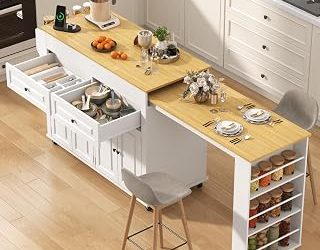
80″–48″ Extendable Kitchen Island with Dining Table
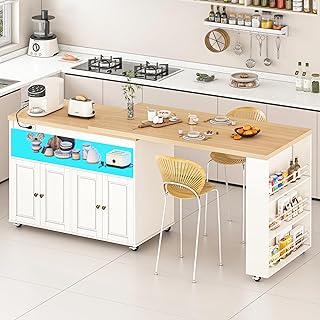
This is the strongest option for households that eat where they cook, collapsing from a generous 80 inches down to a compact 48 when the meal ends. The built-in outlet and two drawers keep small appliances and utensils within arm’s reach, though I’d reserve the three open shelves for attractive, frequently used items rather than storage overflow.
84″ Rolling Kitchen Island with Swivel Table and LED Lights
The swivel side table is the standout feature here, letting you open a serving or homework surface without rearranging the room. The integrated LEDs make this the most sleep-friendly pick on the list for late-evening use — provided you rely on them instead of the ceiling lights and keep the brightness modest.
JassmiPkwy 67″ Movable Island with Drop Leaf
A smart choice for narrow galley kitchens: the drop leaf and lockable sliding countertop expand your working area only when you need it, and the two large drawers absorb the clutter that usually migrates onto counters. The spice and towel racks consolidate prep and cleanup into a single station.
Bobve 74.8″ Large Farmhouse Island with Storage
With six closed compartments and two drawers, this stationary wooden island offers the best clutter-to-calm ratio of the group — nearly everything disappears behind a door. It’s the pick for anyone who wants a visually quiet kitchen and doesn’t need the island to move.
IRONCK Kitchen Island with Wheels and Drawers
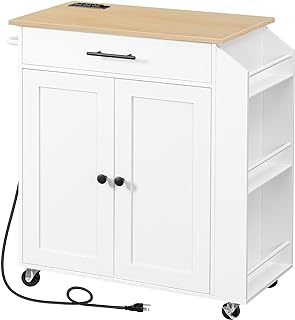
A straightforward, well-proportioned rolling island for kitchens that need flexibility more than capacity. The open shelving suits daily-use bowls and cookware; lock the casters before any serious chopping.
Frequently Asked Questions
Does kitchen lighting really affect sleep?
Yes. Bright, cool-toned light in the two hours before bed delays melatonin release and can push your natural sleep window later. Dim, warm task lighting — such as a low LED strip on an island — lets you finish evening chores without resetting your internal clock.
How much clearance do I need around an island?
Plan for 36 inches minimum, and 42–48 inches where two people pass or where you’ll be pulling out seating. Test the path in the dark before committing to a footprint.
Are rolling islands stable enough for real cooking?
With locking casters engaged, yes — options like the HOOBRO rolling island handle everyday prep comfortably. For heavy tasks such as dough work or butchering, a stationary island is the better long-term choice.
Should the island double as a dining table?
It works well in smaller homes, but choose an extendable or drop-leaf model so the surface can shrink after dinner. A permanently oversized table tends to become a drop zone, which adds to nightly cleanup.
Final Thoughts
If your evenings run late and cleanup is the bottleneck, the Bobve 74.8″ farmhouse island offers the most closed storage and the calmest sightlines. For flexible spaces, the 84″ rolling island with swivel table and warm LEDs is the most thoughtfully lit option for after-dark use, while the 80″–48″ extendable island is the best fit for households that need a dining surface that disappears once the meal is over.