Key takeaways
- Match runtime to surface area, not price: A 120-minute battery is plenty for a 15,000-gallon rectangle, but a large freeform pool with steps, benches and a tanning ledge will drain it before the waterline gets touched. Buy roughly 30% more runtime than you think you need.
- Insist on true waterline scrubbing: The oily band at the water’s edge is where algae and sunscreen residue collect. A robot that only does floors leaves you holding a brush, which defeats the entire purpose of automating the job.
- Check how it gets out of the pool: Auto-docking or surface parking means you lift the unit from the edge instead of hauling it up by cable. If you have a deep end or a bad back, treat this as non-negotiable rather than a luxury.
- Look at navigation, not just suction: Random bounce patterns miss corners and repeat coverage. Mapping or path-planning models finish faster, use less battery per square foot, and give you far more consistent results week to week.
- Think about the sound and the schedule: If you want the pool cleaned without disrupting your evenings, choose a model with app scheduling and run it mid-morning. Nothing undermines a calm backyard faster than a motor humming while you’re trying to unwind.
What's inside
Ask anyone who owns an inground pool what steals their evenings, and you’ll hear the same answer: the hose, the pole, and the twenty minutes of chasing leaves before dark. As someone who spends most of my professional life studying what wrecks people’s rest, I find this genuinely interesting — a backyard pool is supposed to be a wind-down space, a place where your nervous system downshifts before bed. Instead, for a lot of homeowners it becomes a nagging chore that sits in the back of the mind at 11 p.m., which is precisely the kind of low-grade mental to-do list that keeps sleep shallow.
That’s the lens I’m bringing to this guide. Below you’ll find the inground pool vacuum robots worth your money in 2026, judged on the things that actually matter for a low-friction household: runtime long enough to cover a full pool in one pass, wall and waterline climbing so you’re not scrubbing tile by hand, docking behavior that doesn’t require you to fish a machine out of eight feet of water, and quiet, predictable operation you can schedule and forget. I’ve also flagged which models suit simple rectangles versus awkward freeform shapes, since buying too little robot for too complex a pool is the most common regret I hear.
As an Amazon Associate we earn from qualifying purchases.



🛒 Best Price Today on Amazon
Prime members get fast, free shipping on everything above, plus member-only deals. New members get a 30-day free trial — cancel anytime.
How to Choose an Inground Pool Vacuum Robot (2026)
- Match runtime to surface area, not price: A 120-minute battery is plenty for a 15,000-gallon rectangle, but a large freeform pool with steps, benches and a tanning ledge will drain it before the waterline gets touched. Buy roughly 30% more runtime than you think you need.
- Insist on true waterline scrubbing: The oily band at the water’s edge is where algae and sunscreen residue collect. A robot that only does floors leaves you holding a brush, which defeats the entire purpose of automating the job.
- Check how it gets out of the pool: Auto-docking or surface parking means you lift the unit from the edge instead of hauling it up by cable. If you have a deep end or a bad back, treat this as non-negotiable rather than a luxury.
- Look at navigation, not just suction: Random bounce patterns miss corners and repeat coverage. Mapping or path-planning models finish faster, use less battery per square foot, and give you far more consistent results week to week.
- Think about the sound and the schedule: If you want the pool cleaned without disrupting your evenings, choose a model with app scheduling and run it mid-morning. Nothing undermines a calm backyard faster than a motor humming while you’re trying to unwind.
The Best Inground Pool Vacuum Robots (2026) Reviewed
DREAME Z1 PRO Robotic Pool Cleaner
With 8,000 GPH of suction, smart mapping and up to 300 minutes of runtime, this is the most complete package here for anyone with a genuinely large pool. It’s the model I’d point to first for a homeowner who wants to set a schedule once and stop thinking about it entirely.
Beatbot AquaSense 2 Ultra
The AI-camera mapping and 5-in-1 cleaning make this the standout for complex pools with ledges, curves and varied depths, where simpler robots stall or skip zones. Water clarification and surface skimming are meaningful extras if your pool sits under trees.
WYBOT S2 Solar Vision Robot Pool Vacuum
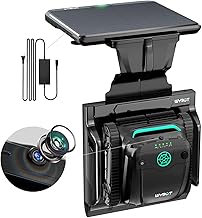
Vision-based navigation and 3D adsorption give it confident wall and waterline coverage, while auto-return charging and dual charging options keep it genuinely low-maintenance. A smart middle-ground pick for medium inground pools.
Aiper Scuba S3 Robotic Pool Cleaner
Lightweight, sensor-guided and app-controlled, the Scuba S3 handles waterline scrubbing well and lifts out easily thanks to auto-parking. Its dual ultra-fine filtration is a real advantage for pollen season and fine silt.
U8 Cordless Robotic Pool Cleaner
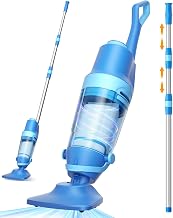
Rated for pools up to 2,600 sq. ft. with a 150-minute battery and reliable auto-docking, the U8 covers walls and waterline without hand-scrubbing. Excellent value for standard-sized inground pools that don’t need premium mapping.
Frequently Asked Questions
How often should I run a pool vacuum robot?
Two to three cycles per week is right for most inground pools in season, rising to daily during heavy pollen drop or after storms. Consistency matters more than duration.
Do these robots replace my filtration system?
No. They handle debris, walls and the waterline, but your pump and filter still manage water chemistry and circulation. Think of the robot as the cleaning crew, not the plumbing.
Are cordless models powerful enough?
Modern cordless units easily match older corded cleaners on suction, and they avoid tangling entirely. The only real trade-off is finite runtime, which is why sizing the battery to your pool matters.
Can they climb walls in every pool?
Most can climb standard plaster, tile, vinyl and fiberglass walls, though very steep or heavily textured surfaces can reduce grip. Freeform pools benefit noticeably from mapping-equipped models.
Final Thoughts
For most inground pools in 2026, the DREAME Z1 PRO is the best all-round buy thanks to its runtime and mapping, while the Beatbot AquaSense 2 Ultra is the one to choose if your pool has complicated geometry. If you want strong automation at a friendlier price, the Aiper Scuba S3 gets you most of the way there — and gets your evenings back, which was the point all along.