Key takeaways
- Nickel-safe formulation: Many evaporator plates are nickel-plated, and aggressive acids will strip them permanently. Confirm the label says nickel-safe before the product touches your machine — this is non-negotiable on Scotsman, Manitowoc, and most undercounter units.
- Acid type: Citric acid formulas are gentler, food-safe, and ideal for countertop and nugget makers. Phosphoric or sulfamic blends cut heavy limescale faster and suit hard-water regions or neglected commercial units.
- Liquid vs. tablet: Liquids let you dial in concentration for large reservoirs; tablets remove guesswork and store cleanly. If you’ve ever eyeballed a pour and wondered if you used enough, buy tablets.
- Supply length: Descaling every three to six months means you need roughly two to four doses a year. Multi-tablet packs priced as a one-year or 1.5-year supply almost always undercut single bottles per treatment.
- Stated brand compatibility: Look for your machine by name — GE Opal, Frigidaire, KitchenAid, Scotsman. Explicit compatibility lists are a reasonable proxy for a manufacturer having actually tested the chemistry against real hardware.
What's inside
Nobody buys an ice machine expecting to think about it again. Then, six months in, the cubes start tasting faintly metallic, a pinkish film appears around the water reservoir, and the unit begins cycling louder and slower than it did on day one. That progression isn’t a defect — it’s mineral scale and biofilm doing exactly what they do in any appliance that holds standing water at cool temperatures. As someone who spends most of my working hours helping people optimize bedrooms, evening routines, and the small environmental details that make rest easier, I’ve watched this specific problem derail more nightstand water rituals than almost anything else. A cloudy, off-tasting glass of ice water at 9 p.m. is a surprisingly effective way to talk yourself out of hydrating before bed.
The fix is a purpose-built descaler used on a predictable schedule, not vinegar and hope. This guide walks through what actually separates a good ice machine cleaner from a mediocre one — nickel safety, acid chemistry, dosing format, and compatibility with countertop versus commercial units — and then reviews the options I recommend most often for 2026. Whether you’re maintaining a nugget maker in a guest suite or a full undercounter unit in a wet bar, the right bottle or tablet takes about fifteen minutes of your evening and buys you months of clean, neutral-tasting ice.
As an Amazon Associate we earn from qualifying purchases.


🛒 Best Price Today on Amazon
Prime members get fast, free shipping on everything above, plus member-only deals. New members get a 30-day free trial — cancel anytime.
How to Choose a Ice Maker Cleaner (2026)
- Nickel-safe formulation: Many evaporator plates are nickel-plated, and aggressive acids will strip them permanently. Confirm the label says nickel-safe before the product touches your machine — this is non-negotiable on Scotsman, Manitowoc, and most undercounter units.
- Acid type: Citric acid formulas are gentler, food-safe, and ideal for countertop and nugget makers. Phosphoric or sulfamic blends cut heavy limescale faster and suit hard-water regions or neglected commercial units.
- Liquid vs. tablet: Liquids let you dial in concentration for large reservoirs; tablets remove guesswork and store cleanly. If you’ve ever eyeballed a pour and wondered if you used enough, buy tablets.
- Supply length: Descaling every three to six months means you need roughly two to four doses a year. Multi-tablet packs priced as a one-year or 1.5-year supply almost always undercut single bottles per treatment.
- Stated brand compatibility: Look for your machine by name — GE Opal, Frigidaire, KitchenAid, Scotsman. Explicit compatibility lists are a reasonable proxy for a manufacturer having actually tested the chemistry against real hardware.
The Best Ice Maker Cleaners (2026) Reviewed
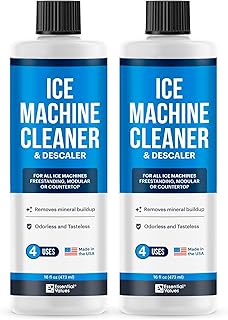
Essential Values Ice Machine Cleaner and Descaler (2-Pack, 16 fl oz)
This is my default recommendation for anyone running a larger or older machine, because 32 total ounces of nickel-safe liquid gives you room to do a genuinely thorough soak rather than a token rinse. It’s made in the USA and rated for Scotsman, KitchenAid, and most major brands, which covers nearly every undercounter unit I encounter.
Ice Machine Cleaner Tablets Descaler (24-Pack)
A full year of dosing in a compact jar, with clear nickel-safe labeling and a formula aimed squarely at mold and off-flavors — the two complaints that make people stop using their ice makers entirely. Best suited to countertop and nugget machines where the reservoir is small enough that one tablet does the job properly.
ACTIVE Ice Machine Cleaner Tablets (24-Count)
ACTIVE lists Frigidaire, GE Profile, Opal, and KitchenAid explicitly, and in practice it’s the tablet I hand to friends with an Opal who’ve never descaled once. The bulk one-year format is priced sensibly enough that there’s no excuse for skipping a quarterly cycle.
Citric Acid Ice Machine Cleaner Tablets (36-Count)
The gentlest chemistry here and the longest supply — up to eighteen months — which makes it the smart pick for a rarely-used guest-room or bar machine. Citric acid handles limescale and odors capably without the harshness that worries owners of plated evaporators.
Affresh Ice Machine Cleaner
Affresh has a long track record in appliance care, and this formula targets hard-water and mineral buildup with the straightforward, no-surprises performance you’d expect from a Whirlpool-affiliated brand. A good choice if you prefer a name your appliance manual likely already mentions.
Frequently Asked Questions
How often should I clean my ice maker?
Every three to six months for most homes, and closer to every two months if you’re on hard water or the machine runs continuously. Slower cycles, cloudy cubes, or any change in taste means clean it now regardless of the calendar.
Can I just use vinegar instead?
Vinegar will dissolve light scale, but it’s slow, leaves a persistent smell in the reservoir, and does little against biofilm. Purpose-built descalers are formulated to a known concentration and rinse clean, which matters when the output goes directly into a glass.
What does “nickel-safe” actually mean?
It indicates the acid concentration and blend won’t corrode nickel-plated evaporator plates found in many ice machines. Using a non-nickel-safe cleaner on plated components can cause irreversible pitting and void your warranty.
Will cleaner residue affect the taste of my ice?
Not if you complete the rinse cycles the instructions specify — typically two to three full flushes with fresh water. Discard the first batch of ice produced after cleaning as an extra precaution.
Final Thoughts
For most households, the Essential Values liquid descaler is the most versatile buy — enough volume for a proper soak and broad brand compatibility. If you’d rather never measure anything again, the ACTIVE tablets are the easiest way to stay on schedule with a countertop or nugget maker, while the 36-count citric acid tablets offer the gentlest chemistry and the longest runway. Pick one, set a recurring reminder, and your late-evening glass of water goes back to tasting like nothing at all — which is exactly what you want.