Key takeaways
- Lay angle: Hang so the suspension straps sit at roughly 30 degrees from horizontal, with the lowest point of the fabric about 18 inches off the ground. This produces a shallow, near-flat lay instead of a hip-swallowing banana shape, which is the single biggest determinant of whether you can rest comfortably for an hour or more.
- Width and length: Look for at least 10 feet of length and 5 feet of width for solo use. Extra width lets you lie diagonally across the fabric — the classic “Brazilian” technique — which flattens your spine considerably. Double models are worth buying even for one person.
- Stand versus straps: If your outdoor space lacks two load-bearing trees 13 to 16 feet apart, buy a stand-included model. Steel-frame stands relocate easily and remove the guesswork; tree straps are lighter but demand suitable anchors and correct tension.
- Fabric behavior: Ripstop nylon dries fast, packs small, and traps a little warmth — ideal for travel and cool mornings. Handwoven cotton rope breathes exceptionally well and stays cool in humidity, but holds moisture and needs to be stored dry to prevent mildew.
- Spreader bar or not: Spreader bars keep the hammock open and make entry easy, which suits older users and anyone with mobility limitations, though they raise the tipping risk. Gathered-end designs cradle more securely and lay flatter, but require you to learn the sit-and-swing entry.
What's inside
Outdoor napping fails for predictable reasons. Most buyers pick a hammock based on how it looks slung between two trees in a catalog photo, then discover that the fabric bunches around their shoulders, the ridgeline sags until their hips bottom out, or the whole setup depends on two perfectly spaced trees that don’t exist in their yard. From a sleep-physiology standpoint, the problem is postural: a hammock that forces your spine into a deep C-curve compresses the chest, restricts breathing, and pulls you out of the slow, steady respiration that daytime rest depends on.
The good news is that the fix is mostly geometry, not money. A flat lay, adequate width, and a stable suspension point matter far more than thread count or brand cachet. This guide breaks down the outdoor hammocks worth considering in 2026 — freestanding stand-included models for patios and decks, plus packable nylon options for trail use — and explains the specifications that actually determine whether you drift off or just lie there rearranging yourself.
As an Amazon Associate we earn from qualifying purchases.




🛒 Best Price Today on Amazon
Prime members get fast, free shipping on everything above, plus member-only deals. New members get a 30-day free trial — cancel anytime.
How to Choose a Hammock For Outdoors (2026)
- Lay angle: Hang so the suspension straps sit at roughly 30 degrees from horizontal, with the lowest point of the fabric about 18 inches off the ground. This produces a shallow, near-flat lay instead of a hip-swallowing banana shape, which is the single biggest determinant of whether you can rest comfortably for an hour or more.
- Width and length: Look for at least 10 feet of length and 5 feet of width for solo use. Extra width lets you lie diagonally across the fabric — the classic “Brazilian” technique — which flattens your spine considerably. Double models are worth buying even for one person.
- Stand versus straps: If your outdoor space lacks two load-bearing trees 13 to 16 feet apart, buy a stand-included model. Steel-frame stands relocate easily and remove the guesswork; tree straps are lighter but demand suitable anchors and correct tension.
- Fabric behavior: Ripstop nylon dries fast, packs small, and traps a little warmth — ideal for travel and cool mornings. Handwoven cotton rope breathes exceptionally well and stays cool in humidity, but holds moisture and needs to be stored dry to prevent mildew.
- Spreader bar or not: Spreader bars keep the hammock open and make entry easy, which suits older users and anyone with mobility limitations, though they raise the tipping risk. Gathered-end designs cradle more securely and lay flatter, but require you to learn the sit-and-swing entry.
The Best Hammock For Outdoors (2026)s Reviewed
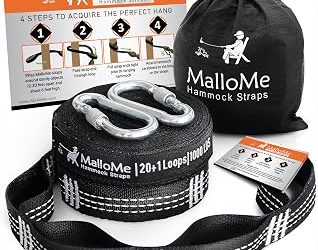
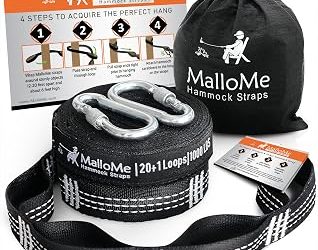
Parachute Nylon Camping Hammock with Tree Straps
This is the packable benchmark: ripstop parachute nylon that compresses to the size of a grapefruit yet holds two adults, with multi-loop tree straps that let you fine-tune the hang angle without re-rigging. Buy the double version even for solo trips — the extra width is what makes the diagonal lay possible, and it costs almost nothing in packed volume.
Double Cotton Rope Hammock with Stand and Carrying Bag
A complete patio solution that skips the tree hunt entirely, pairing handwoven cotton rope with a polyester pad that softens the rope pattern against bare skin. The airflow through open rope weave is genuinely superior to solid fabric in humid climates, and the included pad addresses the one real drawback of rope construction.
Extra Large 2 Person Camping Hammock
Generous dimensions are the main event here, giving a taller sleeper enough diagonal room to achieve a properly flat lay rather than a compromised one. It remains trail-appropriate in weight while delivering noticeably more usable surface than standard single-width designs.
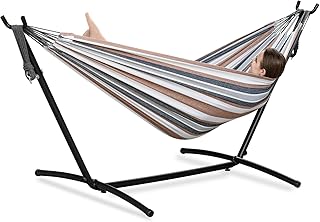
Heavy-Duty Double Hammock with Stand (Coffee)
The 9-foot steel frame and 450-pound rating make this the pick for households where two people actually use the hammock together, and the space-saving footprint suits smaller decks and balconies. Assembly is straightforward, and the frame is rigid enough that it doesn’t develop the unsettling flex common to lighter stands.
Lazy Daze Double Handwoven Rope Hammock
Traditional craftsmanship done properly: a hand-tied rope bed with a spreader bar, 450-pound capacity, and a full hardware kit covering both tree straps and chain hanging. It fits 12-to-14-foot stands, so confirm your existing frame’s span before ordering.
Frequently Asked Questions
How high should an outdoor hammock hang?
Aim for the seat to sit roughly chair height — about 18 inches — at its lowest point when occupied, which usually means anchoring 4 to 5 feet up. Hanging too high increases fall risk without improving comfort.
Can I sleep overnight in an outdoor hammock?
Yes, and many people report deeper rest thanks to the gentle rocking motion, which appears to encourage synchronized brain activity during light sleep. Add an underquilt or sleeping pad, since compressed insulation beneath you loses most of its thermal value.
Do rope hammocks hurt after a while?
Uncushioned rope can leave imprints and pressure points during long sessions, which is why a pad or folded blanket makes a real difference. Tightly woven cotton rope is noticeably gentler than coarse polyester varieties.
Should I leave my hammock outside year-round?
Nylon tolerates weather better than cotton, but ultraviolet exposure degrades every fabric over time. Store yours in its carrying bag between uses, or at minimum bring it in before extended rain to prevent mildew.
Final Thoughts
For patio and backyard rest where no suitable trees exist, the Heavy-Duty Double Hammock with Stand is the most reliable choice thanks to its rigid frame and genuine two-person capacity, while the Double Cotton Rope Hammock with Stand offers the best airflow for hot, humid conditions. Anyone heading to a campsite or beach should default to the Parachute Nylon Camping Hammock in its double width — it packs tiny, adjusts precisely, and gives you the room needed for a properly flat, restorative lay.