Key takeaways
- Published snow load, not vague claims: Look for a stated figure in pounds — 1,000 lb and up is meaningful for northern climates. “Snow resistant” with no number behind it is a marketing phrase, not a rating. Convert if needed: wet snow runs roughly 20 lb per cubic foot.
- Post thickness and footprint: Posts are where wind loads transfer to the ground. Cedar timbers in the 4.5″–5″ range or aluminum posts near 4″ resist twisting far better than the thin 2″ uprights common on budget frames. Wider stance beats taller silhouette every time.
- Roof geometry and venting: A sloped or double-tier galvanized steel roof does two jobs — it sheds snow before it accumulates, and the gap between tiers lets gusts pass through instead of lifting the whole canopy like a wing.
- Anchoring method: The strongest frame is only as good as its connection to earth. Plan for concrete footings, expansion anchors into a slab, or ground screws. Weighted feet alone are not a wind strategy in exposed yards.
- Corrosion and drainage detail: Powder-coated aluminum won’t rust; galvanized steel roofing resists it. Built-in gutters and integrated downspouts keep meltwater off your seating instead of channeling it onto the deck boards.
What's inside
Anyone who has spent a January morning shoveling a collapsed canopy off a patio table knows the hard truth about outdoor structures: the pretty ones and the durable ones are rarely the same product. Big-box gazebos are engineered for a calm afternoon in July, not a 55 mph gust rolling off an open field or 18 inches of wet spring snow sitting on a flat roof panel. Buyers get burned because the marketing photos never show what happens in February, and the spec sheets bury — or omit — the two numbers that actually matter: rated snow load and rated wind speed.
This guide approaches the problem the way a sleep-wellness specialist approaches a bedroom: the structure around you determines whether you can actually relax inside it. A shelter that creaks, flaps, drips, or makes you check the forecast every night isn’t restful — it’s a low-grade stressor parked in your backyard. Below, we break down the engineering features that separate a genuine four-season pavilion from a seasonal tent, then review six vetted options built specifically for heavy snow and sustained wind, spanning cedar-post construction and powder-coated aluminum.
As an Amazon Associate we earn from qualifying purchases.



🛒 Best Price Today on Amazon
Prime members get fast, free shipping on everything above, plus member-only deals. New members get a 30-day free trial — cancel anytime.
How to Choose a Gazebo For High Winds And Snow (2026)
- Published snow load, not vague claims: Look for a stated figure in pounds — 1,000 lb and up is meaningful for northern climates. “Snow resistant” with no number behind it is a marketing phrase, not a rating. Convert if needed: wet snow runs roughly 20 lb per cubic foot.
- Post thickness and footprint: Posts are where wind loads transfer to the ground. Cedar timbers in the 4.5″–5″ range or aluminum posts near 4″ resist twisting far better than the thin 2″ uprights common on budget frames. Wider stance beats taller silhouette every time.
- Roof geometry and venting: A sloped or double-tier galvanized steel roof does two jobs — it sheds snow before it accumulates, and the gap between tiers lets gusts pass through instead of lifting the whole canopy like a wing.
- Anchoring method: The strongest frame is only as good as its connection to earth. Plan for concrete footings, expansion anchors into a slab, or ground screws. Weighted feet alone are not a wind strategy in exposed yards.
- Corrosion and drainage detail: Powder-coated aluminum won’t rust; galvanized steel roofing resists it. Built-in gutters and integrated downspouts keep meltwater off your seating instead of channeling it onto the deck boards.
The Best Gazebos For High Winds And Snow (2026), Reviewed
Modern Shade Wood Grill Gazebo 12′ x 16′
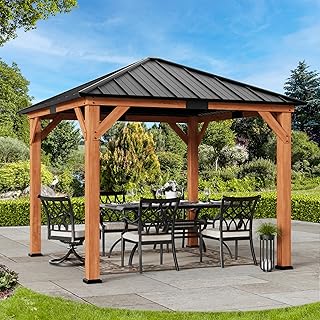
The most substantial option here, pairing 4.6″ cedar posts with a sloped galvanized steel roof that dumps snow rather than holding it. At 12′ x 16′ it comfortably covers a grill station plus a full seating group, and the timber mass gives it a genuinely quiet, non-rattling feel in wind.
Modern Shade Permanent Wood Gazebo 10×10
The same all-weather cedar-and-steel formula in a compact square footprint, which is exactly what you want on a smaller lot or an urban patio where a large roof plane catches more wind. Integrated hooks make it easy to hang string lighting or planters without drilling into the beams.
PURPLE LEAF 11′ x 13′ Aluminum Gazebo
A standout for exposed sites: 4.7″ posts, built-in drainage channels, and a vented roof design that bleeds off gust pressure instead of fighting it. The fade-resistant curtains are a real upgrade over the polyester panels that chalk out after two summers.
PURPLE LEAF Hardtop Gazebo 10′ x 12′
The clearest snow-load spec of the group at 1,800 lb, on a rust-proof powder-coated aluminum frame with a clean white finish. Curtains plus mosquito netting turn it into a genuinely usable evening room, which is where the year-round value lives.
Aoxun 10′ x 12′ Wood Gazebo
A well-priced entry into permanent cedar construction, with a galvanized steel double roof that handles both shedding and venting duties. Expect to seal the timber on schedule — that maintenance is the tradeoff for the warmth and rigidity wood provides.
Frequently Asked Questions
Do I need to remove snow from a hardtop gazebo?
With a rated steel or aluminum hardtop, occasional accumulation is fine. Still, clear anything deeper than roughly a foot with a roof rake — never a shovel or a ladder — since ice layers weigh far more than fresh powder.
Wood or aluminum for windy sites?
Aluminum offers precise engineering data and zero rot risk; heavy cedar offers mass and stiffness that dampen movement. Both perform well when anchored properly, so choose based on maintenance appetite and aesthetics.
Can I anchor to an existing patio?
Yes, provided the slab is at least four inches thick and in sound condition. Use manufacturer-specified expansion anchors; for pavers or gravel, pour dedicated footings below the frost line instead.
Will a hardtop gazebo make my patio too dark?
Solid roofs cast real shade, which most owners consider the point. If you want ambient light, choose a light-colored frame and add wall-mounted or string lighting under the roof line.
Final Thoughts
For maximum coverage and a truly immovable feel, the Modern Shade 12′ x 16′ cedar gazebo is the pick. If you want documented performance numbers and zero rust worry, the PURPLE LEAF 10′ x 12′ hardtop with its 1,800 lb snow rating is the smarter buy, while the PURPLE LEAF 11′ x 13′ aluminum model splits the difference with excellent drainage and thick posts for wind-exposed yards.