Key takeaways
- Blade size and crosscut capacity: A 10-inch saw handles 2x stock, bed slats and drawer parts comfortably. Step up to 12 inches if you plan to crosscut wide headboard panels, chunky 4×4 bed posts, or nominal 1×12 shelving in a single pass.
- Sliding vs. non-sliding: Non-sliding saws are lighter, cheaper and rock-solid for framing lumber. A slider dramatically widens your capacity — the difference between piecing a headboard together and cutting it clean — but demands more bench depth behind the saw.
- Single vs. double bevel: Single bevel is fine if you’re patient and happy to flip workpieces. Double bevel saves real time and reduces layout mistakes on mitered boxes, plinths and crown-style bed frame trim, where every flip is a chance to cut the wrong end.
- Cut-line visibility: Laser lines wander out of calibration. A shadow-cast LED system projects the blade’s actual silhouette onto the workpiece, which is what you want when you’re chasing a pencil line on dark walnut at the end of a long evening.
- Support and dust control: A saw is only as accurate as the stand under it. Long bed rails need continuous outfeed support, and if you’re working near living or sleeping areas, plan on a shop vacuum at the port rather than relying on the bag alone.
What's inside
Most people who buy a miter saw aren’t chasing sawdust for its own sake. They’re building a platform bed that finally fits the mattress, a floating nightstand at the exact height of the pillow, a slatted headboard that turns a bare wall into something restful. The problem is that bedroom furniture is unforgiving work: a headboard frame out by a single degree reads as crooked from across the room, and a bed rail cut a millimeter short will creak for years. Hand saws and circular saws rarely hold that tolerance across dozens of repeated cuts, and cheap miter saws drift out of square the moment you tighten a clamp.
This guide looks at DEWALT’s miter saw lineup through the lens of the rooms we sleep in — accuracy on repeat crosscuts, capacity for wide headboard stock, dust behavior in a space where you’ll eventually be breathing, and how quickly the tool can be set up and broken down when your workshop is a garage or a corner of the spare room. Below you’ll find the saws worth your money in 2026, the two stands that make them safe to use alone, and a plain-language buying framework so you can stop comparing spec sheets and start cutting.
As an Amazon Associate we earn from qualifying purchases.



🛒 Best Price Today on Amazon
Prime members get fast, free shipping on everything above, plus member-only deals. New members get a 30-day free trial — cancel anytime.
How to Choose a Dewalt Miter Saw (2026)
- Blade size and crosscut capacity: A 10-inch saw handles 2x stock, bed slats and drawer parts comfortably. Step up to 12 inches if you plan to crosscut wide headboard panels, chunky 4×4 bed posts, or nominal 1×12 shelving in a single pass.
- Sliding vs. non-sliding: Non-sliding saws are lighter, cheaper and rock-solid for framing lumber. A slider dramatically widens your capacity — the difference between piecing a headboard together and cutting it clean — but demands more bench depth behind the saw.
- Single vs. double bevel: Single bevel is fine if you’re patient and happy to flip workpieces. Double bevel saves real time and reduces layout mistakes on mitered boxes, plinths and crown-style bed frame trim, where every flip is a chance to cut the wrong end.
- Cut-line visibility: Laser lines wander out of calibration. A shadow-cast LED system projects the blade’s actual silhouette onto the workpiece, which is what you want when you’re chasing a pencil line on dark walnut at the end of a long evening.
- Support and dust control: A saw is only as accurate as the stand under it. Long bed rails need continuous outfeed support, and if you’re working near living or sleeping areas, plan on a shop vacuum at the port rather than relying on the bag alone.
The Best Dewalt Miter Saw (2026)s Reviewed
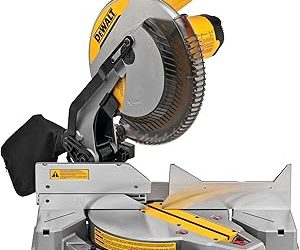
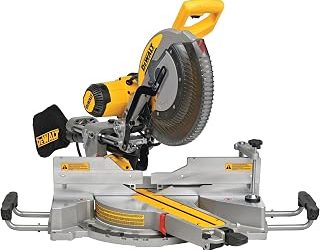
DEWALT DWS780 12-Inch Double Bevel Sliding Compound Miter Saw
This is the saw to buy if bedroom furniture is your main project queue: the slide plus 12-inch blade swallows wide headboard boards and thick posts, and the XPS shadow light is the single most useful accuracy feature on any miter saw at this price. It arrives with a clamp, wrench and dust bag, so you can square it up and start cutting the same afternoon.
DEWALT DWS716 12-Inch Double Bevel Compound Miter Saw
A non-sliding 12-inch double bevel is an underrated sweet spot — you get generous crosscut depth and left-right bevels without the footprint or price of a slider. Ideal for mitered plinths, bed rails and repetitive trim work in a tight garage bay.
DEWALT DWS715 12-Inch Single Bevel Compound Miter Saw
The same tough 15-amp platform with bevel travel in one direction only, which most furniture builders can live with. Choose it if your work is mainly square crosscuts and simple miters, and put the savings toward better blades.
DEWALT DWS713 10-Inch Single Bevel Compound Miter Saw
The lightest and most portable of the group, and genuinely accurate for slats, frame stock, shelving and drawer components. It’s the right first saw for anyone furnishing a home rather than building for clients.
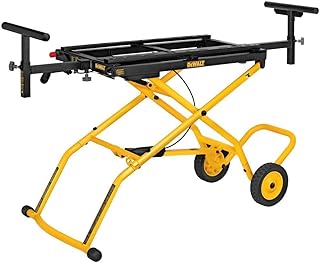
DEWALT DWX726 Rolling Miter Saw Stand
Eight feet of material support, adjustable height and wheels — this is what turns a solo bed-frame build from a wrestling match into a controlled operation. Fold it flat when the workshop reverts to being a garage.
Frequently Asked Questions
Do I really need a 12-inch saw for bedroom furniture?
Not always. A 10-inch saw covers slats, rails and most case parts. Twelve inches earns its keep on wide headboard panels and 4×4 posts.
Is a sliding saw worth the extra cost?
If you cut boards wider than about 8 inches with any regularity, yes. If you mostly cut 2×4 and 1×6 stock, a fixed-head saw stays more accurate for less money.
Can I use a miter saw indoors?
Only with real dust management. Connect a shop vacuum to the port, ventilate the space, and never cut in or adjacent to a bedroom — fine wood dust lingers in soft furnishings long after the tool is packed away.
Which stand should I choose?
Pick the DWX726 if you cut long stock alone and want wheels; pick the compact DWX724 if storage space is scarce and your cuts are shorter.
Final Thoughts
For most people building furniture for their own home, the DWS780 is the saw that will never limit a design, while the DWS713 is the smarter, lighter buy if your projects stay modest. Pair either with the DWX726 rolling stand and you’ll cut straighter, work more safely, and spend far less time fighting the tool than the wood.