Key takeaways
- Motor and blade size: A 15-amp, 10-inch saw handles nearly all furniture stock, including 2x material in a single pass. Drop to an 8-1/4-inch blade only if you rarely cut thicker than 2-1/2 inches, and reserve 3 HP cabinet power for hardwood work done daily.
- Rip capacity: Measure your most common sheet cut before you buy. Roughly 25 inches to the right of the blade covers most casework; 50 inches means you can break down a full plywood sheet without an outfeed helper.
- Fence and miter accuracy: The fence, not the motor, determines joinery quality. Look for a fence that locks parallel without tapping, and check that the miter slots are standard T-slot so you can add sleds and featherboards later.
- Dust collection and noise: A shrouded blade with a 2-1/2-inch port keeps fine dust out of the air you sleep in. Universal motors run loud, so plan hearing protection and, if your shop shares a wall with a bedroom, plan your cutting hours too.
- Safety hardware and stand: Insist on a riving knife, functional guard, and anti-kickback pawls. A folding rolling stand that deploys in under a minute is what keeps you working in short, well-rested sessions rather than marathon ones.
What's inside
Most people shopping for a table saw are not really shopping for a table saw. They are shopping for the bed frame they promised their partner in March, the nursery shelving that has to be sanded and sealed before the due date, the closet build-out that would end the nightly hunt for a clean shirt. As someone who spends their working life on sleep environments, I see the pattern from the other side: unfinished projects and late-night cutting sessions are two of the quietest saboteurs of good rest in a household. A saw that bogs down, drifts out of square, or forces you to work past 11 p.m. is not a bargain at any price.
This guide looks at the strongest table saw values heading into 2026, judged on the things that actually shorten a build: motor honesty, fence accuracy, dust capture, and how quickly the machine goes from folded to cutting. I have weighted portability and noise more heavily than most roundups do, because for anyone building furniture in a garage attached to a bedroom, decibels and setup time are usability features. Below you will find the current picks, followed by a buying framework and answers to the questions readers send me most.
As an Amazon Associate we earn from qualifying purchases.



How to Choose a Deal On A Table Saw (2026)
- Motor and blade size: A 15-amp, 10-inch saw handles nearly all furniture stock, including 2x material in a single pass. Drop to an 8-1/4-inch blade only if you rarely cut thicker than 2-1/2 inches, and reserve 3 HP cabinet power for hardwood work done daily.
- Rip capacity: Measure your most common sheet cut before you buy. Roughly 25 inches to the right of the blade covers most casework; 50 inches means you can break down a full plywood sheet without an outfeed helper.
- Fence and miter accuracy: The fence, not the motor, determines joinery quality. Look for a fence that locks parallel without tapping, and check that the miter slots are standard T-slot so you can add sleds and featherboards later.
- Dust collection and noise: A shrouded blade with a 2-1/2-inch port keeps fine dust out of the air you sleep in. Universal motors run loud, so plan hearing protection and, if your shop shares a wall with a bedroom, plan your cutting hours too.
- Safety hardware and stand: Insist on a riving knife, functional guard, and anti-kickback pawls. A folding rolling stand that deploys in under a minute is what keeps you working in short, well-rested sessions rather than marathon ones.
The Best Deal On A Table Saw (2026)s Reviewed
SKIL 15 Amp 10-Inch Portable Jobsite Table Saw (TS6307-00)
This is the value benchmark right now: a true 10-inch, 15-amp saw with a rack-and-pinion fence that tracks square better than its price suggests, mounted on a folding stand one person can wheel out and set up alone. If you are building beds, tables, and cabinets in a shared garage, start here.
DEWALT 15 Amp 8-1/4 in. Compact Portable Jobsite Table Saw (DWE7485)
The smaller blade is a deliberate trade: you lose about half an inch of depth and gain a saw light enough to lift onto a bench and stow on a shelf. Its fence and rip capacity punch well above the footprint, making it the pick for apartments, small shops, and anyone who breaks down the workspace after every session.
Prostormer 10-Inch Table Saw with Stand
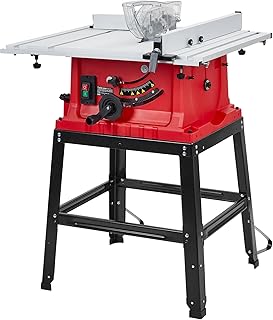
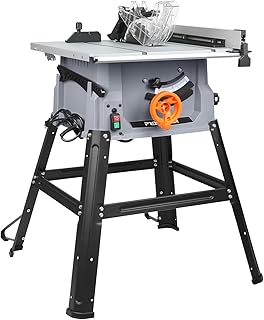
A straightforward 15-amp benchtop saw with a stand included, aimed at decking, trim, and weekend furniture builds. Expect to spend twenty minutes truing the fence and blade at setup; do that once and it cuts far above its cost.
10-Inch 15 Amp Table Saw with Stand and Protective Cover
The 36 x 25-inch tabletop is the standout here, giving you real support for wide panels along with 90-degree cross cuts and a 0-45 degree bevel. The included cover is a genuine perk for garages where sawdust and humidity are constant threats to a bare cast surface.
JET 10-Inch Deluxe XACTA Table Saw, 50-Inch Rip (JTAS-10XL50-1DX)
This is the graduation machine: 3 HP, 230V, a 50-inch rip fence, and enough cast iron mass to smooth vibration and drop the pitch of the cut noticeably. It requires a dedicated circuit and floor space, but for hardwood furniture at volume, nothing else on this list compares for repeatability.
Frequently Asked Questions
Is an 8-1/4 inch saw enough for furniture work?
For most casework, yes. It handles 3/4-inch stock, plywood, and standard hardwood boards easily. You will only feel the limit when cutting thick tabletop slabs or ripping 4x material.
What about small-scale and hobby cutting?
For miniatures, models, and delicate craft stock, a full-size saw is the wrong tool. The MXBAOHENG Mini Table Saw S3, with its 1/2-inch depth capacity and seven-speed control, gives you fine control at a fraction of the noise and footprint.
How loud are these saws, realistically?
Portable jobsite saws typically peak between 95 and 105 dB under load, which is well past the level that carries through interior walls. Wear muffs, and if bedrooms are nearby, keep cutting to daylight hours and save sanding and assembly for evenings.
Does a more expensive saw actually make better furniture?
Only in consistency and comfort. A budget saw tuned carefully will produce clean joinery; a cabinet saw simply gets there faster, with less vibration and fewer repeat cuts, which is what protects your time and your sleep schedule on long builds.
Final Thoughts
For most readers building furniture at home, the SKIL TS6307-00 is the clear best overall value, pairing full 10-inch capacity with a stand that respects your setup time. Choose the DEWALT DWE7485 if space is your real constraint, and step up to the JET XACTA 50-inch if woodworking has stopped being a weekend project and started being a practice.