Key takeaways
- Read PSI skeptically: Headline pressure figures are often theoretical peaks measured at the nozzle tip with zero flow. For patio furniture, siding, and cars, anything in the honest 1,000–1,500 PSI range does the work; treat four-digit marketing numbers as a rough ranking, not a spec sheet.
- Prioritize flow over pressure: Gallons per minute determines how fast you rinse away what you’ve loosened. A modest-pressure unit with decent GPM will finish a deck sooner than a high-PSI trickle, and it’ll be gentler on softwood and cushion fabric.
- Check the battery math: Two batteries beat one, and 4.0Ah or higher is the practical floor. Expect roughly 15–25 minutes per pack under real use, and confirm whether the cells fit a platform you already own.
- Look for a brushless motor: Brushless designs run cooler, last longer, and — relevant if you’re working early or near bedrooms — noticeably quieter than brushed equivalents at the same output.
- Measure your reach: Add up hose length plus the suction line to your bucket or rain barrel. A 23–27 foot hose is the difference between washing a fence in one setup and repositioning six times.
What's inside
As someone who spends most of my working life on sleep environments, I’ve noticed a pattern that has nothing to do with mattresses: people stop using the outdoor half of their home. The deck gets a film of green, the patio chairs go chalky, and the one place that could be a genuine wind-down room after work quietly becomes storage. The obvious fix — a pressure washer — usually comes with its own problem. Gas units are loud enough to be a neighborhood event, and corded electric models tether you to an outlet and a puddle of extension cable, which means the job gets postponed to a weekend that never quite arrives.
Cordless pressure washers solve the logistics, but the category is noisy in a different way: wildly inflated PSI claims, mystery battery platforms, and hoses too short to reach the far end of a fence. This guide cuts through it. Below, you’ll find what actually matters when comparing models in 2026, honest notes on the units worth your attention, and answers to the questions buyers ask most — with a bias toward machines quiet enough to run at 8 a.m. without waking anyone.
As an Amazon Associate we earn from qualifying purchases.


How to Choose a Cordless Pressure Washer (2026)
- Read PSI skeptically: Headline pressure figures are often theoretical peaks measured at the nozzle tip with zero flow. For patio furniture, siding, and cars, anything in the honest 1,000–1,500 PSI range does the work; treat four-digit marketing numbers as a rough ranking, not a spec sheet.
- Prioritize flow over pressure: Gallons per minute determines how fast you rinse away what you’ve loosened. A modest-pressure unit with decent GPM will finish a deck sooner than a high-PSI trickle, and it’ll be gentler on softwood and cushion fabric.
- Check the battery math: Two batteries beat one, and 4.0Ah or higher is the practical floor. Expect roughly 15–25 minutes per pack under real use, and confirm whether the cells fit a platform you already own.
- Look for a brushless motor: Brushless designs run cooler, last longer, and — relevant if you’re working early or near bedrooms — noticeably quieter than brushed equivalents at the same output.
- Measure your reach: Add up hose length plus the suction line to your bucket or rain barrel. A 23–27 foot hose is the difference between washing a fence in one setup and repositioning six times.
The Best Cordless Pressure Washers (2026) Reviewed
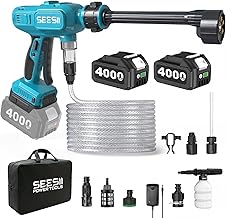
SEESII Cordless Pressure Washer 1250 PSI
The brushless motor is the headline here, and it earns its place: smoother power delivery, less heat, and a lower, less grating sound signature than the brushed competition. Paired with two 4,000mAh packs and a 27-foot hose, it’s the most complete choice for anyone tackling a whole patio set in one session.
1300 PSI 6-in-1 Portable Cordless Pressure Washer
A well-balanced handheld with two 4.0Ah batteries, which in practice means you can keep working while one charges rather than calling it a day. The six-in-one nozzle covers everything from a wide fan for cushions to a focused jet for wheel wells.
21V Cordless Pressure Washer with Dual 4.5Ah Batteries
The two-stage power selector is the feature I’d argue for most: dropping to low mode reduces both the risk of etching teak or composite decking and the noise you’re pushing into your neighbor’s morning. The largest battery capacity in this group, too.
1100 PSI Handheld Power Washer with 23 ft Hose
The most generously kitted option — foam pot, long hose, charger, and a full nozzle set — at a pressure rating that’s genuinely appropriate for outdoor furniture, glass, and paintwork. A sensible first cordless washer if you’re not sure how often you’ll use it.
6-in-1 Cordless Washer with Foam Cannon
Ignore the 5,000 PSI on the box; that figure reflects optimistic peak math rather than sustained output. Judged on what it actually does, the included foam cannon makes it the detailer’s pick, laying down a thick pre-soak that lifts grime before you touch the surface.
Frequently Asked Questions
How loud are cordless pressure washers?
Most sit around 70–80 dB at the pump — closer to a dishwasher than a lawnmower, and a fraction of a gas unit’s output. Brushless models on a low power setting are quiet enough for early-morning use without disturbing sleeping households nearby.
Can I run one from a bucket instead of a spigot?
Yes, and it’s the main advantage of the category. Every model here draws through a suction hose from a bucket, rain barrel, or lake, which makes them viable for apartment balconies and driveways without an outdoor tap.
Will they damage outdoor furniture or cushions?
Not at these pressures, provided you start with a wide fan tip at arm’s length and move closer only if needed. Keep the jet off fabric seams and untreated softwood, and let surfaces dry fully before use.
Do they replace a full-size pressure washer?
For furniture, cars, bikes, grills, siding, and small decks, comfortably. For stripping paint or reviving a large concrete driveway, a corded or gas unit still wins on sustained flow.
Final Thoughts
If you want one machine that handles a full afternoon of patio restoration without a recharge break, the SEESII 1250 PSI brushless model is the strongest all-rounder here. For finer control over delicate surfaces — and quieter early-morning sessions — the dual 4.5Ah 21V unit’s two-stage power switch is worth the small premium, while the 1100 PSI kit with the 23-foot hose remains the most sensible entry point. Clean the space, and you’ll actually sit in it.