Key takeaways
- Hammer drill vs. rotary hammer: A hammer drill uses two ridged plates that click against each other, delivering many light taps — fine for brick, block, mortar, and occasional small holes in concrete. A rotary hammer uses a piston to drive the bit forward with real force, and it will out-drill a hammer drill by a factor of several in cured concrete. If you are setting anchors larger than about 1/4 inch, or more than a handful of them, buy the rotary hammer.
- Impact rate over torque figures: Torque ratings sell drills, but in masonry the useful number is blows per minute (IPM/BPM). Anything from roughly 27,000 IPM upward is credible for a hammer drill; a rotary hammer trades rate for impact energy, measured in joules, and wins anyway.
- Chuck and bit system: A 1/2-inch all-metal keyless chuck grips carbide masonry bits far better than a plastic-bodied chuck, which will let bits slip and mushroom under percussion. SDS-Plus tools use a slotted shank that locks in and cannot slip at all — a meaningful advantage on long holes.
- Brushless motors and battery capacity: Brushless motors hold speed under load instead of bogging, which is exactly what happens when a bit hits rebar or hard aggregate. Pair one with at least a 4.0Ah pack; masonry drilling is the most current-hungry thing a cordless drill does, and small 2.0Ah batteries sag and heat up quickly.
- Vibration, noise, and household timing: Percussive tools sit somewhere around 95–105 dB at the operator’s ear and transmit low-frequency thud through the whole structure — the frequency range that carries best through walls and floors and reliably pulls people out of light sleep. Wear hearing protection, favor tools with a side handle to reduce hand-arm vibration, and finish masonry work well before anyone’s bedtime rather than saving it for late evening. A faster tool is also a quieter one, simply because it stops sooner.
What's inside
Concrete does not forgive underpowered tools. Anyone who has leaned into a drill for ten minutes, watched a bit polish a smooth crater into a basement wall, and gotten nowhere knows the feeling: the anchor still isn’t in, the shelf is still on the floor, and the whole household now knows exactly what you’re doing. Cured concrete, brick, and block resist cutting edges in a way wood and metal never do, which is why a standard drill/driver — even a strong one — is the wrong instrument. You need percussion: thousands of tiny hammer blows per minute that fracture the aggregate while the bit clears the dust.
This guide is written for people mounting things inside homes, not pouring foundations. That changes the priorities. Raw power matters, but so do the things nobody puts on the box: how much vibration reaches your wrists, how long the noise lasts, whether the tool finishes an anchor in twenty seconds or three grinding minutes, and whether you can do the job in the evening without waking a sleeping child down the hall. Below we cover the specs that genuinely predict performance in masonry, then review the strongest cordless hammer drills and rotary hammers available in 2026 for concrete work around the house.
As an Amazon Associate we earn from qualifying purchases.



🛒 Best Price Today on Amazon
Prime members get fast, free shipping on everything above, plus member-only deals. New members get a 30-day free trial — cancel anytime.
How to Choose a Cordless Hammer Drill For Concrete (2026)
- Hammer drill vs. rotary hammer: A hammer drill uses two ridged plates that click against each other, delivering many light taps — fine for brick, block, mortar, and occasional small holes in concrete. A rotary hammer uses a piston to drive the bit forward with real force, and it will out-drill a hammer drill by a factor of several in cured concrete. If you are setting anchors larger than about 1/4 inch, or more than a handful of them, buy the rotary hammer.
- Impact rate over torque figures: Torque ratings sell drills, but in masonry the useful number is blows per minute (IPM/BPM). Anything from roughly 27,000 IPM upward is credible for a hammer drill; a rotary hammer trades rate for impact energy, measured in joules, and wins anyway.
- Chuck and bit system: A 1/2-inch all-metal keyless chuck grips carbide masonry bits far better than a plastic-bodied chuck, which will let bits slip and mushroom under percussion. SDS-Plus tools use a slotted shank that locks in and cannot slip at all — a meaningful advantage on long holes.
- Brushless motors and battery capacity: Brushless motors hold speed under load instead of bogging, which is exactly what happens when a bit hits rebar or hard aggregate. Pair one with at least a 4.0Ah pack; masonry drilling is the most current-hungry thing a cordless drill does, and small 2.0Ah batteries sag and heat up quickly.
- Vibration, noise, and household timing: Percussive tools sit somewhere around 95–105 dB at the operator’s ear and transmit low-frequency thud through the whole structure — the frequency range that carries best through walls and floors and reliably pulls people out of light sleep. Wear hearing protection, favor tools with a side handle to reduce hand-arm vibration, and finish masonry work well before anyone’s bedtime rather than saving it for late evening. A faster tool is also a quieter one, simply because it stops sooner.
The Best Cordless Hammer Drill For Concrete (2026)s Reviewed
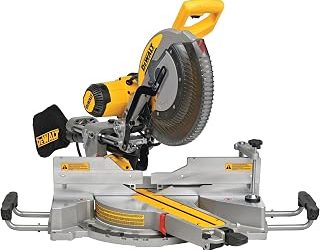
DEWALT 20V MAX SDS Rotary Hammer (DCH273B)
This is the tool to buy if concrete is the actual job rather than an occasional obstacle: the SDS-Plus piston mechanism drills 1/2-inch anchor holes in seconds and offers rotation-only, hammer-only, and combined modes for chiseling and light demolition. It ships bare, so factor in batteries — ideally the largest packs you own.
DCK 20V Brushless Hammer Drill (KDJZ05-13)
At 531 in-lbs and 36,000 BPM with a 4.0Ah pack included, this is the most convincing conventional hammer drill of the group for masonry, and the all-metal keyless chuck holds carbide bits securely under sustained percussion. A strong choice when you want one tool that drills concrete competently and still drives screws.
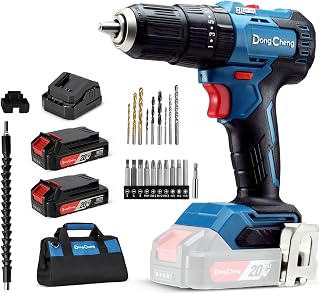
Dong Cheng 20V Brushless Impact Drill
Two batteries, 443 in-lbs, 27,000 IPM, and a metal chuck make this a sensible do-everything kit for brick, block, and mortar joints. It handles small concrete holes willingly but slows noticeably past 3/8 inch.
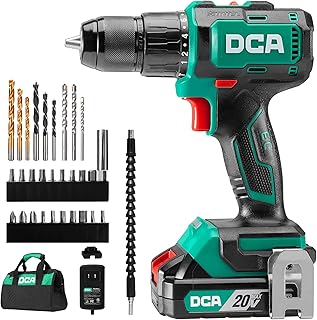
DCA 20V Brushless Hammer Drill (ADJZ2055i)
Compact and genuinely comfortable overhead, with 492 in-lbs and a useful low 0–450 RPM gear for controlled starts in masonry. The included 2.0Ah battery is the limiting factor — a larger pack transforms it.
CRAFTSMAN V20 Hammer Drill Kit (CMCD711C2)
The most affordable route into masonry drilling, and perfectly adequate for anchoring shelves and curtain rods into brick or block. Expect slower going in poured concrete and plan on frequent battery swaps.
Frequently Asked Questions
Can I drill concrete with a regular cordless drill?
Only marginally, and only in soft block or old mortar. Without percussion the carbide tip burnishes rather than fractures the material, which destroys bits and accomplishes little.
Do I need SDS bits, or will standard masonry bits work?
Hammer drills take round-shank masonry bits in their keyless chuck. SDS-Plus tools require SDS-shank bits, which cannot be used in a standard chuck — the two systems are not interchangeable.
How loud is hammer drilling, really?
Loud enough to require ear protection within minutes, and structure-borne enough that neighbors two floors away will hear it. Treat it as morning or afternoon work.
What if I hit rebar?
Stop hammering. Switch to rotation-only mode with a metal-cutting bit, or relocate the hole a few inches — continued percussion on steel ruins carbide and stresses the tool.
Final Thoughts
For serious concrete work, the DEWALT DCH273B rotary hammer is the clear pick and will save more time than its price suggests. If you want a single versatile tool, the DCK KDJZ05-13 offers the best combination of impact rate and included battery capacity, while the CRAFTSMAN CMCD711C2 remains the honest budget answer for light anchoring in brick and block.