Key takeaways
- Canopy density over canopy color: A saturated shade means nothing if light streams through the weave. Look for UPF 50+ or explicit UV-blocking claims — dense fabric produces deep, even shade rather than a dappled glare that keeps your eyes working and your nervous system alert.
- Hue and perceived calm: Cool tones like peacock blue and teal filter light into a shade that reads as cooler and quieter underneath, which suits an evening unwind. Warm yellows, limes, and reds cast a livelier glow — excellent for social afternoons, less ideal if you’re using the space to decompress before bed.
- Rib count and material: Eight ribs distribute wind load far better than six, and steel or reinforced fiberglass will outlast the flimsy alternatives. A canopy that flexes instead of inverting is one you’ll still own in three summers.
- Tilt plus crank, not one or the other: The crank raises the canopy; the push-button tilt is what lets you block low, late-day sun without dragging furniture around. That combination matters most between 4 and 7 p.m., when horizontal light is at its most intrusive.
- Fade resistance and ventilation: Ask about fade warranties, and look for a vented top. Venting relieves wind pressure and pulls hot air upward, which meaningfully lowers the temperature in the seat below — and cooler bodies settle into sleep more easily.
What's inside
As someone who spends their working life talking to people about rest, I’ve noticed that the conversation almost always begins indoors — blackout curtains, mattress firmness, room temperature. But daytime light exposure shapes your night far more than most people realize, and the shaded corner of a patio is where a surprising amount of that work happens. The problem is that shopping for a patio umbrella has become an exercise in guessing: canopy colors photograph beautifully and then fade to a chalky pastel by August, cheap ribs fold in the first real gust, and thin fabric lets so much glare through that sitting beneath it feels less like shade and more like a suggestion.
This guide approaches color patio umbrellas from a slightly unusual angle — not just which ones look good, but which ones create the kind of restorative outdoor space that helps you wind down in the late afternoon and sleep better that night. I’ve weighed canopy density and UV rating, how a given hue behaves in bright sun, pole and rib construction, tilt mechanisms that let you chase shade as the sun drops, and long-term colorfastness. Below are the six options worth your attention in 2026, with honest notes on where each one earns its place.
As an Amazon Associate we earn from qualifying purchases.



🛒 Best Price Today on Amazon
Prime members get fast, free shipping on everything above, plus member-only deals. New members get a 30-day free trial — cancel anytime.
How to Choose a Color Patio Umbrella (2026)
- Canopy density over canopy color: A saturated shade means nothing if light streams through the weave. Look for UPF 50+ or explicit UV-blocking claims — dense fabric produces deep, even shade rather than a dappled glare that keeps your eyes working and your nervous system alert.
- Hue and perceived calm: Cool tones like peacock blue and teal filter light into a shade that reads as cooler and quieter underneath, which suits an evening unwind. Warm yellows, limes, and reds cast a livelier glow — excellent for social afternoons, less ideal if you’re using the space to decompress before bed.
- Rib count and material: Eight ribs distribute wind load far better than six, and steel or reinforced fiberglass will outlast the flimsy alternatives. A canopy that flexes instead of inverting is one you’ll still own in three summers.
- Tilt plus crank, not one or the other: The crank raises the canopy; the push-button tilt is what lets you block low, late-day sun without dragging furniture around. That combination matters most between 4 and 7 p.m., when horizontal light is at its most intrusive.
- Fade resistance and ventilation: Ask about fade warranties, and look for a vented top. Venting relieves wind pressure and pulls hot air upward, which meaningfully lowers the temperature in the seat below — and cooler bodies settle into sleep more easily.
The Best Color Patio Umbrella (2026)s Reviewed
JEAREY 9FT Patio Umbrella (Peacock Blue)
This is my first recommendation for anyone building a genuine wind-down space: the peacock blue canopy throws a cool, low-glare shade that’s remarkably easy on tired eyes, and eight ribs plus push-button tilt make it practical rather than merely pretty. The waterproof canopy and UV protection mean it stays usable across shoulder seasons.
EliteShade USA 9ft 3-Tier Market Umbrella (Sunflower Yellow)
The commercial-grade build and 10-year non-fading claim put this in a different durability class, and the three-tier vented design does real cooling work on still, humid afternoons. The sunflower yellow is energetic and cheerful — I’d pair it with a morning coffee routine more than an evening one.
Sunnyglade 9′ Patio Umbrella (Red)
A well-executed, no-drama umbrella: aluminum pole, eight ribs, waterproof polyester, and a tilt-and-crank setup that works exactly as advertised. Red casts a warm, high-energy shade, so it’s my pick for a dining patio rather than a reading nook.
AMMSUN 7ft Fringe Tassel Umbrella (Wave Colorful)
The fringed edge is genuinely functional — it softens the shade line and cuts the harsh contrast between sun and shadow that makes some patios uncomfortable to sit in. UPF 50+ fabric on a steel pole keeps it more capable than its playful looks suggest.
7.5 ft Patio Umbrella (Lime)
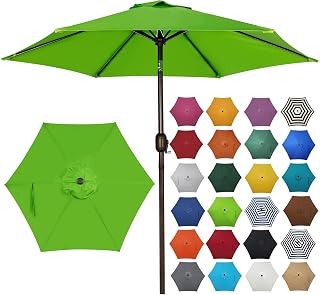
A smart choice for smaller balconies and bistro tables where a 9-footer would overwhelm the space, with the same push-button tilt and crank you’d want on a larger model. The lime canopy tints the light beneath it noticeably green, which some people love and others find distracting.
Frequently Asked Questions
Does umbrella color affect how cool the shade feels?
Somewhat. Darker canopies absorb more heat but typically block more light, producing deeper shade; lighter ones stay cooler to the touch but can transmit more glare. Fabric density and top venting influence the temperature you actually feel more than hue does.
Can sitting in shade still help my sleep?
Yes — and it’s an underrated tactic. Shaded outdoor light is still many times brighter than indoor lighting, so an hour beneath an umbrella delivers a meaningful circadian signal without the squinting, overheating, or sun exposure that discourages people from going outside at all.
How do I stop a bright canopy from fading?
Close and cover it when unused, rinse off pollen and dust periodically, and prioritize models with stated fade warranties. Fading is largely cumulative UV exposure, so an umbrella left cranked open all season will lose saturation fastest.
Is 7.5 feet enough, or should I size up to 9?
Measure your table and add roughly two feet of overhang on each side. A 7.5-foot canopy suits two-to-four-person bistro setups; anything larger, or any seating group you want fully covered through a shifting afternoon, calls for 9 feet.
Final Thoughts
If you want one umbrella that balances shade quality, build integrity, and a color that genuinely helps a space feel restful, the JEAREY 9FT in peacock blue is the one I’d put on my own patio. Choose the EliteShade USA 3-Tier in sunflower yellow if longevity and ventilation top your list, or the Sunnyglade 9′ in red for a straightforward, well-made classic at a friendlier price.