Key takeaways
- Shade density and timing: Decide whether you want full summer cover with winter sun (deciduous options like Boston ivy and wisteria) or year-round screening (evergreen jasmine in mild zones). Deciduous vines are the smarter circadian choice for most homes: they block harsh late-afternoon light in summer and let warm morning light through in winter.
- Fragrance placement: Scent is a genuine variable in rest quality. Plant strongly perfumed climbers such as jasmine at the far end of the pergola or along a walkway — not within a few feet of an open bedroom window, where a heavy floral note can fragment light sleep.
- Structural load: Mature wisteria is heavy and its stems thicken relentlessly. It needs bolted timber or steel, not a lightweight kit pergola. Twining annual-style climbers like mandevilla and Thunbergia are far gentler on the frame.
- Hardiness zone honesty: Mandevilla is reliably perennial only in roughly zones 9–11; Thunbergia behaves as a tender perennial or fast annual in cooler regions. Buy accordingly rather than hoping for a mild winter.
- Maintenance appetite: Vigorous vines are not low-effort. Wisteria wants twice-yearly pruning; Boston ivy needs edges kept off gutters and siding. If you want coverage without a calendar of chores, start with seeds or plugs of something less rampant.
What's inside
Most people shop for a pergola vine with their eyes: they want blossoms, dappled light, that photograph-ready canopy. But if you actually use your pergola in the hours that matter — the wind-down window between dinner and bed — you quickly discover that the wrong plant works against you. A sparse canopy lets late western sun blast the seating area at 7 p.m., keeping your body temperature and alertness elevated exactly when they should be dropping. A too-aggressive climber turns into a wasp motel. And a heavily perfumed vine planted directly beside a bedroom window can be lovely in June and genuinely disruptive by August.
I approach outdoor structures the way I approach a bedroom: as part of a circadian environment. Shade quality, fragrance intensity, airflow, and even the rustle of leaves all feed into whether an evening space helps you decompress or subtly keeps you switched on. This guide covers six climbers worth planting on a pergola in 2026 — what each one gives you in terms of shade density, bloom season, scent, and maintenance load — plus how to match them to your climate zone and your evening routine.
As an Amazon Associate we earn from qualifying purchases.




🛒 Best Price Today on Amazon
Prime members get fast, free shipping on everything above, plus member-only deals. New members get a 30-day free trial — cancel anytime.
How to Choose a Climbing Vine For Pergola (2026)
- Shade density and timing: Decide whether you want full summer cover with winter sun (deciduous options like Boston ivy and wisteria) or year-round screening (evergreen jasmine in mild zones). Deciduous vines are the smarter circadian choice for most homes: they block harsh late-afternoon light in summer and let warm morning light through in winter.
- Fragrance placement: Scent is a genuine variable in rest quality. Plant strongly perfumed climbers such as jasmine at the far end of the pergola or along a walkway — not within a few feet of an open bedroom window, where a heavy floral note can fragment light sleep.
- Structural load: Mature wisteria is heavy and its stems thicken relentlessly. It needs bolted timber or steel, not a lightweight kit pergola. Twining annual-style climbers like mandevilla and Thunbergia are far gentler on the frame.
- Hardiness zone honesty: Mandevilla is reliably perennial only in roughly zones 9–11; Thunbergia behaves as a tender perennial or fast annual in cooler regions. Buy accordingly rather than hoping for a mild winter.
- Maintenance appetite: Vigorous vines are not low-effort. Wisteria wants twice-yearly pruning; Boston ivy needs edges kept off gutters and siding. If you want coverage without a calendar of chores, start with seeds or plugs of something less rampant.
The Best Climbing Vines for a Pergola (2026), Reviewed
Climbing Jasmine Seeds (410 Seeds)
The strongest pick if evening ambience is your priority: fragrant white blooms, evergreen habit in mild climates, and a scent profile many people find genuinely settling at the end of the day. Seed-starting takes patience, but the value per plant is unbeatable for covering a long pergola run.
Boston Ivy Vine Seeds (50 Seeds)
My default recommendation for pure shade performance — a dense, self-clinging, deciduous canopy that cools a seating area dramatically in July and then hands you sunlight back in autumn colour. Keep it trained on the pergola only; it will happily colonise adjacent walls if you let it.
Thunbergia Grandiflora Blue Trumpet Vine (2 Plants)
Fast, generous, and refreshingly unfussy, with sky-blue trumpets that read as calming rather than loud. Two plants will cover a standard pergola bay in one warm season, which makes it the best option when you want results this year.
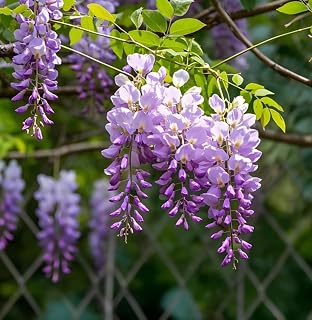
Wisteria Floribunda Live Plants (3 Plants)
The classic pergola drape, and nothing else produces those hanging lavender racemes. Commit to a sturdy structure and a real pruning routine, and you’ll get decades of filtered light from it — the three-plant pack also gives you spare stock for bonsai training.
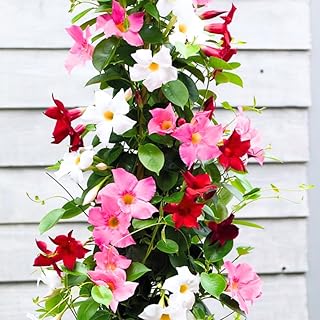
Mixed Mandevilla Live Plants (3 Plants)
Ideal for container-grown pergola posts and for renters, with a long bloom window and no woody mass to manage. Treat it as a warm-season performer outside zones 9–11 and overwinter it indoors.
Frequently Asked Questions
How long until a vine actually shades my pergola?
Thunbergia and mandevilla deliver usable cover in a single season. Boston ivy typically takes two summers; wisteria often needs three to five years before the canopy is dense and flowering reliably.
Will a flowering vine attract too many bees near seating?
Some pollinator traffic is inevitable and desirable, but it peaks in daylight. If you mainly use the space after sunset, bloom-heavy vines are rarely a problem — position the densest flowering sections away from where people sit and drink.
Is jasmine scent really beneficial for sleep?
Evidence for floral aromas as a relaxation cue is modest but real; the practical mechanism is association and reduced arousal, not sedation. Moderate exposure outdoors helps most people wind down, while overwhelming concentration in a bedroom can do the opposite.
Can I grow two vines on the same pergola?
Yes, if you pair a vigorous shade-maker with something less competitive — Boston ivy on the sunniest side, jasmine or Thunbergia at the entrance. Avoid combining wisteria with anything delicate; it will win.
Final Thoughts
For an evening-first pergola, start with Climbing Jasmine for atmosphere and Boston Ivy for dependable summer shade — together they cover both halves of the problem. If you need a canopy before this season ends, the Thunbergia Blue Trumpet Vine is the fastest honest route there, and Wisteria Floribunda remains the long-game choice for anyone willing to prune.