Key takeaways
- Wall-sharing audit: Before anything else, identify what’s behind and above the cabinet run. A compressor cycling against a shared bedroom wall transmits low-frequency vibration that survives closed doors far better than higher-pitched sound. Island and pantry placements are almost always the kinder choice.
- Ice format: Nugget and pellet ice lands softly and chews easily, which makes for quieter harvest cycles and gentler late-night refills. Crescent and gourmet cubes last longer in a drink but arrive with more percussion. Match the format to how you actually use ice, not to what looks impressive.
- Drainage design: Gravity-drain units need a floor drain or pump; pumped models handle awkward layouts but add a motor that kicks on intermittently. Drain-free designs recirculate meltwater, eliminating plumbing entirely — a real advantage in bedrooms-adjacent bars or finished basements.
- Honest capacity math: A 100 lb/day rating means the machine runs hard. Most households need 20–40 lbs, and an oversized unit simply cycles more often in a space where you’d prefer silence. Size to your entertaining reality, then add a modest cushion.
- Cleaning cadence: Self-cleaning cycles and included descaler packs determine whether maintenance happens or gets deferred until the ice tastes stale. Look for accessible bins, removable scoops, and a stated descaling interval you can genuinely keep.
What's inside
Anyone who has been jolted awake at 2 a.m. by the clatter of ice tumbling into a metal bin knows that an appliance purchase can quietly become a sleep problem. As a sleep-wellness writer, I spend a lot of time mapping the sound signature of a home — the compressor hum, the harvest cycle thud, the drip of a defrost line — because fragmented sleep rarely comes from one loud noise. It comes from a dozen small ones layered on top of a nervous system that never fully downshifts. A built-in ice maker sits in that category: enormously convenient, occasionally disruptive, and almost always installed without a second thought about the bedroom on the other side of the wall.
This guide looks at built-in and undercounter ice makers through two lenses at once: how well they perform as appliances, and how gracefully they coexist with a household that values rest. I’ll cover the decisions that actually matter — placement, ice style, drainage, cycle noise, and cleaning burden — then walk through the strongest models available in 2026, including full-size undercounter units from Mojgar, VEVOR, and EdgeStar, plus the countertop GE Profile Opal nugget machines that many people choose when a permanent install isn’t practical.
As an Amazon Associate we earn from qualifying purchases.


🛒 Best Price Today on Amazon
Prime members get fast, free shipping on everything above, plus member-only deals. New members get a 30-day free trial — cancel anytime.
How to Choose a Built-In Ice Maker (2026)
- Wall-sharing audit: Before anything else, identify what’s behind and above the cabinet run. A compressor cycling against a shared bedroom wall transmits low-frequency vibration that survives closed doors far better than higher-pitched sound. Island and pantry placements are almost always the kinder choice.
- Ice format: Nugget and pellet ice lands softly and chews easily, which makes for quieter harvest cycles and gentler late-night refills. Crescent and gourmet cubes last longer in a drink but arrive with more percussion. Match the format to how you actually use ice, not to what looks impressive.
- Drainage design: Gravity-drain units need a floor drain or pump; pumped models handle awkward layouts but add a motor that kicks on intermittently. Drain-free designs recirculate meltwater, eliminating plumbing entirely — a real advantage in bedrooms-adjacent bars or finished basements.
- Honest capacity math: A 100 lb/day rating means the machine runs hard. Most households need 20–40 lbs, and an oversized unit simply cycles more often in a space where you’d prefer silence. Size to your entertaining reality, then add a modest cushion.
- Cleaning cadence: Self-cleaning cycles and included descaler packs determine whether maintenance happens or gets deferred until the ice tastes stale. Look for accessible bins, removable scoops, and a stated descaling interval you can genuinely keep.
The Best Built-In Ice Makers of 2026, Reviewed
GE Profile Opal MINI PRO Nugget Ice Maker
The MINI PRO produces 36 lbs of soft nugget ice a day with a side tank that meaningfully extends unattended runtime, and its stainless finish blends into most bar cabinetry. Nugget ice falls quietly, which makes this the model I most often suggest for anyone whose kitchen shares a wall with a bedroom.
GE Profile Opal Mini Nugget Ice Maker
Mechanically similar to the MINI PRO but in a smaller footprint and warmer Stone Grey colorway, this version trades the side tank for a compact 2 lb bin and top-fill reservoir. It’s the right pick for a guest suite or bedside wet bar where the machine gets filled once and used lightly.
Mojgar 15″ Undercounter Ice Maker
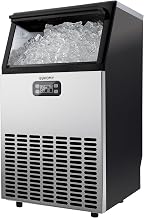
At 100 lbs per day with a 30 lb bin, this ETL-approved unit is genuinely commercial-grade and slots into a standard 15-inch cabinet opening. Self-cleaning keeps maintenance simple, though I’d install it well away from sleeping areas given the output and duty cycle.
Mojgar Commercial Ice Maker (33 lb Bin)
Essentially the same platform with slightly more storage, this model suits homes that entertain seriously and want to stop hauling bags of ice. Freestanding or built-in flexibility makes it a sensible choice if your layout might change.
EdgeStar 15 Inch Built-In Ice Maker
Modest output at 15 lbs per day, but the no-drain-required design is the headline: no plumbing, no pump motor, no standing water. For a bedroom-adjacent bar or a finished basement lounge, this is the quietest and least invasive installation on the list.
Frequently Asked Questions
Will a built-in ice maker actually disturb my sleep?
It depends far more on placement than on the model. Harvest cycles and compressor vibration transmit through shared framing, so a unit two rooms away is rarely noticed while the same machine behind a headboard wall can fragment sleep for months without you connecting the cause.
Is nugget ice really quieter?
Yes, measurably so at the point of harvest. Soft pellets drop with a muted sound rather than the sharp crack of solid cubes, and they’re easier to scoop without the metallic scrape that tends to wake light sleepers.
Should I leave it running overnight?
Most units are designed for continuous operation, and constant cycling is easier on the compressor than repeated cold starts. If noise is a concern, look for a model that idles once the bin is full rather than switching it off manually each evening.
How often does an ice maker need descaling?
Every one to two months for hard-water households, longer for softened water. Machines that ship with descaler packs — like both GE Profile Opal models — make it far more likely you’ll stay on schedule.
Final Thoughts
For most homes, the GE Profile Opal MINI PRO offers the best balance of capacity, soft nugget ice, and low acoustic impact, while the EdgeStar 15-inch built-in is the smartest choice when you need a permanent installation without plumbing or pump noise. If volume genuinely matters and the unit can live away from bedrooms, the Mojgar 15″ undercounter model delivers commercial output with self-cleaning convenience — just be deliberate about where it goes.