
Key takeaways
- Warranty Description: 2 years
- Item Dimensions L x W: 8.82"L x 7.01"W
- Handle Diameter: 28 millimeters
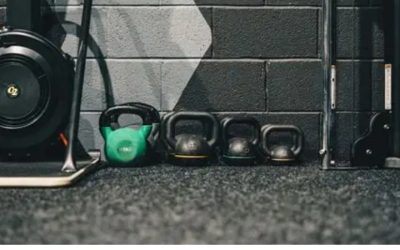
A rack of cast-iron kettlebells is a beautiful thing until you try to fit one in a bedroom closet. Six fixed bells spanning 8 to 40 pounds will run you a few hundred dollars, occupy roughly four square feet of floor, and gouge your baseboards the first time you set one down carelessly. The math gets worse when you realize that most home lifters actually use three of those six on any given day — the light one for warm-up halos and windmills, the medium one for cleans and snatches, the heavy one for two-hand swings and goblet squats. The rest sit there collecting dust and guilt.
That gap is exactly what an adjustable kettlebell is supposed to close, and the two things that determine whether it succeeds are grip and load behavior. Grip means handle diameter, window clearance for two hands, and whether the coating turns slick after four minutes of swings. Load behavior means how the selected plates sit inside the shell — whether the weight stays centered as it climbs, whether the bell rattles at the top of a snatch, and how fast you can move between settings during a circuit. Below, the BowFlex SelectTech 840 is rated against both criteria, with a buying framework you can apply to any adjustable bell you’re considering.
Our top picks
 BowFlex SelectTech 840 Adjustable Kettlebell
- Warranty Description: 2 years
- Item Dimensions L x W: 8.82"L x 7.01"W
- Handle Diameter: 28 millimeters

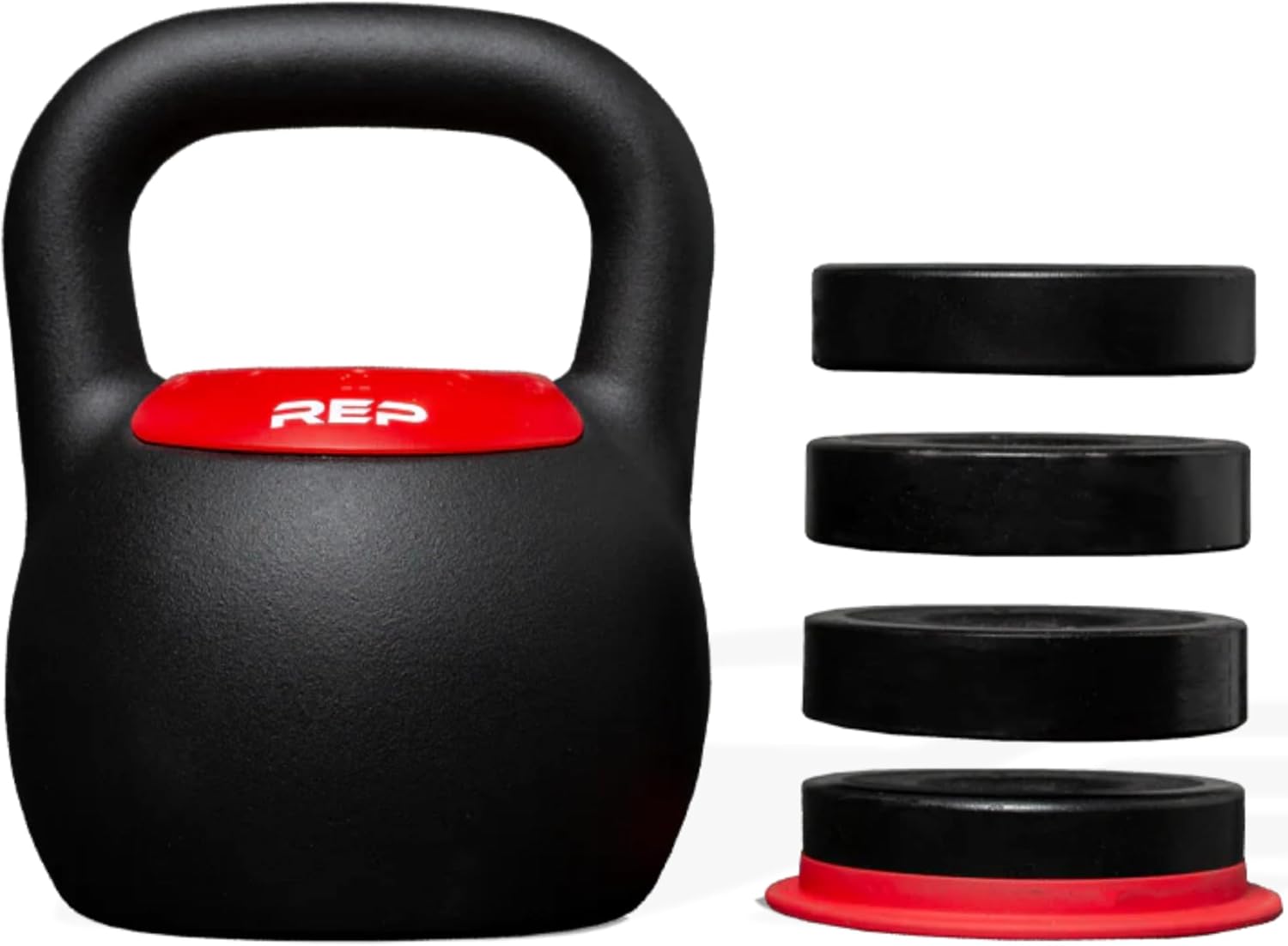 Rep Fitness Adjustable Kettlebell
- Handle Diameter: 1.3 inches
- Material: Iron
- Recommended Uses For Product: Cross Fit, HIIT, Weight Lifting



As an Amazon Associate we earn from qualifying purchases at no extra cost to you.
As an Amazon Associate we earn from qualifying purchases.

Quick Comparison
| Model | Weight Range | Settings | Adjustment Method | Grip Notes | Best Suited For |
|---|---|---|---|---|---|
| BowFlex SelectTech 840 Adjustable Kettlebell | 8 – 40 lb | 6 (8, 12, 20, 25, 35, 40 lb) | Single dial on the base | Wide molded handle, generous two-hand window | Apartment gyms, swing and squat circuits, one-bell training plans |
How to Choose
- Measure the handle, not the marketing. A 33–35 mm handle diameter suits most hands for ballistic work; anything thicker turns snatches into a forearm endurance test. Check the vertical clearance inside the window too — you need room for two stacked hands plus a thumb wrap without pinching.
- Interrogate the adjustment mechanism. Dials are fast but need the bell seated in its base to change weight. Pin and collar systems are cheaper and more forgiving but slower. Either way, ask whether the mechanism locks positively or relies on friction — friction fails first.
- Look at the size of the weight jumps. Kettlebell progressions in the middle of a range benefit from 4–5 pound steps. Large gaps in the heavy end are common on adjustable models, so decide whether you’ll be strong enough to bridge a 10-pound jump on presses, not just swings.
- Check bell geometry and base stability. A tall, narrow shell shifts the center of mass upward and makes the bell feel awkward in the rack position. A flat, broad base keeps it upright for renegade rows and floor presses without wobbling.
- Read the warranty on the mechanism specifically. The shell rarely breaks. The selector does. A warranty that covers moving parts, plus an accessible replacement path, matters more than the length of the coverage on the plastic housing.
Top Picks Reviewed
BowFlex SelectTech 840 Adjustable Kettlebell
The 840 replaces six separate bells with one unit that dials from 8 to 40 pounds in six settings. You set it down on its base, rotate the dial to the number you want, and lift — no pins to lose, no collars to thread, no plates stacking on a counter. In practice the change takes about three seconds once you’ve done it a dozen times, which is fast enough to keep an EMOM or a ladder circuit moving. The transitions that matter most in a real session — light for warm-ups, medium for cleans, heavy for swings — happen without you leaving your mat.
On grip, this is the model’s strongest showing. The handle is molded wide and shallow rather than round and thick, and the window is deep enough that two hands fit comfortably for swings with room left for thumbs. The surface has enough texture to hold onto through sweat but not so much that it chews up your palms during high-rep sets. Chalk isn’t necessary, though a light dusting extends comfort on longer swing blocks. Lifters with large hands report the least compromise here of any adjustable bell in this weight class.
On load, the picture is good with one honest caveat. The selected plates sit low and centered, so the bell tracks predictably through the swing arc and doesn’t feel top-heavy in the rack position. The flat base keeps it stable for floor work. The caveat is the spacing: the jumps from 12 to 20 and from 25 to 35 pounds are large, which you’ll notice most on single-arm presses where 8 or 10 pounds is a meaningful leap. For swings, squats, and carries, the gaps are irrelevant. For strict overhead work, plan to bridge them with tempo or extra reps rather than expecting a clean linear progression. It also stops at 40 pounds — plenty for the majority of lifters, but dedicated swing specialists will eventually want a heavier fixed bell alongside it.
The shell is a hard composite rather than bare iron, so it’s quieter on hardwood and less likely to chip a tile, though you should still avoid dropping it from height. For anyone consolidating a home setup into a single corner of a room, the value proposition is straightforward: one footprint, six weights, and a grip that doesn’t fight you.
Frequently Asked Questions
Can you do snatches and cleans with an adjustable kettlebell?
Yes, with attention to the shell. Adjustable bells have a wider body than cast iron, so the bell lands on your forearm slightly differently in the catch. Practice the movement at a light setting first to find where it sits, and keep the wrist punching through rather than letting the bell flop over the hand. Once you’ve calibrated, high-rep ballistic work is entirely reasonable.
Is a dial mechanism durable enough for swings?
The selector is engaged only when the bell rests in its base, and the plates lock as a single unit when lifted, so swings don’t load the dial itself. The failure mode to avoid is dropping the bell on concrete or setting it down hard off-center repeatedly — that’s what stresses the housing. Treat it as gym equipment rather than a competition bell and it holds up.
What weight range should a beginner start with?
Most adults new to kettlebells will spend their first month between 12 and 20 pounds learning hinge mechanics, then move to 25–35 pounds for two-hand swings within a few weeks of that. A range topping out around 40 pounds covers that whole arc, which is why the 8–40 span suits beginners better than a single heavy fixed bell does.
Does one adjustable bell replace a full kettlebell set?
For most home training goals, yes. Programs built around swings, goblet squats, presses, rows, carries, and Turkish get-ups need one bell at a time. The exception is double-kettlebell work — double front squats, double cleans — which requires two matched bells. If that’s central to your training, buy in pairs or supplement with fixed weights.
Final Thoughts
Judged on the two things that actually matter in daily use, the BowFlex SelectTech 840 earns its spot: the handle is wide and honest enough for real ballistic work, and the load sits low and stable through the full range. Its weakness is spacing, not construction — the heavy-end jumps ask more of your pressing strength than a full cast-iron set would. If your training lives in swings, squats, carries, and get-ups, and your gym lives in a closet, one dial and six weights is a trade worth making.
8 Best Kettlebell Weights for Men: How to Pick the Right Size
Best kettlebell weight for men is the decision that quietly settles whether...
8 Best Kettlebell Ab Exercises: 6 Adjustable and Fixed Picks
Best kettlebell ab exercises rarely share a single weight. A loaded carry,...
Best Kettlebell Core Exercises: 6 Picks for Floor Space
Best kettlebell core exercises tend to be floor-based or overhead, which makes...
8 Best Kettlebell Exercises for Abs: 5 Bells for Long Holds
Best kettlebell exercise for abs options nearly all involve holding load away...
8 Best Kettlebell Ab Workouts: 6 Bells Sized for Circuit Work
Best kettlebell ab workout equipment is chosen for sustained rounds, not for...
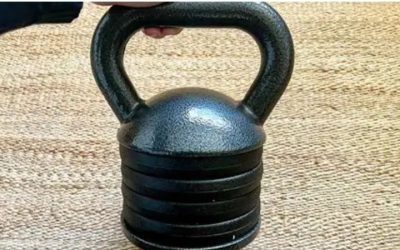
Best Kettlebell Weight: How to Size It Plus 6 Top Picks
Best kettlebell weight is not one number, because a swing, a press...
8 Best Kettlebell Routines: How to Pick the Right Bell Weight
Best kettlebell routine arguments usually skip the one decision that determines whether...
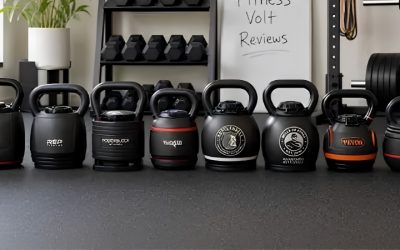
8 Best Kettlebell Routines: 6 Bells Matched to Each Format
Best kettlebell routines fail more often on equipment than on programming. A...
8 Best Kettlebell Trainings: 6 Bells to Build a Progression
Best kettlebell training runs into a hardware problem early: the traditional weight...
8 Best Workout Kettlebells: 6 Bells Matched to Your Training
Best workout kettlebell choices depend entirely on the session you plan to...
Write Your Review
No reviews yet. Be the first to share your experience!