Key takeaways
- Verify the real width, not the category: Pull the manufacturer’s dimension sheet and confirm both cabinet width and required side clearance. A unit that fits the hole but can’t swing its doors is a returned unit. If your opening is a hard 32 inches, prioritize models advertised at 30 to 32 inches and treat 36-inch French doors as a different project entirely.
- Judge the ice maker, not just the decibel rating: Steady-state compressor noise is rarely what disturbs sleep — intermittent, unpredictable sounds are. Ice dropping into a bin is an impulse noise, and impulse noise is far more likely to cause a cortical arousal than continuous hum at the same level. Look for units that let you disable ice production overnight, or plan to switch it off manually before bed.
- Prefer in-door dispensers over interior bins if the fridge is near a bedroom: An in-door reservoir means fewer harvest cycles for the same water volume, and dispensing happens on your schedule rather than the machine’s. Interior ice makers in tight cabinets also tend to transmit vibration into surrounding cabinetry.
- Plan for vibration isolation at install: Level the unit properly, leave the manufacturer’s rear and side air gaps, and avoid rigid contact between the cabinet and the fridge chassis. A fridge touching a wall becomes a speaker for that wall. Anti-vibration pads under the leveling feet cost very little and often do more for perceived quiet than paying up a tier.
- Match capacity honestly to your household: Overstuffing a narrow refrigerator restricts airflow, which makes the compressor run longer and louder. If you shop weekly for four people, an 18-to-22 cubic foot model will run quieter than a 14 cubic foot one crammed to the door seals.
What's inside
Most refrigerator guides talk about crisper drawers and cubic feet. Almost none talk about the thing that wakes you at 2:47 a.m.: the clatter of an ice harvest cycle two rooms away, or a compressor that cycles on with a low hum your nervous system registers even when your conscious mind doesn’t. In apartments, open-plan condos, and the increasingly common “kitchen wall shares a stud bay with the bedroom” layout, a refrigerator is a sleep-environment appliance whether you intended it to be or not. And the models people want most — narrow footprints with plumbed water and ice — are precisely the ones that pack a dispenser, an auger, and an ice mold into a tight cabinet where noise has nowhere to go.
This guide approaches 32-inch-class refrigerators with dispensers from a sleep-quality perspective first, storage second. Below you’ll find the current standouts, a buying framework built around acoustics, placement, and nighttime behavior, and honest notes on which of these units genuinely suit a narrow opening versus which need a wider cabinet. One important caveat before you shop: true 32-inch external widths are uncommon, and manufacturers list “narrow” across a 30-to-36-inch range. Measure your opening, then verify the exact spec sheet for the model you choose rather than trusting a category label.
As an Amazon Associate we earn from qualifying purchases.


🛒 Best Price Today on Amazon
Prime members get fast, free shipping on everything above, plus member-only deals. New members get a 30-day free trial — cancel anytime.
How to Choose a 32 Inch Wide Refrigerator With Water And Ice Dispenser (2026)
- Verify the real width, not the category: Pull the manufacturer’s dimension sheet and confirm both cabinet width and required side clearance. A unit that fits the hole but can’t swing its doors is a returned unit. If your opening is a hard 32 inches, prioritize models advertised at 30 to 32 inches and treat 36-inch French doors as a different project entirely.
- Judge the ice maker, not just the decibel rating: Steady-state compressor noise is rarely what disturbs sleep — intermittent, unpredictable sounds are. Ice dropping into a bin is an impulse noise, and impulse noise is far more likely to cause a cortical arousal than continuous hum at the same level. Look for units that let you disable ice production overnight, or plan to switch it off manually before bed.
- Prefer in-door dispensers over interior bins if the fridge is near a bedroom: An in-door reservoir means fewer harvest cycles for the same water volume, and dispensing happens on your schedule rather than the machine’s. Interior ice makers in tight cabinets also tend to transmit vibration into surrounding cabinetry.
- Plan for vibration isolation at install: Level the unit properly, leave the manufacturer’s rear and side air gaps, and avoid rigid contact between the cabinet and the fridge chassis. A fridge touching a wall becomes a speaker for that wall. Anti-vibration pads under the leveling feet cost very little and often do more for perceived quiet than paying up a tier.
- Match capacity honestly to your household: Overstuffing a narrow refrigerator restricts airflow, which makes the compressor run longer and louder. If you shop weekly for four people, an 18-to-22 cubic foot model will run quieter than a 14 cubic foot one crammed to the door seals.
The Best 32 Inch Wide Refrigerator With Water And Ice Dispensers Reviewed
Sharp SJF2955KS French Door
Sharp’s Advanced Cooling Plus system holds temperature with fewer aggressive compressor surges, which translates to a smoother, less startling acoustic profile than budget French doors. Note the 36-inch cabinet: this is the pick for a full-width kitchen, not a genuine 32-inch opening.
LG LFDS22520S French Door
A sensible narrow-cabinet French door with a plumbed water dispenser and no through-door ice mechanism, which removes the single most sleep-disruptive component from the equation. LG’s inverter-style compressors are consistently among the better performers for low, stable background sound.
COWSAR 20 cu. ft. French Door
Generous capacity for its footprint, with both a water dispenser and integrated ice maker. Because the ice system sits inside the cabinet, I’d install this one on an interior wall and get comfortable with the ice-off switch if it shares structure with a bedroom.
Electactic 18.1 Cu. Ft. Side by Side
The garage-ready freezer and digital temperature control make this the most flexible placement option here — moving a dispenser fridge out of the living core is the single most effective sleep intervention available. Side-by-side doors also need less swing clearance in tight galleys.
7.3 Cu. Ft. Compact with Water Dispenser
Explicitly low-noise and genuinely narrow, this is the studio-apartment and bedroom-adjacent answer: adjustable thermostat, modest compressor, and no ice harvest cycle to jolt you awake. Capacity is the obvious trade, so treat it as a one-to-two person unit.
Frequently Asked Questions
Can refrigerator noise actually affect sleep quality?
Yes. Environmental sound doesn’t need to wake you to fragment your sleep — brief arousals can shift you out of deeper stages without producing any memory of waking. Intermittent noises like ice drops and defrost cycles are the main offenders, not steady hum.
Should I turn the ice maker off at night?
If the refrigerator is within earshot of a bedroom, it’s worth trying for a week. Most units resume production within a couple of hours the next morning, so the practical cost is low and the reduction in unpredictable noise is immediate.
Is there a truly quiet refrigerator with an ice dispenser?
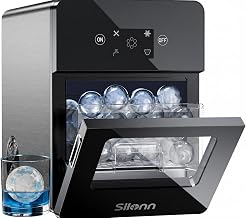
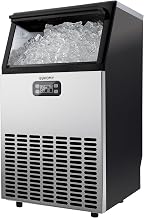
Quieter, yes; silent, no. Any unit that makes and drops ice will produce impulse sounds. If uninterrupted sleep is the priority and the fridge can’t be relocated, a water-only dispenser with a separate countertop ice maker is the better architecture.
Do all of these fit a 32-inch opening?
No, and that matters more than any other spec. The Sharp and Kenmore models are 36-inch cabinets; the compact and several narrow French doors are the realistic candidates for a tight 32-inch space. Always confirm against the official dimension drawing.
Final Thoughts
For a genuinely narrow opening where sleep comes first, the 7.3 cu. ft. compact with water dispenser is the quietest honest answer, and the LG LFDS22520S is the best balance of real family capacity and low, predictable operating sound. If you have full 36-inch clearance and want performance without acoustic drama, the Sharp SJF2955KS earns the upgrade — just install it level, gapped, and on padded feet.