Key takeaways
- Compare 5 hobby storage chest systems, from a 56-quart trunk to a 50-gallon pro bin, with capacities, locks and stacking tips for busy craft rooms.
The real decision with a hobby storage chest is not whether your supplies fit today, but whether one deep, lidded box still works when the collection doubles. Yarn stashes, fabric bolts, model kits, board game overflow and seasonal craft gear are bulky in a way small drawers and shallow bins cannot absorb. A proper chest system gives each hobby one large home with a hinged or latching lid, a footprint you can stack or slide under a worktable, and enough interior height for the awkward items that defeat everything else.
This guide is for knitters and sewists with growing material stashes, model builders and gamers whose kits need one protected place, and multi-hobby households rotating gear through a craft room or closet. Every pick below is a lidded trunk or footlocker-style chest, chosen from the product name and specifications on its Amazon listing, running from a compact 56-quart trunk to a 50-gallon professional bin.
Quick Picks
As an Amazon Associate we earn from qualifying purchases.
| Product | Best for | Key spec from title |
|---|---|---|
| Plano Storage Trunk with Wheels, Green, 108-Quart | The largest single hobby stash that still needs to move rooms | 108-Quart, Lockable, with Wheels |
| Rubbermaid ActionPacker Lockable Storage Box, 35 Gal | Mixed craft gear that travels between home, classes and events | 35 Gal, Lockable Storage Box |
| Seward Trunk Barracks Footlocker, Black, 30-Inch | Fabric, patterns and finished projects stored in a bedroom or studio | 30-Inch Footlocker, SWD5115-10 |
| Plano Sportsman Trunk, Black, Small, 56-Quart | One focused hobby, such as a single model or sewing kit collection | 56-Quart, Lockable, Small |
| Contico 3725 Pro Tuff Bin | Heavy shared gear, tools and supplies used by a whole household or club | 50 Gallon Capacity, 3725 Pro Tuff Bin |
How to Choose
Start with interior volume, not the headline size
Chest listings lead with outside dimensions or a quart figure, but hobbies live or die on usable interior space. A 108-quart trunk swallows yarn skeins, batting and game boxes that would take three shallow bins, while a 56-quart chest suits one discipline, such as a full sewing kit with fabric cuts and a pattern library. Measure your bulkiest single item first, a quilting hoop, a model kit box, a wreath form, and check it against interior length before anything else. Sloped walls and wheel housings eat space at the corners, so a chest that looks big on paper can still refuse the one object you bought it for.
Decide how the lid and latches will be used daily
A chest you open twice a day needs different hardware from one opened twice a season. Hinged lids that stay attached, like the Rubbermaid design, suit active projects because nothing gets set down and lost mid-session. Removable lids on the Plano trunks stack neatly and seal with snap latches, which works well for stored collections. Footlocker lids with a tongue-and-groove closure, like the Seward, close along the whole rim and feel more like furniture. Whichever style you pick, confirm the latches can be worked with one hand while the other holds supplies, because that is how the chest will actually be used.
Match the lock to who shares the space
Locking means different things across this lineup, and the right choice depends on your household. Padlock tabs on the Plano and Contico chests let you add your own lock, useful when a craft room doubles as a guest room or when sharp tools, paints and adhesives should stay away from children. The Seward footlocker builds in a push-button key lock with two keys included, which suits a bedroom or dorm-style setup where the chest is also personal storage. The Rubbermaid latches accept a padlock as well. None of these is a safe, so treat the lock as a privacy and child-access measure rather than security for valuables.
Plan the system: stacking, wheels and where chests live
A chest system earns the name when two or three units work together. The Plano trunks are molded for stacking, so a 56-quart and a 108-quart can share one closet footprint with the active project on top. Wheels matter once a loaded chest passes what you can comfortably carry: the large Plano rolls, the Rubbermaid is built for transport, and the Contico is a lift-by-handles design rated for far heavier loads. Decide the final resting place before ordering, measure the closet depth or under-table clearance, and leave room for the lid to open fully without dragging the chest out each time.
The 5 Best Options
Plano Storage Trunk with Wheels, Green, 108-Quart

This is the chest for the hobby that has outgrown every other container in the house. At 108 quarts it takes the bulky end of a collection in one load: yarn by the bag, quilt batting, board game boxes, costume pieces or a full set of seasonal craft supplies, and the integrated wheels and recessed handles mean a full chest can still be rolled from closet to worktable instead of dragged. The lid is reinforced and removable, the body is impact-resistant plastic, and molded grooves support stacking, so a second trunk can sit on top when the stash splits into stored and active halves.
Specs
- Capacity 108 quarts (102 liters); model 191902; impact-resistant plastic construction; lockable with padlock tabs; stackable; integrated wheels and recessed handles; tie-down points on either side.
- Best for: The largest single hobby stash that still needs to move between rooms.
- Watch out for: The footprint is the biggest here, so measure closet depth and door swings before committing.
Rubbermaid ActionPacker Lockable Storage Box, 35 Gal
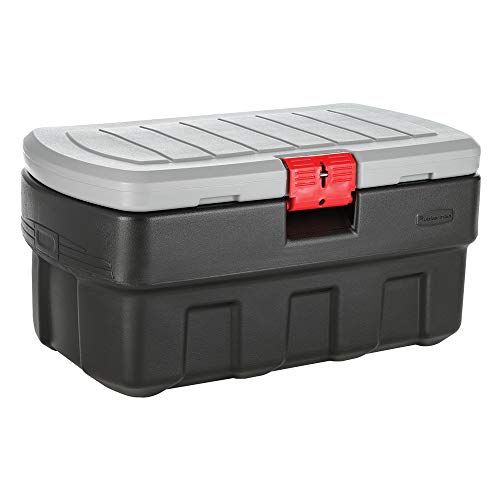
The ActionPacker suits hobbyists whose gear regularly leaves the house, to classes, club nights, craft fairs or a second workspace. The 35-gallon body has a double-walled lid with a grooved surface designed to shed water, the included components list a tote with hinged lid, and the latches accept a padlock for shared venues. Inside dimensions of about 31 by 16 by 14 inches fit long items such as cutting mats, rolls of vinyl or wrapping paper, and boxed kits, while the stated 110-pound load capacity covers dense loads like paint, books and tools without the chest feeling like the weak point.
Specs
- Capacity 35 gallons; outside dimensions 35.25 x 20 x 17.25 inches; inside dimensions 31 x 16 x 14 inches; load capacity 110 pounds; double-walled lid; model RMAP350000.
- Best for: Mixed craft and hobby gear that travels between home, classes and events.
- Watch out for: The padlock is not included, and the rugged exterior looks more at home in a garage or studio than a living room.
Seward Trunk Barracks Footlocker, Black, 30-Inch
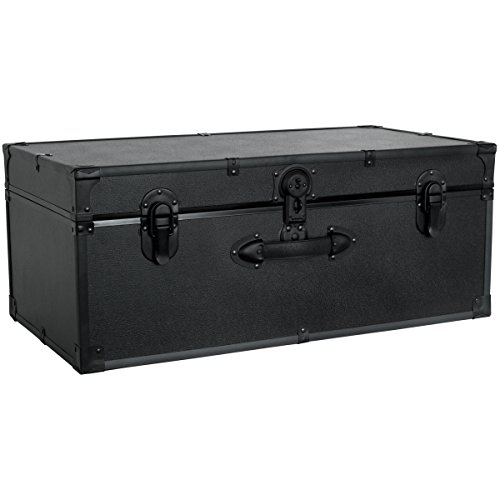
Where the plastic trunks read as utility gear, this classic footlocker reads as furniture, which makes it the natural pick for a bedroom, studio or spare room where the chest stays visible. The 30-inch body holds a fabric stash, pattern binders, finished quilts or a yarn collection in one lidded space at the foot of a bed or under a window. Closure is tongue-and-groove along the rim, security is a push-button key lock with two keys included, and a front carrying handle helps with the occasional move. It is the only pick here designed to be looked at every day.
Specs
- 30-inch footlocker; dimensions 30 x 15.75 x 12.25 inches; model SWD5115-10; push-button key lock with two keys; two lock-down latches; tongue-and-groove closure; front carrying handle.
- Best for: Fabric, patterns and finished projects stored in a bedroom or studio.
- Watch out for: No wheels, so a fully loaded fabric stash is a two-hand carry, and the interior is shallower than the big plastic trunks.
Plano Sportsman Trunk, Black, Small, 56-Quart

The smaller Plano is the right scale for one focused hobby rather than a whole craft room: a complete model-building setup, a calligraphy and paper station, a jewelry-making kit, or the overflow from a drawer system that handles the small parts. It shares the family design of its larger sibling, high-impact plastic, a lockable lid and tie-down points, in a footprint that fits a closet shelf or the space under a workbench. Because it stacks with the same molded system, it also works as the top, active-project layer above a 108-quart trunk holding the deep stash.
Specs
- Capacity 56 quarts; model 161900; high-impact plastic construction; lockable with padlock tabs; tie-down points on either side; removable lid with heavy-duty latches.
- Best for: One focused hobby, such as a single model or sewing kit collection.
- Watch out for: At 56 quarts it fills quickly with bulky materials, so stash-heavy hobbies should size up to the 108-quart instead.
Contico 3725 Pro Tuff Bin

The Contico is the heavy-duty end of the hobby chest idea, built for shared gear that gets treated roughly: club supplies, stage and event props, workshop-adjacent craft tools, or a household collection of sports and hobby equipment that several people load and unload. The structural foam body is rated by the maker for a recommended maximum load of 250 pounds, the lid runs on steel hinge pins, and molded-in hasps accept padlocks. At 50 gallons it is the largest capacity here, and the molded side grips are made for two-person or gloved handling rather than one-finger lifting.
Specs
- Capacity 50 gallons; dimensions 36.75 x 22.75 x 20.25 inches; model 3725NL; structural foam construction; steel hinge pins; molded-in locking hasps; recommended maximum load 250 pounds.
- Best for: Heavy shared gear, tools and supplies used by a whole household or club.
- Watch out for: It is a large, heavy bin even when empty, and the industrial styling suits a garage, basement or club room rather than finished living space.
Which One Fits Your Situation
A craft room closet that has to hold everything
Start with the 108-quart Plano as the base layer for bulk materials, then add the 56-quart Plano on top for the current project. The shared stacking footprint keeps one closet column doing the work of a whole shelving unit, and both chests lock with your own padlocks when the room hosts guests. Roll the big trunk out when you need the deep stash, and leave the small one at hand height for weekly use.
A bedroom or studio where storage is on display
Choose the Seward Barracks Footlocker. Its footlocker profile, key lock and tongue-and-groove lid suit a space that is lived in, not just worked in, and the 30-inch body doubles as a low surface at the foot of a bed. It holds a fabric or yarn collection neatly out of sight while looking like a deliberate piece of furniture rather than a plastic bin that wandered in from the garage.
A hobby that travels to classes, clubs or fairs
Take the Rubbermaid ActionPacker. The hinged, double-walled lid, padlock-ready latches and 110-pound load capacity are built around transport, and the interior length handles mats, rolls and boxed kits that shorter chests refuse. Load it once, keep it packed between sessions, and the chest becomes the hobby’s permanent travel case instead of a box you repack from shelves every time.
Shared, heavy or rough-use gear
Pick the Contico Pro Tuff Bin when the load is heavy, the users are many, or the storage space is a garage or basement. The 250-pound recommended load rating and steel hinge pins are overbuilt for yarn, but exactly right for tools, props, sports-hobby equipment and club supplies that would flex a lighter trunk. Add padlocks to the molded hasps and the bin is ready for communal storage.
Common Mistakes
- Buying by outside dimensions and discovering the bulkiest kit, hoop or game box does not fit the interior length or the sloped corners.
- Filling a wheelless chest like the Seward or Contico in place, then realizing a full load of fabric, books or paint is too heavy to move comfortably.
- Assuming lockable means secure storage for valuables, when padlock tabs and footlocker key locks are privacy and child-access measures, not safes.
- Stacking chests without checking that the lid grooves and bases are designed to interlock, which turns a tidy column into a sliding hazard.
- Storing fabric, yarn or paper in a damp garage or basement chest without checking the space first, since none of these lids is a sealed, climate-controlled container.
Frequently Asked Questions
How is a storage chest different from a storage bin or drawer unit?
A chest is one large, deep compartment under a single hinged or latching lid, made for bulky items and whole collections. Bins are usually smaller, lighter boxes for sorted categories, and drawer units divide supplies into many shallow compartments for small parts. Most serious hobby setups use a chest for bulk and reserves, with drawers or bins handling the small, daily items on the worktable.
What size chest does a typical hobby stash need?
One focused hobby, such as model building or a single sewing kit, usually fits a 56-quart trunk. A growing fabric, yarn or game collection is better matched to the 35-gallon Rubbermaid or the 108-quart Plano. Shared or multi-hobby households should look at the 50-gallon Contico. When torn between two sizes, choose the larger one: an overfilled chest with a lid that will not close organizes nothing.
Can these chests be stacked safely?
The Plano trunks are molded with grooves intended for stacking, and the ActionPacker lid is designed to shed water and support its stackable format. Keep the heaviest chest at the bottom, avoid stacking more than two high in a lived-in room, and never stack a loaded chest on a footlocker lid that was not designed for it, like the Seward, which is better used as a standalone piece.
Are any of these chests waterproof for garage or basement use?
No. Listings describe water resistance or water-shedding lids, such as the grooved double-walled lid on the Rubbermaid, which handles splashes and light rain during transport. That is not a waterproof seal. For damp spaces, raise chests off the floor, keep paper, fabric and yarn in inner bags or boxes, and check stored contents after humid seasons.
More from Amazon
Programs that pair well with the guide above. Offers and eligibility are set by Amazon and may change.
Collect the home and kitchen items you want in one registry that guests can shop from.
Create a wedding registrySet up recurring deliveries of everyday items on eligible products. Terms and savings are set by Amazon.
Explore Subscribe & SaveFree shipping on eligible items, Prime Video and more. Eligible new members can start with a free trial.
Start a Prime free trialAudiobooks and podcasts to listen to on the go. Eligible new members can start with a free trial.
Try Audible freeAs an Amazon Associate we earn from qualifying purchases.