Key takeaways
- Measured noise level: Look for a published dBA figure, not vague claims. Anything at or below roughly 65 dBA is conversational-volume territory; models in the 80s are closer to a garbage disposal and will carry through drywall and floor joists. If a listing omits the number entirely, assume it’s loud.
- Duty cycle over raw pressure: A compressor that cycles constantly is a compressor that’s always making noise. Match SCFM at 90 PSI to your actual tools — brad nailers sip air, HVLP finish sprayers drink it — so the motor rests instead of running.
- Pump type and long-term upkeep: Oil-free pumps skip the maintenance schedule and tolerate cold garages, but tend to run louder. Oil-lubricated units are quieter and longer-lived, at the cost of periodic checks. Decide honestly which trade-off you’ll actually maintain.
- Vibration path, not just placement: Structure-borne noise travels farther than airborne noise. Rubber isolation feet, an anti-vibration mat, or a plywood-and-foam platform can matter more than moving the unit ten feet away. Wheels help you relocate it entirely when someone’s asleep.
- Tank size versus portability: Larger steel tanks mean fewer motor starts and steadier pressure; smaller pancake tanks mean you can carry the unit outdoors and away from bedrooms. Six to eight gallons is the practical sweet spot for furniture and home projects.
What's inside
Most people shop for an air compressor by looking at tank size and maximum PSI, then discover the real variable only after the first pull of the trigger: sound. A compressor’s motor doesn’t just fill a tank — it fills a house. If your garage shares a wall with a nursery, if your workshop sits under a bedroom, or if you’re the person who wants to finish a trim project at 9 p.m. without waking anyone, decibels matter as much as CFM. I’ve spent years advising households on protecting sleep architecture from avoidable noise intrusions, and mechanical tools are one of the most common offenders nobody thinks to audit.
This guide approaches the Harbor Freight air compressor category through that lens: which models deliver real working air for furniture assembly, upholstery, and finish work, and which ones do it without spiking your household’s ambient noise floor into territory that fragments sleep. You’ll find selection criteria that account for placement and vibration transfer, honest reviews of five strong contenders across price points, and answers to the questions buyers ask once they realize sound is not a footnote.
As an Amazon Associate we earn from qualifying purchases.



How to Choose a Harbor Freight Air Compressor (2026)
- Measured noise level: Look for a published dBA figure, not vague claims. Anything at or below roughly 65 dBA is conversational-volume territory; models in the 80s are closer to a garbage disposal and will carry through drywall and floor joists. If a listing omits the number entirely, assume it’s loud.
- Duty cycle over raw pressure: A compressor that cycles constantly is a compressor that’s always making noise. Match SCFM at 90 PSI to your actual tools — brad nailers sip air, HVLP finish sprayers drink it — so the motor rests instead of running.
- Pump type and long-term upkeep: Oil-free pumps skip the maintenance schedule and tolerate cold garages, but tend to run louder. Oil-lubricated units are quieter and longer-lived, at the cost of periodic checks. Decide honestly which trade-off you’ll actually maintain.
- Vibration path, not just placement: Structure-borne noise travels farther than airborne noise. Rubber isolation feet, an anti-vibration mat, or a plywood-and-foam platform can matter more than moving the unit ten feet away. Wheels help you relocate it entirely when someone’s asleep.
- Tank size versus portability: Larger steel tanks mean fewer motor starts and steadier pressure; smaller pancake tanks mean you can carry the unit outdoors and away from bedrooms. Six to eight gallons is the practical sweet spot for furniture and home projects.
The Best Harbor Freight Air Compressor (2026)s Reviewed
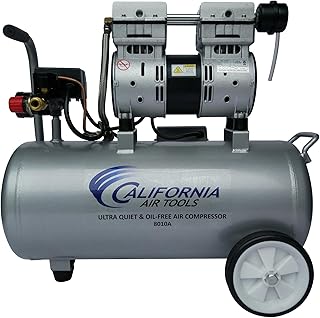
California Air Tools 8010A Ultra Quiet
At a rated 60 dBA, this 1.0 HP oil-free unit is the clear choice for anyone working near sleeping spaces — it sits roughly at the level of normal conversation rather than the shriek of a typical pancake pump. The 8-gallon aluminum tank resists rust, and the wheeled frame keeps it genuinely movable despite the capacity.
DEWALT 6-Gallon Pancake, 165 PSI (DWFP55126)
The reference standard for finish carpentry and furniture assembly: 165 max PSI and 2.6 SCFM at 90 PSI drive two nailers comfortably, and the oil-free pump asks nothing of you seasonally. It is not a quiet machine, so treat it as a daytime tool or plan on a vibration mat and a closed door.
ECOMAX Pancake, 150 PSI Dual Coupler
A well-judged value pick with 2.6 CFM at 90 PSI and dual quick couplers, meaning two people can work simultaneously without swapping hoses mid-project. The 1.5 HP oil-free motor recovers quickly, which shortens total run time even if peak volume is unremarkable.
DEWALT 4-1/2 Gallon, 225 PSI (D55146)
The 225 PSI ceiling stores meaningfully more usable air in a compact tank, so the motor kicks on less often than the spec sheet suggests — a quiet-by-arithmetic advantage. Hand-carry with wheels makes it the most credible option for moving between a garage bench and an outdoor staging area.
Bauer-Compatible 12/20V Inflator/Deflator
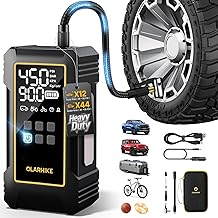
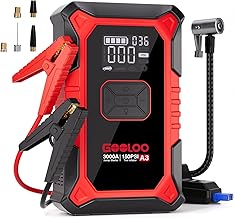
Not a substitute for a tank compressor, but the right tool for the small jobs that don’t justify waking a 1.5 HP motor: air mattresses, guest-room inflatables, tires, and cushion inserts up to 160 PSI. Battery or 12V car power means zero cord management and near-negligible noise.
Frequently Asked Questions
How loud is too loud for a home with sleepers nearby?
Sustained noise above about 45 dBA at the sleeping position is associated with disrupted sleep continuity. A 60 dBA compressor two rooms away is usually fine; an 85 dBA unit in an attached garage frequently is not.
Do I need an oil-lubricated compressor for furniture work?
Rarely. Oil-free pumps handle nailers, staplers, and inflation duties without complaint. Consider oil-lubricated only if you’re spraying finishes for hours at a stretch and want the quieter, longer-lived pump.
Will a pancake compressor run an upholstery stapler?
Yes — pneumatic staplers are low-consumption tools. A 6-gallon tank with 2.6 SCFM at 90 PSI will keep pace with continuous upholstery work from a single operator.
Can I reduce compressor noise after purchase?
Meaningfully, yes. Anti-vibration pads, an intake muffler, and positioning the unit away from shared walls and hard corners can shave several perceived decibels. Enclosures work only if you preserve airflow for motor cooling.
Final Thoughts
If protecting your household’s sleep is a genuine constraint, the California Air Tools 8010A is the model worth paying for — 60 dBA changes when and where you can work. For pure capability and finish-nailing reliability, the DEWALT DWFP55126 remains the safest bet, and the DEWALT D55146 splits the difference with high stored pressure in a portable frame. Keep the Bauer-compatible inflator on the shelf for everything that doesn’t deserve a motor at all.