Key takeaways
- Duty rating over headline height: Type IA handles 300 lb and Type IAA handles 375 lb, and that figure includes you plus your tools, the curtain rod, and the drill. Sizing up costs a few dollars and removes the flex that makes people nervous.
- Fiberglass for anything electrical: If you’ll be near a junction box, ceiling fixture, or fan wiring — and in a bedroom you will be — non-conductive fiberglass rails are the responsible choice. Reserve aluminum for painting, storage, and pure reach tasks.
- Platform versus top step: A wide standing platform lets you work for twenty minutes without your arches complaining, which matters when you’re fussing with drapery brackets. Narrow top steps are fine for quick bulb changes.
- Weight you’ll actually carry: A ladder that lives three rooms away from where it’s needed gets left in the closet. Under 15 lb means you’ll grab it for small jobs instead of balancing on a nightstand.
- Feet, flooring, and footprint: Check for slip-resistant boot-style feet that won’t scuff hardwood or sink into plush carpet, and measure your open floor space — twin-front designs need clearance on both sides.
What's inside
Most people buy a ladder in a hurry, usually the afternoon a smoke detector starts chirping or a blackout curtain rod refuses to sit level. That urgency is exactly why so many garages contain a wobbly, undersized ladder that nobody trusts. I spend my working life helping people build better sleep environments — hanging light-blocking drapery, swapping harsh 4000K bulbs for warm ones, cleaning ceiling fan blades that dump dust onto a pillow every night — and almost every one of those jobs happens six feet off the ground. A ladder is quietly one of the most important tools in a restful bedroom.
The trouble is that six-foot step ladders look nearly identical on a product page. Duty ratings, rail materials, top-cap design, and platform width all change how the ladder behaves under you, and none of it is obvious from a thumbnail. Below, I’ve broken down what actually matters when you’re working overhead in a finished room, then reviewed the six-foot models I’d genuinely put my own weight on. Whether you’re mounting a headboard sconce or finally reaching the top closet shelf, this guide should get you to a confident purchase in a few minutes.
As an Amazon Associate we earn from qualifying purchases.


How to Choose a 6-Foot Ladder (2026)
- Duty rating over headline height: Type IA handles 300 lb and Type IAA handles 375 lb, and that figure includes you plus your tools, the curtain rod, and the drill. Sizing up costs a few dollars and removes the flex that makes people nervous.
- Fiberglass for anything electrical: If you’ll be near a junction box, ceiling fixture, or fan wiring — and in a bedroom you will be — non-conductive fiberglass rails are the responsible choice. Reserve aluminum for painting, storage, and pure reach tasks.
- Platform versus top step: A wide standing platform lets you work for twenty minutes without your arches complaining, which matters when you’re fussing with drapery brackets. Narrow top steps are fine for quick bulb changes.
- Weight you’ll actually carry: A ladder that lives three rooms away from where it’s needed gets left in the closet. Under 15 lb means you’ll grab it for small jobs instead of balancing on a nightstand.
- Feet, flooring, and footprint: Check for slip-resistant boot-style feet that won’t scuff hardwood or sink into plush carpet, and measure your open floor space — twin-front designs need clearance on both sides.
The Best 6-Foot Ladders (2026) Reviewed
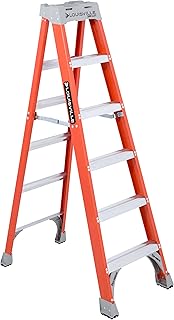
Louisville FS1406HD Fiberglass Step Ladder
This is the one I recommend most often: Type IAA fiberglass with a 375-pound rating, a molded top that holds a drill and a fistful of hardware, and rails stiff enough that you stop thinking about the ladder and start thinking about the job. It’s the sensible default for anyone hanging light-blocking curtains or servicing a bedroom fixture.
Little Giant Flip-N-Lite 6-ft Aluminum Stepladder
Genuinely light, genuinely stable, and the model most likely to get used for two-minute tasks because carrying it upstairs is effortless. The wide anti-slip steps and easy-release handle are excellent — just keep it away from live wiring, since it’s aluminum.
6-Foot Fiberglass Platform Step Ladder, 500-Pound Capacity
The generous standing platform changes the experience of longer overhead work, letting you shift your stance instead of clenching on a single rung. With a 500-pound capacity, it also suits anyone carrying heavy tools or simply wanting a large margin of safety.
Louisville FS1506 Fiberglass Step Ladder
A Type IA fiberglass workhorse at a friendlier price, and still non-conductive where it counts. If your projects are occasional and you’re comfortably inside the 300-pound limit, this is a smart, unfussy buy.
Louisville FM1406HD Twin Front Step Ladder
Both sides are climbable, so two people can work simultaneously and you can approach a ceiling fan from whichever side the blade is on. It’s the specialist pick — heavier and hungrier for floor space, but invaluable for shared installs.
Frequently Asked Questions
How high can I reach with a six-foot ladder?
Most adults comfortably reach roughly 10 to 12 feet, which covers standard eight- and nine-foot ceilings. For vaulted bedrooms, plan on an eight-foot ladder instead of stretching.
Is fiberglass really worth the extra weight?
For anything touching electrical work, yes. Fiberglass rails don’t conduct current, and that single property justifies the extra few pounds when you’re wiring a sconce or a fan.
Will a ladder damage hardwood or carpet?
Quality slip-resistant feet are designed not to mark floors, but a scrap of cardboard or a drop cloth underneath is cheap insurance on refinished wood.
What does Type IAA actually mean?
It’s the industrial duty class rated to 375 pounds total load — your body, clothing, tools, and materials combined. Type IA sits just below at 300 pounds.
Final Thoughts
If you buy one ladder and want it to handle every bedroom project for the next decade, choose the Louisville FS1406HD for its Type IAA fiberglass construction. Pick the Little Giant Flip-N-Lite if portability is what will actually get it used, or the 500-pound fiberglass platform model if you value a wide, comfortable standing surface for longer installs.