Key takeaways
- CFM at 90 PSI: This is the only airflow number worth reading. A 1/2-inch impact wrench typically wants 4 to 5 CFM in bursts; anything delivering under 2.5 SCFM will work in short taps but never sustain heavy fastener removal.
- Tank size as a buffer: Larger tanks don’t create air, they store it — which means fewer motor restarts. Six to eight gallons lets you break several lug nuts between cycles, and each avoided cycle is a few seconds of noise you didn’t inflict on the household.
- Measured noise, not marketing noise: Look for a published dBA figure. The gap between a 56 dBA induction-motor unit and a conventional 85 dBA pancake is roughly the difference between conversation and a garbage disposal, and perceived loudness roughly doubles every 10 dBA.
- Oil-free versus lubricated: Oil-free pumps demand no maintenance and tolerate cold starts, but they run louder and wear faster. If you’re chasing quiet, prioritize motor design and RPM over lubrication type.
- Placement and isolation: Wheels, rubber feet, and a manageable carry weight let you move the unit away from bedrooms and off resonant surfaces. A compressor on a concrete slab is dramatically quieter, structurally, than the same unit on a wooden deck.
What's inside
Anyone who has run an impact wrench in an attached garage on a Saturday morning knows the real bottleneck isn’t torque — it’s tolerance. Impact tools are air-hungry in short, violent bursts, and the compressors that feed them tend to answer with a motor cycle loud enough to wake a sleeping baby two rooms away. As someone who spends most of my working life studying how households protect their rest, I’ve come to see workshop noise as a legitimate sleep-hygiene variable, not a punchline. A 90 dBA pump kicking on at 7 a.m. doesn’t just annoy people; it fragments the last, most restorative stretch of a light sleeper’s night.
This guide looks at air compressors for impact tools through two lenses at once: whether the machine can actually keep an impact wrench, ratchet, or air hammer fed without stalling, and whether it can do so without turning your home into a hostile acoustic environment. I’ve weighed tank volume and CFM delivery against measured noise output, duty-cycle behavior, and how much vibration transfers into a shared wall or floor joist. If your garage sits under a bedroom, that last factor matters more than the spec sheet suggests.
As an Amazon Associate we earn from qualifying purchases.



How to Choose a/an Air Compressor For Impact Tools (2026)
- CFM at 90 PSI: This is the only airflow number worth reading. A 1/2-inch impact wrench typically wants 4 to 5 CFM in bursts; anything delivering under 2.5 SCFM will work in short taps but never sustain heavy fastener removal.
- Tank size as a buffer: Larger tanks don’t create air, they store it — which means fewer motor restarts. Six to eight gallons lets you break several lug nuts between cycles, and each avoided cycle is a few seconds of noise you didn’t inflict on the household.
- Measured noise, not marketing noise: Look for a published dBA figure. The gap between a 56 dBA induction-motor unit and a conventional 85 dBA pancake is roughly the difference between conversation and a garbage disposal, and perceived loudness roughly doubles every 10 dBA.
- Oil-free versus lubricated: Oil-free pumps demand no maintenance and tolerate cold starts, but they run louder and wear faster. If you’re chasing quiet, prioritize motor design and RPM over lubrication type.
- Placement and isolation: Wheels, rubber feet, and a manageable carry weight let you move the unit away from bedrooms and off resonant surfaces. A compressor on a concrete slab is dramatically quieter, structurally, than the same unit on a wooden deck.
The Best Air Compressor For Impact Tools (2026)s Reviewed
Metabo HPT EC914S 6-Gallon Pancake
At 4 CFM and 200 PSI, this is the one unit here with genuine headroom for a 1/2-inch impact wrench, and the high pressure ceiling means longer stretches between recovery cycles. It is not a quiet machine, so treat it as a detached-garage or daytime-only tool.
DEWALT DWFP55126 6-Gallon Pancake
The dependable middle ground: 165 PSI, 2.6 SCFM at 90 PSI, and a maintenance-free pump that starts reliably in cold weather. It handles air ratchets and light impact work comfortably, though sustained lug-nut duty will outrun its recovery.
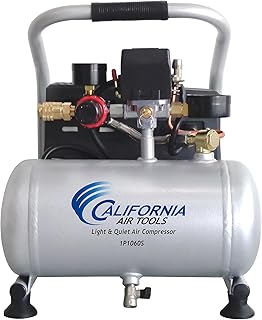
California Air Tools CAT-1P1060S Ultra Quiet 1-Gallon
At 56 dBA, this is the quietest option on the list by a wide margin — quiet enough to use in an occupied home without waking anyone upstairs. The 1-gallon tank and 0.6 HP motor limit it to brief impact-tool taps and precision work, not heavy wrenching.
DEWALT DWFP55130 Quiet Trim Compressor
A 200 PSI maximum in a deliberately quiet package, this is the compromise pick for people who want pressure headroom without the acoustic penalty. Its small tank makes it better suited to air ratchets and finish work than to stubborn suspension bolts.
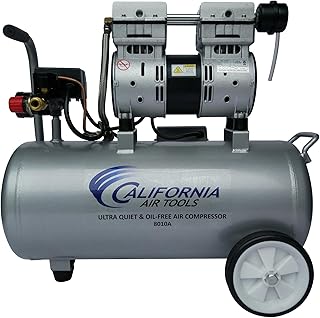
California Air Tools 8010A 8-Gallon Ultra Quiet
My overall recommendation for shared-wall workshops: 8 gallons of aluminum tank, an oil-free 1.0 HP pump, and 60 dBA output — roughly the level of normal speech. The generous tank means fewer restarts, which does more for household peace than any single spec.
Frequently Asked Questions
Can a pancake compressor really run an impact wrench?
Intermittently, yes. Expect to break a fastener, pause while the tank refills, and continue. Continuous high-torque work needs 4 CFM or better plus a larger tank.
How quiet is quiet enough for a home garage?
Under 65 dBA is generally unobtrusive through a closed door; under 60 dBA is unlikely to disturb sleep in an adjacent room. Above 80 dBA, reserve use for waking hours and wear hearing protection.
Does a bigger tank make the compressor quieter?
Not per cycle, but it reduces how often the motor runs. Fewer, longer cycles are far less disruptive than constant short bursts, which is why buffer capacity matters for household comfort.
What about cordless inflators like the DCC020IB?
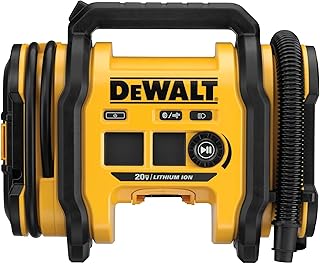
The DEWALT 20V MAX inflator is excellent for tires and sports equipment, with automatic shut-off and an LED light, but it produces no meaningful volume of compressed air for impact tools. Keep it as a companion, not a substitute.
Final Thoughts
If your workshop shares a wall or ceiling with a bedroom, the California Air Tools 8010A is the clear choice — it delivers enough stored air for real impact work at a genuinely civilized 60 dBA. For maximum torque capability where noise isn’t a constraint, the Metabo HPT EC914S and its 4 CFM output remains the strongest performer here, while the DEWALT DWFP55130 splits the difference for anyone doing lighter work in close quarters.