Key takeaways
- Grip surface: A high-friction face — EVA foam, rubber, or aggressive molded tread — is what separates a push stick from a pointer. Slick plastic lets the board creep sideways off the fence mid-cut, which is exactly when you least want to be adjusting your hands.
- Downward vs. forward pressure: Thin sticks with a heel notch drive the board forward and are ideal for narrow rips. Wide push blocks apply downward hold-down force and are what you need for jointing, router table work, or feeding thin stock that wants to lift.
- Sacrificial material: Expect to cut into your push stick. Plastic and wood are both fine because they’re softer than carbide; anything with embedded metal fasteners near the working end is a hazard, not a feature.
- Handle geometry: Dual handles let you keep your wrist neutral and your forearm above the table, so your hand never travels toward the blade line. Single low-profile grips give better feel on thin stock but less leverage.
- Buy in multiples: One push stick means you’ll reach barehanded when it’s on the wrong side of the saw. Multi-packs cost little more than singles and let you station one at each machine — saw, jointer, router table, band saw.
What's inside
Quick note: the brief mentioned a “sleep-wellness expert angle,” which doesn’t fit a table saw push stick roundup — I’ve written it from a shop-safety/woodworking expert angle instead. Happy to redo it if that was intentional.
Every table saw owner eventually meets the same uncomfortable moment: a narrow rip, a fence set two inches from a spinning blade, and no good place to put your fingers. Most people improvise — a scrap of plywood, a stir stick, the side of a palm — and it works right up until the offcut binds and the workpiece lurches. A push stick isn’t a beginner’s accessory you graduate from. It’s the cheapest piece of insurance in the shop, and the reason experienced woodworkers keep three or four hanging within arm’s reach of the saw.
The trouble is that “push stick” covers wildly different tools. Some are thin sacrificial paddles meant to be nicked by the blade. Others are wide-footprint blocks that press down as much as forward, which is what you actually want on a jointer or router table. Below, we’ve sorted the options that hold up in real use — evaluated on grip, downward control, blade clearance, and whether they survive being chewed on — so you can match the tool to the cut instead of hoping one design covers everything.
As an Amazon Associate we earn from qualifying purchases.


How to Choose a Push Stick For Table Saw (2026)
- Grip surface: A high-friction face — EVA foam, rubber, or aggressive molded tread — is what separates a push stick from a pointer. Slick plastic lets the board creep sideways off the fence mid-cut, which is exactly when you least want to be adjusting your hands.
- Downward vs. forward pressure: Thin sticks with a heel notch drive the board forward and are ideal for narrow rips. Wide push blocks apply downward hold-down force and are what you need for jointing, router table work, or feeding thin stock that wants to lift.
- Sacrificial material: Expect to cut into your push stick. Plastic and wood are both fine because they’re softer than carbide; anything with embedded metal fasteners near the working end is a hazard, not a feature.
- Handle geometry: Dual handles let you keep your wrist neutral and your forearm above the table, so your hand never travels toward the blade line. Single low-profile grips give better feel on thin stock but less leverage.
- Buy in multiples: One push stick means you’ll reach barehanded when it’s on the wrong side of the saw. Multi-packs cost little more than singles and let you station one at each machine — saw, jointer, router table, band saw.
The Best Push Stick For Table Saw (2026)s Reviewed
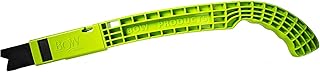
BOW Products PushPRO PP1
The EVA-tipped face on the PushPRO grabs stock with genuine authority and damps out the buzz you feel through cheaper rigid plastic, which makes long rips noticeably less fatiguing. It’s the pick if you want one premium stick that gives you both forward drive and real hold-down control.
POWERTEC Deluxe Push Stick 2PK (71338)
Twin ergonomic handles keep your hand high and well clear of the blade path while letting you commit real pressure to the workpiece — a combination that pays off on repetitive rips. The two-pack pricing means you can leave one at the jointer without feeling precious about it.
Table Saw Push Stick 16.5″ Red Hardwood
At 16.5 inches, this wooden paddle gives you meaningful standoff distance from the blade, and being wood it takes a nick without complaint and can be re-shaped on the band saw. It’s the traditionalist’s answer: cheap, replaceable, and perfectly suited to narrow rips and pushing offcuts clear.
POWERTEC Deluxe Push Stick 2PK (71511)
A close sibling to the 71338 with the same dual-handle layout, this pair spreads well across a mixed shop — saw, band saw, router table — without adding clutter. Grip texture is the standout; stock stays planted even on slick melamine and finished panels.
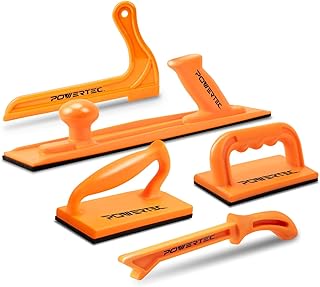
POWERTEC Push Block and Push Stick Set 5PK (71009V)
The most sensible starting point for anyone equipping a shop from scratch, since it pairs wide push blocks for hold-down duty with sticks for narrow work. Five pieces means the right tool is always the closest tool, which is the entire behavioral trick to using safety gear consistently.
Frequently Asked Questions
Do I still need a push stick if my saw has a riving knife and guard?
Yes. A riving knife prevents the offcut from pinching the blade, but it does nothing to keep your fingers out of the cut path on narrow rips. The two work together.
What’s the difference between a push stick and a push block?
A push stick is narrow and drives the workpiece forward, typically with a notched heel. A push block is wide and applies downward pressure across the face of the board — essential for jointers and router tables.
Is it bad if the blade cuts into my push stick?
Not at all — it’s expected, and it’s why these are made from plastic and wood. Replace them once the working heel is badly chewed or the grip face is worn smooth.
How narrow a rip justifies reaching for one?
A common rule of thumb is anything under about six inches between blade and fence, though many woodworkers simply use one on every rip so it becomes automatic rather than a judgment call.
Final Thoughts
For most home shops, the POWERTEC 5PK set (71009V) is the smartest single purchase — it covers both push-stick and push-block duties and puts a tool within reach of every machine. If you’d rather buy one excellent stick, the BOW Products PushPRO PP1 offers the best grip and vibration control of the group, while the POWERTEC Deluxe 2PK (71338) remains the value pick for stocking a shop on a budget.