Key takeaways
- Miter slot fit: Most saws use a 3/4″ x 3/8″ T-slot, but tolerances vary. Look for expanding or adjustable miter bars — a jig that rocks even slightly in the slot will transfer that slop straight into your cut.
- Hold-down direction and force: A good featherboard pushes stock toward the fence and lets it travel forward only. Check the claimed kickback resistance and whether the feathers or fins are replaceable rather than a wear item that retires the whole tool.
- Non-marring materials: Nylon, EVA, and high-density polymers grip without denting softwoods or scarring finished panels. Bare aluminum or hard plastic edges will leave tracks on cherry, maple, and pre-finished plywood.
- Setup speed: Accessories you have to fight get left on the shelf. One-knob clamping, tool-free adjustment, and flip stops mean you’ll actually reposition the jig for the next cut instead of freehanding it.
- Cross-machine usefulness: Many of these tools also fit router tables, band saws, and jointers. Buying accessories that migrate between machines stretches the budget considerably in a one-car-garage shop.
What's inside
Quick note: the brief asks for a “sleep-wellness expert angle” on table saw accessories, which looks like a leftover from another template. I’ve written it as a woodworking/shop-safety expert instead, since that’s what earns trust on this topic. Happy to redo it if the sleep angle was intentional.
Most table saw frustrations don’t come from the saw itself. A decent contractor or hybrid saw will cut straight all day long — but the moment you’re feeding stock freehand, eyeballing blade height, or trusting a stamped-steel miter gauge that shipped in the box, accuracy and safety both start drifting. Boards creep away from the fence mid-cut. Thin strips get narrower as the pile grows. Crosscuts land at 89.5 degrees and every joint downstream pays for it. The fix is almost never a new saw; it’s a handful of well-chosen accessories that hold the work where it belongs and take your hands out of the danger zone.
This guide covers the accessories that make the biggest measurable difference on a home-shop table saw: featherboards that resist kickback, push blocks that keep control through the cut, jigs for repeatable thin rips, a miter gauge worth the slot it sits in, and setup blocks for dialing in blade height and fence alignment. Each pick is judged on hold-down force, fit and adjustability, build materials, and whether it genuinely changes how a cut behaves — not just how the bench looks.
As an Amazon Associate we earn from qualifying purchases.



How to Choose a/an Table Saw Accessories (2026)
- Miter slot fit: Most saws use a 3/4″ x 3/8″ T-slot, but tolerances vary. Look for expanding or adjustable miter bars — a jig that rocks even slightly in the slot will transfer that slop straight into your cut.
- Hold-down direction and force: A good featherboard pushes stock toward the fence and lets it travel forward only. Check the claimed kickback resistance and whether the feathers or fins are replaceable rather than a wear item that retires the whole tool.
- Non-marring materials: Nylon, EVA, and high-density polymers grip without denting softwoods or scarring finished panels. Bare aluminum or hard plastic edges will leave tracks on cherry, maple, and pre-finished plywood.
- Setup speed: Accessories you have to fight get left on the shelf. One-knob clamping, tool-free adjustment, and flip stops mean you’ll actually reposition the jig for the next cut instead of freehanding it.
- Cross-machine usefulness: Many of these tools also fit router tables, band saws, and jointers. Buying accessories that migrate between machines stretches the budget considerably in a one-car-garage shop.
The Best Table Saw Accessories (2026)s Reviewed
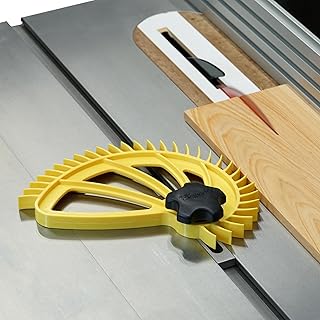
Hedgehog Spiral Safety Featherboard
The spiral fin geometry is the whole story here: it applies steady inward pressure while acting as a one-way valve against kickback, and the DuPont nylon flexes without taking a set the way stiffer plastics do. One-knob setup means it takes seconds to reposition, which matters more than any spec sheet number.
GOINGMAKE Thin Rip Jig
Ripping repeatable narrow strips is where most woodworkers get into trouble, and this jig solves it properly by referencing off the workpiece and moving the fence instead of trapping thin stock against the blade. It drops into a standard 3/8″ x 3/4″ T-slot and works equally well on a band saw or router table.
BOW Products EVA Featherboard
The AnchorPRO miter bar locks down with genuine authority, and the claimed 5x kickback resistance is backed up by how little the EVA feathers deflect under load. The non-marring EVA and replaceable feather design make this the one to reach for on finished plywood and figured hardwoods.
Milescraft 3406 GrabberPRO
A push block earns its keep by letting you maintain downward and forward pressure through the end of the cut without your hand ever tracking near the blade. The GrabberPRO’s grip pad and heel catch hold small offcuts securely, and it moves happily to the jointer and router table.
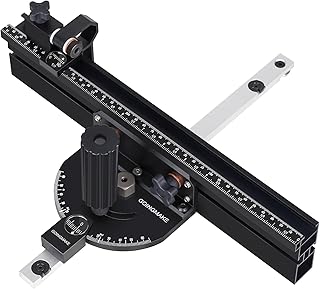
GOINGMAKE Compact Miter Gauge
Positive angle stops and a 360mm fence with a flip stop turn repetitive crosscuts from a measuring exercise into a production task, which is exactly what a stock gauge can’t do. It’s a compact unit, so it suits jobsite and hybrid saws where a full-size gauge overhangs the table awkwardly.
Frequently Asked Questions
Do I need more than one featherboard?
Two is the practical sweet spot — one ahead of the blade holding stock to the fence, and a second mounted to the fence pressing down. Running a pair eliminates most of the lift and drift that causes burn marks and tapered rips.
Are aluminum setup blocks really more accurate than a tape measure?
Yes, meaningfully so. A precision set-up bar set like the 14-piece aluminum alloy kit lets you set blade height, dado depth, and fence offsets by direct contact rather than squinting at graduations, and it removes cumulative parallax error from repeated setups.
Will these accessories fit my jobsite saw?
Check the miter slot dimensions first. The 3/4″ x 3/8″ T-slot is near-universal on cabinet, hybrid, and most contractor saws, but some compact jobsite models use shallower or non-T slots that won’t accept an anchoring miter bar.
Can accessories replace a riving knife or blade guard?
No. Featherboards and push blocks reduce risk but complement the saw’s guarding rather than substituting for it. Keep the riving knife installed for all through-cuts and treat these tools as an added layer.
Final Thoughts
If you’re building a kit from scratch, start with the Hedgehog Spiral Featherboard and the Milescraft GrabberPRO — together they cover the two moments where table saw cuts most often go wrong, and neither requires any modification to your saw. Add the GOINGMAKE Compact Miter Gauge once you’re doing repeatable crosscuts for casework, and the accuracy gain will show up in every joint you cut afterward.