Key takeaways
- Capacity vs. footprint: Measure your wall or bay before you shop. A 52″ or 72″ cabinet transforms a two-car garage but strands you in a single-bay space, where a compact 5-drawer roller earns its keep. Leave at least 30 inches of clearance in front for full drawer extension.
- Drawer slides and load ratings: Ball-bearing runners glide smoothly under weight and dampen the shudder that makes cheap chests sound like a filing cabinet falling over. Check per-drawer ratings, not just the cabinet total, and put dense items like impact wrenches in the lower banks.
- Steel gauge and top surface:
- Casters and mobility: Look for at least two locking swivel wheels, and prefer larger diameters if your floor has cracks, drains, or a threshold. Locking casters also stop the midnight creep that lets a loaded cabinet drift into your car door.
- Security and low-noise operation: A single keyed lock bar that secures every drawer at once beats individual locks you’ll never all engage. Rubber or foam liners are not a luxury — they keep tools from sliding, protect finishes, and cut rattle enough that a late-night wrench swap won’t carry upstairs.
What's inside
Anyone who has hunted for a 10mm socket across three drawers, a bucket, and the floor knows the real cost of bad tool storage: it isn’t money, it’s momentum. A chest that sags, rattles, or refuses to roll over a garage expansion joint quietly taxes every project you start. And because so much home repair happens after work — in that narrow window between dinner and bedtime — the wrong cabinet also becomes a noise problem, sending metal-on-metal clangs through the wall into someone’s first sleep cycle.
This guide looks at rolling chests, workbench combos, and grab-and-go portable boxes with an eye on the details that matter after the unboxing photos: drawer slide quality, load ratings, caster behavior on rough concrete, locking hardware, and how quietly the whole thing operates when the house has gone to bed. Below you’ll find our current picks, a short buying framework, and answers to the questions we hear most often.
As an Amazon Associate we earn from qualifying purchases.




How to Choose a Who Makes The Best Tool Chest (2026)
- Capacity vs. footprint: Measure your wall or bay before you shop. A 52″ or 72″ cabinet transforms a two-car garage but strands you in a single-bay space, where a compact 5-drawer roller earns its keep. Leave at least 30 inches of clearance in front for full drawer extension.
- Drawer slides and load ratings: Ball-bearing runners glide smoothly under weight and dampen the shudder that makes cheap chests sound like a filing cabinet falling over. Check per-drawer ratings, not just the cabinet total, and put dense items like impact wrenches in the lower banks.
- Steel gauge and top surface:
- Casters and mobility: Look for at least two locking swivel wheels, and prefer larger diameters if your floor has cracks, drains, or a threshold. Locking casters also stop the midnight creep that lets a loaded cabinet drift into your car door.
- Security and low-noise operation: A single keyed lock bar that secures every drawer at once beats individual locks you’ll never all engage. Rubber or foam liners are not a luxury — they keep tools from sliding, protect finishes, and cut rattle enough that a late-night wrench swap won’t carry upstairs.
Note on the third point above: aim for 16- to 18-gauge steel on the shell, and match the worktop to your habits — solid hardwood absorbs impact and stays quiet, while stainless wipes clean after oil changes.
The Best Who Makes The Best Tool Chest (2026)s Reviewed
HAUTMEC 72″ Rolling Tool Chest (HT0428)
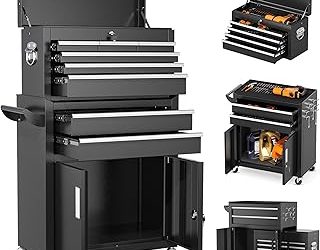
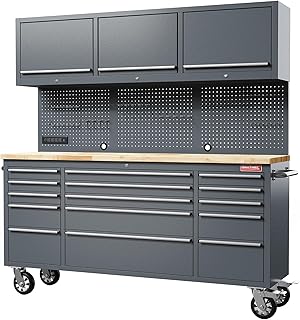
This is the full-shop solution: 15 lockable drawers, three upper cabinets, a pegboard with 51 hooks, and a solid oak top over 16-gauge steel, all wired with an ETL-listed power strip. The oak deadens vibration noticeably compared with bare metal, which matters if your workshop shares a wall with a bedroom — just plan on help during assembly and a level patch of floor.
WORKPRO 52″ Rolling Tool Chest
A smart middle path at 1,000 lbs capacity, pairing five drawers and a door cabinet with adjustable shelves, a wooden workbench surface, and an integrated power strip. It gives you a genuine work station without the wall-length commitment of a 72″ unit, and the drawer action stays composed when loaded.
Goplus 5-Drawer Rolling Tool Cabinet
The value pick for a first serious chest: five drawers, universal lockable wheels, a keyed lock bar, protective liners, and a side tool rack, plus a detachable top box you can carry to the job. Load it thoughtfully — it’s built for household and hobby tool weight rather than heavy fleet work.
8-Drawer Rolling Tool Chest with Detachable Top
Arriving assembled is a real advantage here, and the eight-drawer layout with tray dividers and liners encourages the kind of one-item-per-slot organization that ends drawer digging. The detachable top box, hooks, and casters make it a strong fit for repair rooms and warehouse aisles where the tools follow the work.
Craftsman 3-Drawer Portable Chest
Not a garage centerpiece, but the classic answer to “I need my core kit in the truck.” Three metal drawers in the familiar red shell keep sockets, drivers, and fasteners sorted and quiet in transit, and it slots neatly on a shelf beside a larger roller.
Frequently Asked Questions
How many drawers do I actually need?
Count your tool categories, not your tools. Most homeowners are well served by five to eight drawers; if you regularly work on vehicles or maintain multiple trades’ worth of gear, step up to a 15-drawer cabinet so nothing shares a compartment.
Do I need a workbench-style top?
If your current workspace is the hood of a car or the top of a dryer, yes. A hardwood or steel worktop gives you a dedicated surface at a comfortable height and keeps assembly work off the floor.
Can a rolling chest be quiet enough for a shared wall?
Reasonably, with three habits: line every drawer, close them deliberately rather than letting them coast, and lock the casters so the frame can’t shift. Wood-topped units transmit less impact noise than bare steel.
Is a portable box worth owning alongside a cabinet?
Almost always. A 24″ portable metal box with a top tray and ball-bearing runners means you carry ten tools to the task instead of walking back to the cabinet nine times.
Final Thoughts
For a complete home workshop, the HAUTMEC 72″ chest is the clearest upgrade — steel, storage, and a quiet oak top in one piece. The WORKPRO 52″ is the better balance of capability and footprint for most two-car garages, while the Goplus 5-drawer cabinet remains the sensible entry point, especially paired with a Craftsman portable chest for work away from the bench.