Key takeaways
- Mesh density: Standard mosquito netting stops mosquitoes but not biting midges. If you camp near water, in the southeastern U.S., or in Scotland, insist on no-see-um mesh — the finer weave is the difference between sleeping and surrendering.
- Sleeve or integrated: A slip-over sleeve is cheaper, packs separately and works with hammocks you already own. An integrated net saves setup time and eliminates gaps, but ties you to that one hammock.
- Zipper design: Look for dual-sided or diagonal zippers you can reach from inside while lying down. A single side zipper means climbing out and around every time you need water or a headlamp.
- Ridgeline support: Netting that sits on your face all night wrecks sleep quality. A structural ridgeline or spreader lifts the mesh clear of your body and keeps the interior from collapsing when you roll.
- Packed weight and volume: Backpackers should target roughly 8–14 oz for a net. Car campers can ignore weight entirely and prioritize interior space, heavier fabric and a wider entry.
What's inside
Anyone who has tried to sleep outdoors in July knows the specific misery of a mosquito working the perimeter of your hammock at 2 a.m. From a sleep-wellness standpoint, the problem isn’t only the bites — it’s the fragmentation. Every whine near your ear pulls you out of deep, restorative sleep and into a lighter stage, and a night broken into a dozen pieces leaves you feeling as though you never slept at all. Insects are one of the few outdoor sleep disruptors you can eliminate almost entirely with a single piece of gear, which makes a bug net one of the highest-return purchases in a hammock setup.
This guide looks at the hammock bug nets worth buying in 2026, including standalone sleeves that slip over a hammock you already own and all-in-one hammocks with netting built into the design. Below you’ll find our current picks, a short buyer’s checklist covering mesh density, zipper placement, ridgeline support and packed weight, plus answers to the questions we hear most often from first-time hammock sleepers.
As an Amazon Associate we earn from qualifying purchases.


How to Choose a Hammock Bug Net (2026)
- Mesh density: Standard mosquito netting stops mosquitoes but not biting midges. If you camp near water, in the southeastern U.S., or in Scotland, insist on no-see-um mesh — the finer weave is the difference between sleeping and surrendering.
- Sleeve or integrated: A slip-over sleeve is cheaper, packs separately and works with hammocks you already own. An integrated net saves setup time and eliminates gaps, but ties you to that one hammock.
- Zipper design: Look for dual-sided or diagonal zippers you can reach from inside while lying down. A single side zipper means climbing out and around every time you need water or a headlamp.
- Ridgeline support: Netting that sits on your face all night wrecks sleep quality. A structural ridgeline or spreader lifts the mesh clear of your body and keeps the interior from collapsing when you roll.
- Packed weight and volume: Backpackers should target roughly 8–14 oz for a net. Car campers can ignore weight entirely and prioritize interior space, heavier fabric and a wider entry.
The Best Hammock Bug Nets (2026), Reviewed
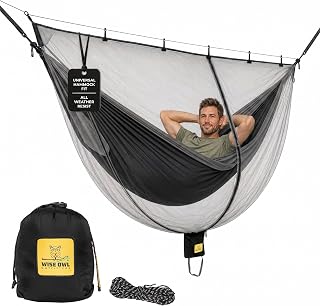
Wise Owl Outfitters Hammock Bug Net
A well-executed slip-over sleeve that keeps things simple: light enough for backpacking, generously cut, and compatible with essentially any single or double hammock you already own. It’s our default recommendation for anyone who likes their current hammock and just wants the insects gone.
XL Hammock Bug Net (11 x 4.6 ft, No-See-Um)
The extra length and no-see-um polyester mesh make this the strongest choice for humid, midge-heavy environments, and the dual diagonal zippers mean you can get in and out without gymnastics. The generous cut also creates real headroom, which matters more for sleep comfort than most buyers expect.
Onewind 11ft Ultralight Camping Hammock with Mosquito Net
The most refined all-in-one here: 40D hexagon ripstop nylon, an integrated no-see-um bugnet and a structural ridgeline that holds the mesh well off your face. Thru-hikers and weight-conscious campers will appreciate that the integration costs almost nothing in packed size.
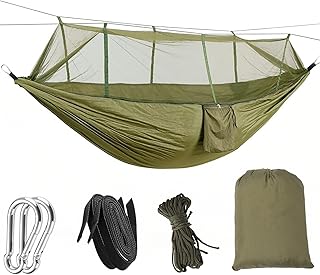
Camping Hammock with Mosquito Net and Rain Fly
A complete shelter system for people who don’t want to assemble one piece by piece — hammock, netting and rain fly in a single purchase. The fly is a genuine sleep asset, since it blocks pre-dawn light and dew as well as rain.
500 lb 2-in-1 Double/Single Hammock with Mosquito Net
The high capacity rating and included tree straps make this the sturdiest pick for taller or heavier sleepers, and the double configuration gives you room to change position without pressure points. Heavier than the ultralight options, but a fair trade for space.
Frequently Asked Questions
Will a bug net make my hammock hotter?
Slightly, since mesh reduces airflow, but the effect is modest. Pitching so the netting stays taut rather than draped against your skin preserves most of the breeze.
Do I still need insect repellent?
Inside a properly sealed net, no. Treat the hours before you turn in — that’s when exposure actually happens — and let the net handle the night.
Can I use a bug net without a rain fly?
Yes, in dry conditions. Mesh offers no rain or wind protection, though, and dew alone can leave you damp by morning, so pair the two in shoulder seasons.
How do I stop bugs from getting in during setup?
Pitch and zip the net before dusk, then enter quickly with your headlamp off or pointed away. Light at the entry is what invites insects in with you.
Final Thoughts
For most hammock sleepers, the Wise Owl Outfitters Bug Net is the easiest upgrade to an existing setup, while the XL No-See-Um Net is the one to buy if midges are part of your local reality. If you’d rather own a single integrated system, the Onewind 11ft Ultralight Hammock delivers the best balance of protection, weight and interior comfort in 2026.