Key takeaways
- Mesh count: Aim for netting rated against no-see-ums, not just mosquitoes. Coarse mesh stops the obvious pests while letting biting midges and sand flies straight through — and those are the ones that ruin a night without you ever seeing the culprit.
- Ridgeline tension: The net must be suspended from its own line so the mesh sits inches above your face. Netting that drapes onto skin becomes a feeding surface and, just as importantly, a claustrophobia trigger that keeps your nervous system alert instead of settling.
- Zipper layout: Dual-sided or diagonal zippers let you exit from either side without a full-body maneuver. If a 2 a.m. bathroom trip requires gymnastics, your sleep architecture pays for it.
- Airflow versus coverage: Polyester mesh is tougher; finer nylon breathes better. Warm, humid climates favour maximum breathability, since core temperature needs to drop slightly for sleep onset — a stuffy enclosure works directly against that.
- Standalone net or integrated system: Add-on nets fit hammocks you already own and let you swap components. Integrated hammock-plus-net-plus-tarp kits weigh less overall and pitch faster, which matters when you’re setting up in fading light.
What's inside
Sleep science has a stubborn rule: fragmented sleep is bad sleep. You can log eight hours in a hammock and still wake up foggy if a mosquito woke you six times to feed. Every one of those micro-arousals pulls you out of slow-wave and REM cycles, the stages that actually handle physical repair and memory consolidation. Outdoors, the biting-insect problem isn’t just an itch issue — it’s the single most common reason people describe hammock nights as “restless but I don’t know why.”
A well-built bug net solves this quietly, which is exactly what you want from sleep gear. This guide looks at hammock netting through a rest-quality lens: mesh density fine enough to stop no-see-ums, suspension that keeps fabric off your face, zipper placement you can operate half-asleep, and packed weight light enough that you’ll actually bring it. Below are the standout options for 2026, followed by a buying framework and answers to the questions I hear most.
As an Amazon Associate we earn from qualifying purchases.


How to Choose a Bug Net For Hammock (2026)
- Mesh count: Aim for netting rated against no-see-ums, not just mosquitoes. Coarse mesh stops the obvious pests while letting biting midges and sand flies straight through — and those are the ones that ruin a night without you ever seeing the culprit.
- Ridgeline tension: The net must be suspended from its own line so the mesh sits inches above your face. Netting that drapes onto skin becomes a feeding surface and, just as importantly, a claustrophobia trigger that keeps your nervous system alert instead of settling.
- Zipper layout: Dual-sided or diagonal zippers let you exit from either side without a full-body maneuver. If a 2 a.m. bathroom trip requires gymnastics, your sleep architecture pays for it.
- Airflow versus coverage: Polyester mesh is tougher; finer nylon breathes better. Warm, humid climates favour maximum breathability, since core temperature needs to drop slightly for sleep onset — a stuffy enclosure works directly against that.
- Standalone net or integrated system: Add-on nets fit hammocks you already own and let you swap components. Integrated hammock-plus-net-plus-tarp kits weigh less overall and pitch faster, which matters when you’re setting up in fading light.
The Best Bug Net For Hammock (2026)s Reviewed
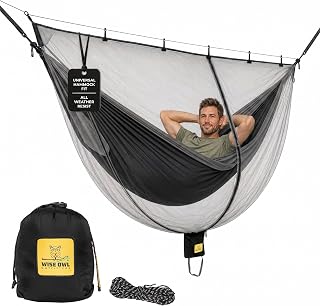
Wise Owl Outfitters Hammock Bug Net
A dependable, genuinely lightweight add-on that slips over most gathered-end hammocks in under a minute, making it the easiest option to justify carrying “just in case.” The compact pack size means it rarely gets left behind, which is the quality that actually protects your sleep.
Hammock Bug Mosquito Net XL 11×4.6FT
The extra-large footprint and no-see-um-rated polyester make this the pick for buggy, humid environments where finer pests are the real threat. Dual diagonal zippers give clean two-sided entry, so nighttime exits stay low-effort and low-arousal.
AYAMAYA Hammock Bug Net, 11ft
Full 360-degree coverage with a fast, intuitive pitch and double-sided zippers — a strong balance of protection and simplicity. The 11-foot length leaves generous headroom at both ends, keeping mesh clear of your face and shoulders.
G4Free Large Camping Hammock with Mosquito Net
An all-in-one system with a 440 lb capacity, tree straps, and a tarp, comfortably sized for two or for one sprawling sleeper. The generous width lets you lie more diagonally, which relieves the shoulder pressure that wakes side-sleepers in narrow hammocks.
Camping Hammock with Mosquito Net and Rain Fly
Bundling the net and rain fly with the hammock removes the guesswork of matching components and shaves meaningful time off setup. Weather protection plus insect protection in one kit means fewer variables between you and an uninterrupted night.
Frequently Asked Questions
Do I really need a bug net if I’m using insect repellent?
Repellent wears off, sweats off, and needs reapplication you won’t wake up to do. A net is passive protection that works for the full night without any effort from you — treat repellent as backup, not the primary barrier.
Will a bug net make the hammock feel too hot?
Quality mesh restricts airflow only marginally, and a properly tensioned ridgeline keeps the netting off your body so air still circulates. If you sleep hot, prioritise the finest breathable mesh you can find and pitch it with plenty of clearance.
Can I use a standalone net with any hammock?
Most sleeve-style nets fit standard gathered-end hammocks up to roughly 11 feet. Bridge hammocks and hammocks with spreader bars often need purpose-built netting, so measure your hammock’s length before ordering.
How do I stop insects biting through the hammock fabric from below?
This is a real and frequently overlooked problem — mosquitoes can reach you through thin nylon where your body compresses it. Add an underquilt, sleeping pad, or even a spare layer beneath you to block access from underneath.
Final Thoughts
For most people, the Hammock Bug Mosquito Net XL is the smartest buy: no-see-um-rated fabric, easy dual-zipper access, and enough size to keep mesh off your face all night. The AYAMAYA 11ft net is an excellent, faster-pitching alternative, while the G4Free complete hammock system suits anyone starting fresh or wanting extra room to sleep diagonally. Any of the three turns a bug-plagued night into one you’ll actually feel rested after.