Key takeaways
- Working load, not marketing load: Look for a stated per-strap rating with real margin over your body weight — figures near 1,000 lbs per strap, as with the Heavy Duty Long Extender kit, give you room for a two-person hang or an aggressive lounge without creaking anxiety.
- Low stretch webbing: Polyester webbing holds its length; nylon and rope creep. A no-stretch weave like the Kammok Python keeps your hang height stable from bedtime to sunrise, which is the single biggest factor in uninterrupted sleep.
- Loop count and spacing: More attachment points mean finer adjustment. Kits with 32 to 38 loops let you shift your sag by an inch at a time instead of guessing between two far-apart options.
- Tree-friendly width: Anything under about ¾ inch concentrates pressure and scars bark. Wide, flat webbing spreads the load and is what most parks and campgrounds actually require.
- Weight and packability: Backyard use rewards length and beef; backpacking rewards grams. Decide which you are optimizing for before you buy, because the best strap for a porch is rarely the best strap for a thru-hike.
What's inside
A hammock is only as restful as its suspension. Sleep-wellness research consistently points to two things that matter most for restorative rest in a swinging bed: a stable, consistent hang angle and the absence of micro-corrections your body has to make all night. Cheap rope kits fail on both counts — they stretch under load, creep lower as the hours pass, and force your spine into a hammock-shaped hammock instead of the gentle, flat-ish curve that actually lets your shoulders release. Add the frustration of knots that slip in the dark, and you have a recipe for a nap that leaves you stiffer than when you started.
This guide looks at hammock straps through that lens: load rating, stretch behavior, loop spacing, and how easy the system is to fine-tune when you are trying to dial in the ideal 30-degree hang. Below you will find our current picks for 2026, followed by a practical buying framework and answers to the questions we get asked most by readers setting up a backyard rest spot or a lightweight trail sleep system.
As an Amazon Associate we earn from qualifying purchases.


How to Choose a/an Straps For Hammock (2026)
- Working load, not marketing load: Look for a stated per-strap rating with real margin over your body weight — figures near 1,000 lbs per strap, as with the Heavy Duty Long Extender kit, give you room for a two-person hang or an aggressive lounge without creaking anxiety.
- Low stretch webbing: Polyester webbing holds its length; nylon and rope creep. A no-stretch weave like the Kammok Python keeps your hang height stable from bedtime to sunrise, which is the single biggest factor in uninterrupted sleep.
- Loop count and spacing: More attachment points mean finer adjustment. Kits with 32 to 38 loops let you shift your sag by an inch at a time instead of guessing between two far-apart options.
- Tree-friendly width: Anything under about ¾ inch concentrates pressure and scars bark. Wide, flat webbing spreads the load and is what most parks and campgrounds actually require.
- Weight and packability: Backyard use rewards length and beef; backpacking rewards grams. Decide which you are optimizing for before you buy, because the best strap for a porch is rarely the best strap for a thru-hike.
The Best Straps For Hammock (2026)s Reviewed
Heavy Duty Long Extender Hammock Straps
Two 10-foot straps with 32 adjustable loops and a claimed 1,000 lb capacity each make this the most forgiving option for wide tree spacing or oversized gathered-end hammocks. The included carabiners are the weak link in the kit, but for a permanent backyard rest station this is hard to beat on value.
SZHLUX Hammock Straps
With 38 loops across 10 feet, the SZHLUX set offers the finest adjustment increments in this roundup, which matters more than most buyers realize when chasing a flat lay. Webbing quality is solid for the price, though I would keep it out of permanent year-round exposure.
Kammok Python 10′ Tree Straps
The Python is the sleep-quality pick: a woven, knotless, genuinely no-stretch design that holds its set height all night and packs down to almost nothing in its stuff sack. If you camp regularly and want your hang to feel identical on night five as it did on night one, this is the strap.
ENO Atlas Suspension System
ENO’s Atlas remains the benchmark for fast, fuss-free setup, with reinforced triangular loops that are easy to thread even with cold hands or a headlamp. It is shorter than the budget 10-footers, so confirm your tree spacing before committing.
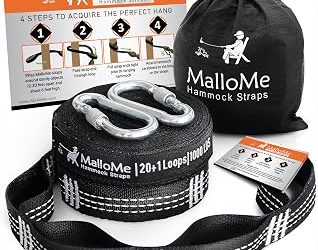
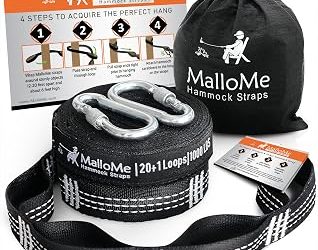
MalloMe Hammock Straps
A genuinely versatile hanging kit that works equally well for hammocks, porch swings, and single-branch setups, which makes it a smart choice if your rest spot changes location often. Adjustment is straightforward, and the length suits most residential trees.
Frequently Asked Questions
What hang angle should I aim for?
Attach your straps so the suspension lines sit at roughly 30 degrees from horizontal, with your hammock’s lowest point around 18 inches off the ground. This produces the flat, diagonal lay that keeps your spine neutral and prevents the calf-ridge pressure that wakes people at 3 a.m.
Are straps safer than rope?
Yes, on two counts. Wide webbing distributes force across a much larger area of bark, and pre-sewn loops remove the human error of a knot tied badly in low light. Rope also stretches, meaning you sink lower and lower through the night.
How long should my straps be?
Ten feet per side covers the vast majority of backyard and campsite anchor spacing and gives you slack to work with on thick trunks. Shorter six-foot straps are lighter but demand near-perfect tree placement.
Can I leave straps outside permanently?
Polyester tolerates weather better than nylon, but UV exposure degrades all webbing over time. For a long-term installation, inspect for fraying and fading each season and replace anything that feels stiff, chalky, or thin at the loops.
Final Thoughts
For the most consistent, sleep-friendly hang, the Kammok Python is the strap I recommend without hesitation — its no-stretch weave is what keeps a nap from slowly collapsing into a slouch. Choose the ENO Atlas if you value the quickest possible setup, or the Heavy Duty Long Extender kit if you need maximum length and load capacity for a permanent backyard rest spot.