Key takeaways
- Mask or move nearby plants and lay a tarp — teak cleaners are alkaline and will scorch lawn and leaves.
- Sand only after the wood is fully dry, 120 grit, with the grain, and only where splinters have lifted.
- Lift furniture onto blocks or feet so end grain isn’t wicking moisture from a damp patio all season.
- Wipe up bird droppings and spilled wine within a day; tannin-reactive stains set fast and become sanding jobs.
What's inside
As someone who spends most of my working life helping people build better rest, I’ve learned that recovery doesn’t begin at bedtime — it begins wherever you finally exhale. For a lot of my clients, that place is a teak bench under a tree or a weathered dining set on the back patio. Morning daylight on your skin anchors your circadian rhythm; an unhurried hour outdoors in the late afternoon lowers the physiological arousal that otherwise follows you to bed. But nobody lingers on furniture that’s slick with algae, streaked grey-black, or leaves a film on their palms. Grubby teak quietly costs you outdoor time, and outdoor time is one of the cheapest sleep interventions there is.
The good news: teak is absurdly forgiving. It’s dense, oily by nature, and rot-resistant enough that boat builders have trusted it for centuries. Cleaning it well is less about elbow grease than about sequence and restraint. Below I’ll walk you through how to read the condition of your wood, the three-stage process that professionals use, when a sealer earns its keep and when oil is the wrong call, plus the products worth keeping in the shed. Expect one properly dirty afternoon per year — and years of comfortable, splinter-free sitting in return.
As an Amazon Associate we earn from qualifying purchases.



First, Diagnose the Surface You’re Actually Dealing With
Grey teak is not dirty teak. That silver patina is oxidised surface fibre, purely cosmetic, and many owners genuinely prefer it. What you’re hunting for is the other stuff: black spotting (mildew feeding on airborne grime, not the wood itself), green haze (algae, usually on the shaded side), orange-brown drip marks from planters or metal fixings, and a greasy sheen where old oil has gone rancid. Run a fingertip across a slat. Chalky residue means dead surface fibre needing a light clean. Sticky or tacky means degraded finish that must come off before anything new goes on. Splinters lifting along the grain mean you’ll be sanding, not just washing.
The Three-Stage Method: Clean, Brighten, Protect
Skipping stages is the single most common mistake. Cleaning lifts organic soil and old coating. Brightening — usually a mild oxalic acid solution — neutralises the alkaline cleaner and pulls back the honey tone that cleaning leaves looking blotchy. Only then does protection make sense. This is why matched kits are worth the small premium: the Furniture Clinic Teak Care Kit bundles cleaner, brightener and oil in chemistry designed to work in sequence, and the EcoDecors Teak Cleaner & Sealer Kit does the same for anyone who prefers a sealed rather than oiled finish. Work in shade, keep the wood wet throughout, and always finish an entire piece before you stop for coffee — half-dried cleaner leaves tide lines that are maddening to remove.
Technique: Soft Bristles, With the Grain, Never a Pressure Washer
Wet the piece down thoroughly with a hose. Apply your cleaner generously and give it the full dwell time on the label — that’s the part doing the work. Agitate with a soft nylon brush, always along the grain, never across it. Teak’s soft summer growth erodes faster than the hard grain, so cross-scrubbing carves microscopic ridges that trap dirt next season. A pressure washer does the same damage in seconds; if you must use one, stay under 1,200 psi with a fan tip a foot back. For heavy neglect, Bayes High Performance Teak Cleaner & Restorer is formulated for genuinely far-gone pieces, while Star Brite Premium Outdoor Teak Cleaner earns its marine reputation on stubborn mildew. For routine annual maintenance, the standalone Furniture Clinic Teak Cleaner is plenty.
Oil, Sealer, or Nothing At All?
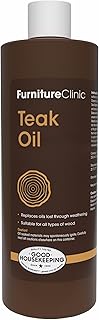
Here’s where advice gets contradictory. Teak oil doesn’t feed the wood — teak has its own oils — it sits on the surface, deepens the colour, and slows greying. It also feeds mildew as it breaks down, which is why oiled pieces often look worse in year two than unoiled ones. Use Furniture Clinic Teak Oil where you want warm colour and are willing to reapply annually: shower benches, covered porches, indoor pieces, boat trim. Choose a sealer for fully exposed furniture, since it blocks moisture and UV without becoming mildew food. Or do nothing, clean once a year, and enjoy the silver. All three are legitimate.
Timing It Around Your Actual Life
Clean in spring once night temperatures hold above 10°C, on an overcast day, and allow 48 hours of dry weather for any coating to cure. Do it in the morning rather than late afternoon: vigorous physical work plus bright light early in the day reinforces your circadian signal, whereas the same effort at 8pm raises core temperature and adrenaline right when your body is trying to wind down. Finish, shower, and sit on the results.
Tips
- Mask or move nearby plants and lay a tarp — teak cleaners are alkaline and will scorch lawn and leaves.
- Sand only after the wood is fully dry, 120 grit, with the grain, and only where splinters have lifted.
- Lift furniture onto blocks or feet so end grain isn’t wicking moisture from a damp patio all season.
- Wipe up bird droppings and spilled wine within a day; tannin-reactive stains set fast and become sanding jobs.
Frequently Asked Questions
Can I just use dish soap and water?
For light dust, yes — a bucket of warm water with a squeeze of mild detergent and a soft brush works fine. It won’t touch mildew, algae, or set-in staining, and it won’t restore colour, because it can’t neutralise or brighten oxidised fibre.
Will bleach damage teak?
Household bleach kills mildew but also degrades lignin, leaving a fuzzy, prematurely aged surface, and it corrodes stainless fixings. Purpose-made teak cleaners use gentler oxidising agents that clean without wrecking the fibre.
How often should this be done?
A full clean once a year for exposed furniture; every two years under cover. Oiled pieces need recoating annually, sealed pieces every two to three years depending on sun exposure.
My furniture feels rough and grey. Is it ruined?
Almost certainly not. Teak weathers superficially — the structural wood beneath is usually sound after decades. A proper clean, brighten, and light sanding typically brings back something very close to new.
Conclusion
Treat teak maintenance as one deliberate afternoon a year rather than a chore you dread, and the payoff is a seat you actually want to use — which matters more than it sounds, because consistent outdoor light and unhurried rest are two of the most reliable levers you have on sleep quality. Clean gently, respect the sequence, decide honestly whether you want gold or silver, and then go sit down.