Key takeaways
- Understand the decibel scale: Loudness perception roughly doubles with every 10 dB increase, so a 58 dB inverter isn’t slightly quieter than a 68 dB unit — it’s about half as loud to your ears. Manufacturer ratings are usually taken at 23 feet under partial load, so treat them as a best case and add distance wherever you can.
- Choose battery over combustion for overnight runs: A lithium power station produces essentially no engine noise, no vibration transfer through decking, and no exhaust — which matters enormously if the unit will operate anywhere near sleeping quarters or a closed window.
- Look for inverter technology and ECO mode: Inverter generators throttle engine speed to match demand instead of running flat-out. ECO or smart-throttle settings keep RPMs low during light overnight loads, which is where most of the perceived noise reduction actually happens.
- Match capacity honestly, then stop: Oversized generators idle inefficiently and often sound rougher at low load. Add up your true essentials — fridge, CPAP, a few lights, phone charging — and buy for that number plus a modest cushion, not for a worst-case fantasy.
- Verify medical-device compatibility: If you run a CPAP or oxygen concentrator, insist on pure sine wave output and confirm the continuous (not peak) watt rating covers your device with its humidifier active.
What's inside
Anyone who has slept beside a running generator knows the problem isn’t really the decibel number on the box. It’s the texture of the sound — the uneven surge of a small engine hunting for load, the drone that seeps through a camper wall at 2 a.m., the neighbor’s outage machine that turns your bedroom into a waiting room. As someone who spends most days helping people troubleshoot fragmented sleep, I’ve come to see backup power as a sleep-environment variable, not just a hardware purchase. A generator that keeps the refrigerator cold but wrecks four nights of rest has made a poor trade.
This guide approaches quiet portable power the way a sleep specialist would: prioritizing steady, low-frequency-managed output over headline wattage, and treating battery-based power stations as the gold standard for anywhere within earshot of a bed. Below you’ll find the models worth considering in 2026, a short framework for matching one to your home or RV, and answers to the questions that come up most often once people realize how much noise actually costs them.
As an Amazon Associate we earn from qualifying purchases.


How to Choose the Quietest Portable Generator (2026)
- Understand the decibel scale: Loudness perception roughly doubles with every 10 dB increase, so a 58 dB inverter isn’t slightly quieter than a 68 dB unit — it’s about half as loud to your ears. Manufacturer ratings are usually taken at 23 feet under partial load, so treat them as a best case and add distance wherever you can.
- Choose battery over combustion for overnight runs: A lithium power station produces essentially no engine noise, no vibration transfer through decking, and no exhaust — which matters enormously if the unit will operate anywhere near sleeping quarters or a closed window.
- Look for inverter technology and ECO mode: Inverter generators throttle engine speed to match demand instead of running flat-out. ECO or smart-throttle settings keep RPMs low during light overnight loads, which is where most of the perceived noise reduction actually happens.
- Match capacity honestly, then stop: Oversized generators idle inefficiently and often sound rougher at low load. Add up your true essentials — fridge, CPAP, a few lights, phone charging — and buy for that number plus a modest cushion, not for a worst-case fantasy.
- Verify medical-device compatibility: If you run a CPAP or oxygen concentrator, insist on pure sine wave output and confirm the continuous (not peak) watt rating covers your device with its humidifier active.
The Best Quietest Portable Generators (2026), Reviewed
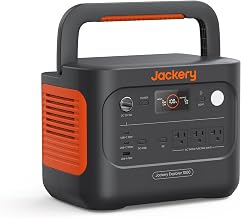
Jackery Explorer 1000 v2 Portable Power Station
This is my default recommendation for anyone who intends to run power near a bedroom, tent, or camper bunk, because it makes almost no sound beyond a faint cooling fan under heavy draw. With 1,070Wh of LiFePO4 capacity and 1,500W output, it comfortably handles a CPAP for multiple nights, and the one-hour fast charge means you can top it off during daylight hours rather than at 3 a.m.
Portable Solar Generator, 300W with 40W Solar Panel
A 220Wh pack won’t carry your house, but it will silently run a fan, a sound machine, a reading light, and phone chargers through the night — the exact loads that keep a bedroom livable. The pure sine wave outlet and bundled panel make it a sensible, genuinely inaudible starter option for van travel and tent camping.
Oxseryn 2800-Watt Portable Inverter Generator
Among gas units, this is the one I’d park farthest from the house and forget about: at 39 pounds it’s easy to relocate, and its inverter throttling keeps the tone steady rather than surging. The fuel shut-off is a practical touch, letting you run the carburetor dry before storage instead of fighting a gummed engine next season.
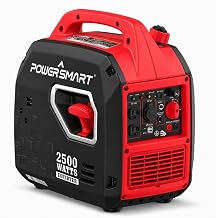
PowerSmart 2500W Portable Inverter Generator
A well-balanced home-backup choice with a 30A outlet, CO shutoff, and parallel capability if you later need more headroom. Its clean inverter power is safe for sensitive electronics, and pairing two smaller units generally reads as less intrusive than one large open-frame generator.
Oxseryn 4400-Watt Inverter Generator
Open-frame construction trades some acoustic insulation for cooling and weight savings, so this is the pick when you genuinely need 4,400 watts for a well pump or window AC. Run it in ECO mode, place it well downwind and at distance, and it remains far more tolerable than a conventional generator of similar output.
Frequently Asked Questions
Can I safely run a CPAP on a portable generator?
Yes, provided the unit delivers pure sine wave power and enough continuous wattage. In practice, a lithium power station indoors is the better approach — gas generators must stay outdoors and well away from any window or vent because of carbon monoxide risk.
How far away should a gas generator be placed?
A minimum of 20 feet from the home, with the exhaust directed away from doors, windows, and vents. Distance also delivers meaningful noise reduction, so extra cord length is one of the cheapest sleep upgrades available.
Do quiet enclosures or baffles actually help?
Purpose-built acoustic barriers can shave a few decibels, but improvised boxes restrict airflow and create fire and overheating hazards. Prioritize distance, orientation, and rubber isolation pads under the frame instead.
Is a solar generator powerful enough for a real outage?
A 1,000Wh class unit will cover essentials and sleep-critical devices for a night or two, especially paired with panels. For heating, air conditioning, or well pumps, you’ll need a gas inverter generator — many households sensibly own both.
Final Thoughts
If protecting sleep is your priority, the Jackery Explorer 1000 v2 is the clearest choice: silent, safe indoors, and more than adequate for medical devices and essentials. Pair it with the Oxseryn 2800W inverter generator for daytime recharging and longer outages, or step up to the PowerSmart 2500W if you want a 30A outlet and the option to run two units in parallel as your needs grow.